
"Will you accept a 6% reduction?"... Early National Pension receipt must consider 'average life expectancy'
The number of early National Pension recipients has exceeded 1 million, driven by economic hardship and expectations of high investment returns.
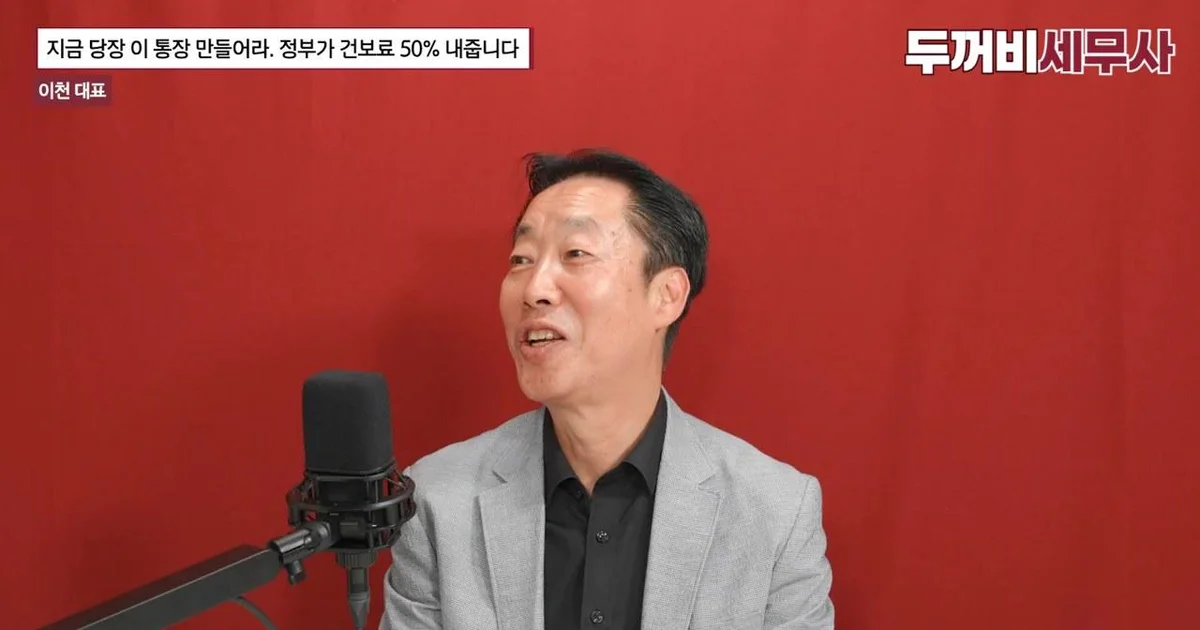
The number of 'early pension recipients' who advance their National Pension receipt timing has exceeded 1 million. While some analyses suggest this is due to economic difficulties, it is a complex combination of anxiety regarding the depletion of the National Pension fund and the expectation that the reduction caused by early receipt can be compensated for with high investment returns. However, experts emphasize that decision-making requires a long-term perspective considering life expectancy rather than simple return calculations.
The Trap of Early Receipt: Do Not Overlook 'Inflation Rate' and 'Compounding Effect'
According to a video by CEO Lee Cheon posted on the Finance with Toad Tax Accountant YouTube channel, if one chooses early pension, the pension amount is reduced by 6% for each year it is advanced. Some recipients judge that it is advantageous to receive it early and generate investment returns even if they suffer a 6% loss, citing that the average annual return of stock markets, such as the US S&P 500 index, has reached approximately 9–10% based on past data.
However, Lee warned against this approach. This is because high past returns do not guarantee the future, and if investment returns record a negative value (e.g., -8% or -3%), the blow from the reduction in pension receipt amount will be very large. In particular, considering the 'inflation rate reflection' function, which is one of the core advantages of the National Pension, the disadvantages of early receipt grow larger as time passes.
The National Pension increases the pension amount every year by reflecting the inflation rate. For example, if the pension amount for a recipient receiving it on time is 1 million won and the amount for an early recipient is 700,000 won, and the inflation rate is 2%, the pension for the person receiving it on time increases by 20,000 won, but the early recipient's pension only increases by 14,000 won. This difference widens further over time when combined with the compounding effect. Lee explained, "The longer you live, the more receiving early pension can lead to fatal results later."
Strategy Considering Life Expectancy... Delaying Receipt by 5 Years Increases Amount by 36%
The most important criterion when deciding the timing of pension receipt is 'average life expectancy.' As of 2024, the life expectancy of Koreans is 80.8 years for men and 86.6 years for women. Lee advised, "Just as when signing up for indemnity insurance, decisions regarding pensions should also be made assuming one lives until the average life expectancy to avoid disadvantages." He suggested that for women, delaying receipt might actually be necessary, noting, "It might be a bit regrettable if you stop receiving it around age 76."
Conversely, if one chooses 'deferred pension,' which delays the receipt timing, the pension amount increases by 7.2% per year. If one delays receipt by 5 years, they receive 36% more than the original amount. As a real-life example, there are cases where a recipient who delayed receipt by 5 years after a high income and long contribution period receives a pension of approximately 3.3 million won per month.
However, deferred receipt is a strategy suitable for those with sufficient asset capacity. Lee added, "While choosing the National Pension increase rate (less than approx. 3% per year) over deposit return rates (less than approx. 3% per year) might be a rational decision intellectually if one has sufficient surplus assets, one must also consider the emotional aspect (securing the receipt period) in preparation for living a long and healthy life." This is because if one decides on deferred receipt but dies without securing a sufficient receipt period due to health problems, an unfair situation may arise where they do not receive enough pension.
Utilizing '3 Accounts, 4 Strengths' Tax-Saving Accounts... A Way to Prepare for Retirement by Reducing Health Insurance Premium Burden
As a means to efficiently manage retirement funds, a 'tax-saving strategy' using Pension Savings Funds, IRP, and ISA was also presented. The common advantage of these three accounts is the effect of 'tax deferral' and 'profit and loss offsetting.' Unlike general accounts, they do not immediately deduct taxes on profits but apply a low-rate pension income tax when withdrawn later, allowing the money that would have gone to taxes to be reinvested to maximize the compounding effect. Additionally, tax savings are possible through the profit and loss offsetting effect, which calculates taxes by summing losses and profits.
Looking at the characteristics of each account, Pension Savings Funds can be joined freely without age or income restrictions, and one can create multiple accounts. IRP can be joined if there is income, and one can create one per financial company, but after commencing pension receipt, one can create one more additional account only at that specific company. ISA can be joined by anyone aged 19 or older even without income and provides tax-free benefits. However, only one ISA can be created per financial company.
In terms of tax benefits, Pension Savings Funds and IRP provide a tax credit of 13.2% to 16.5% on the contribution amount. For Pension Savings Funds, the limit is up to 6 million won per year, and when combined with IRP, the deduction limit applies up to 9 million won per year. For ISA, the tax-free limit is 4 million won for the common type and 2 million won for the general type, and amounts exceeding this are subject to a 9.9% separate taxation.
Particularly regarding the health insurance premium burden, which retirees worry about most, it was noted as a major advantage that profits through these three accounts are not included in the target for health insurance premium imposition based on current standards. Lee explained, "If financial income (interest/dividend income) exceeds 10 million won, approximately 8.13% (including long-term care insurance premium) of the entire amount may be charged as health insurance premium, but by utilizing tax-saving accounts, one can stably manage retirement funds while avoiding this burden."



0Comments
Comments are currently disabled.