
"If Holiday Culture Doesn't Change, Crime Rates Will Rise"... Changing Holiday Landscapes and Imbalance of Labor
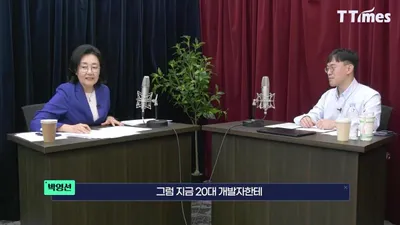
Discussions regarding family conflicts, the imbalance of household labor, and changing holiday traditions were held on the YouTube channel Dongchimi.
Discussions continued regarding the conflicts between family members, the imbalance of household labor, and the changing holiday culture that occur around holidays. In a video released on the YouTube channel Dongchimi, the cast members pointed out the holiday landscape of Korean society through various cases occurring during holiday periods.
Incidents Occurring Before and After Holidays and the Gap in Household Labor
The cast members in the video mentioned specific situations that arise ahead of holidays. One cast member explained that situations where incidents occur due to preparing gifts for parents or performing filial duties ahead of a holiday often lead to an emergency starting a month before the holiday.

They also mentioned incidents occurring during holiday periods and presented the opinion that if holiday culture is not modernized, related problems may persist.
A specific comparison regarding the imbalance of holiday household labor was also made. The cast members noted that there is a significant difference between the labor performed by a son-in-law when visiting his in-laws and the labor performed by a daughter-in-law at her in-laws' house. According to the remarks in the video, it was pointed out that while a son-in-law might engage in activities such as helping to tidy up the flower garden at his in-laws', a daughter-in-law often takes full charge of household labor at her in-laws' house. Regarding this, one cast member cited research stating that the difference in labor and stress between a son-in-law and a daughter-in-law is about 100 times, expressing the view that it is necessary to provide a justifiable reason for daughters-in-law visiting their in-laws.
Conflict Between Visiting Order and Individual Lifestyles
Conflicts stemming from the order of holiday visits were also a major topic. Traditionally, a culture has been maintained where the in-laws' house is visited first on Lunar New Year, and the maternal family is visited briefly in the evening, but discomfort regarding this was raised. One cast member suggested a method of visiting the maternal family a day early to spend time and then moving early the next morning, but added that this is difficult to practice because husbands often dislike having to eat three meals a day.

The conflict between attitudes that value individual privacy and family gatherings was also mentioned. One of the cast members stated that they refuse excessive interference in their private life, such as a husband calling multiple times a day. Additionally, along with the opinion that the expectations themselves regarding mothers-in-law and daughters-in-law evaluating each other are wrong, situations were mentioned where, due to changing times, one might be able to say, "Mother, I am also a guest when I go there," regarding the unilateral imposition of household labor on daughters-in-law.
Punctuality on Holidays and Authority Within the Family
Experiences regarding the atmosphere within the family related to the gathering time on the day of the holiday were also shared. One cast member cited an example of a mother who raised three brothers and demanded they gather early on holiday mornings, explaining the pressure felt when the appointment time could not be kept. In particular, they shared the experience that the psychological burden of a mother's phone call was great if arrival was delayed due to holiday traffic jams.
Along with this, the video covered scenes such as the strong authority of a mother using a specific regional dialect and the resulting landscape where family members had to strive to keep the gathering time. The cast members showed that holidays are more than just days for gathering; they are points where the values of each household and the changing trends of the era collide.


0Comments
Comments are currently disabled.