
Chinese Humanoids Shift Toward Lower Hardware Prices and Equity Investment to Secure 'Data Sovereignty'
The Chinese humanoid robot industry is transitioning from mass-producing hardware to accumulating data to advance robot intelligence. To secure technological dominance and data sovereignty, the Chinese government is shifting its support strategy from direct subsidies to equity investments in promising companies.
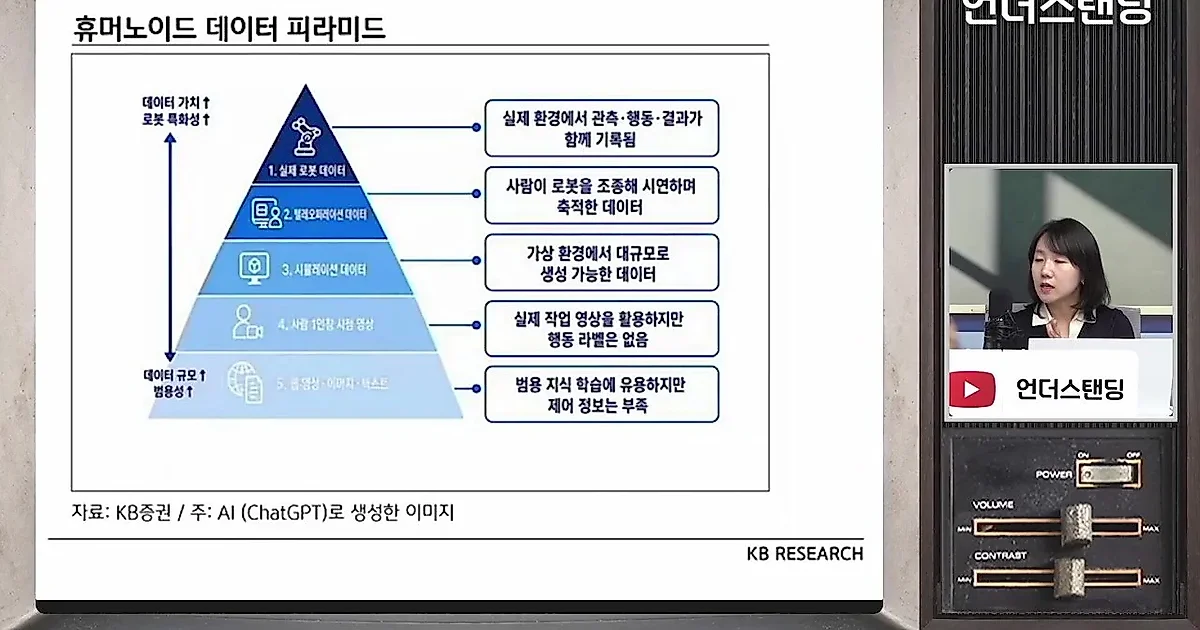
The Chinese humanoid robot industry is moving beyond simple hardware mass production and entering a stage of accumulating data to advance the 'brains of robots.' According to the recently held WRC in China, the number of exhibited robot models has reached approximately 200, an increase of about 100% compared to the previous year, and the number of related companies has reached a scale of 3,000. It was confirmed that 97% of the world's humanoid shipments last year occurred in China, with about 70% of these being utilized for research, development, and data collection.
Securing Hardware Price Competitiveness Based on the Electric Vehicle Supply Chain
The main competitiveness of Chinese robots stems from the low price range of hardware components. In particular, the price of reducers, which are core components of robot joints, has dropped significantly. The planetary reducer from the Chinese company Newstart has fallen to a level of around 500 yuan (approximately 100,000 won) per unit, which is one-fourth to one-eighth the level of Japanese or German companies. This price drop is analyzed to be possible because the supply chain infrastructure accumulated in the existing electric vehicle industry can be repurposed for humanoid component production.
Changes in the market according to the characteristics of components are also being observed. Instead of harmonic reducers, which are highly precise but expensive, planetary reducers—which are cheaper and have good 'backdrivability' to absorb impact during collisions with humans—are being adopted because they are suitable for environments where robots work alongside people. Recently, Tesla's Optimus has also showing a trend of replacing harmonic reducers with planetary reducers. Additionally, robots with a wheelbase form, consisting of wheels for the lower body, are being developed in a direction that increases practicality by reducing expensive joint components.
Data Standardization and Government-Led 'Innovation Center' Operation
China is focusing on securing 'real-world behavioral data' to increase robot intelligence. The Chinese government operates 22 innovation centers nationwide and has established a system to standardize and perform Gathering of data by industry. This is interpreted as a strategy for China to preoccupy technical standards. While the United States still lacks sufficient establishment of humanoid-related technologies, China aims to gain a technological advantage by standardizing data through these innovation centers.
This data acquisition strategy is expected to become the core of the future physical AI competition. China aims for a virtuous cycle where, even if the level of perfection is somewhat low, robots are first deployed to actual sites to accumulate data, the brains are advanced based on this, and then hardware costs are lowered again. In particular, there is a high necessity for humanoid commercialization to maintain manufacturing competitiveness and solve the problem of population decline.
Shift in Fostering Policy from Subsidies to Equity Investment
In the past, when fostering the electric vehicle or solar industries, the method of directly distributing cash subsidies was predominant, but the method has changed now. In a situation where government finances are not as abundant as before due to the real estate slump and other factors, the Chinese government has shifted its policy to a method of making direct equity investments in promising companies. This is a measure to prevent the creation of zombie companies caused by indiscriminate subsidy payments, reduce the fiscal burden, and share the growth profits of companies.
Another purpose of equity investment lies in securing 'data sovereignty.' By holding equity in companies, the government intends to prevent specific companies from monopolizing the data generated by robots and to manage data at the national level. China's human resource base, which produces 7 to 8 million engineering graduates every year, combined with this government data infrastructure strategy, is supporting the expansion of the Chinese robot industry.



0Comments
Comments are currently disabled.