
"If 300 million won in severance pay is too burdensome to invest all at once"... A strategy to turn lump-sum investments into installment investments
A strategy for managing and investing retirement pension (IRP) funds has been presented for those facing retirement with large sums of severance pay. The strategy includes transferring accounts to securities firms and converting lump-sum amounts into installment-style investments using "parking ETFs."
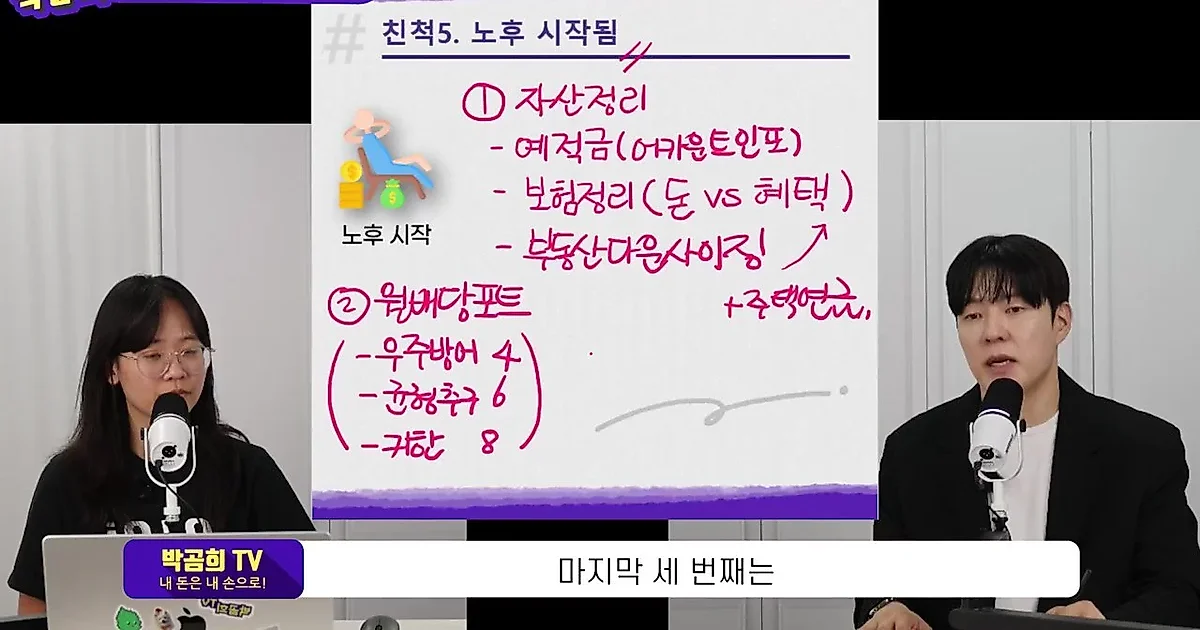
For those contemplating how to manage a large sum of severance pay ahead of retirement, a strategy for managing and operating retirement pensions (IRP) has been presented. According to a video from the YouTube channel 'Park Gom-hee TV', the video covers account transfers upon receiving severance pay, setting the method of receipt, and specific methodologies for investing a lump sum in installments.
Transfer Bank IRP to a Securities Firm and Apply for '10,000 Won Receipt'
The first thing those approaching retirement should consider is the entity managing their Individual Retirement Pension (IRP) account. The video recommended that even if retirement pensions have been managed through a bank, the account should be transferred to a securities firm's IRP after resignation. This is because if a bank IRP is maintained, situations may arise where one feels pressured in interest rate negotiations due to the loan relationship between the corporation and the bank. On the other hand, it is explained that securities firm IRPs are advantageous in terms of cost reduction, as they often have zero inherent fees for savings.
Additionally, if there are no immediate plans to use the severance pay after receiving it, it is important to apply for a '10,000 won receipt.' If you apply to receive only 10,000 won into the account where the severance pay is received, no further deposits can be made into that account. This is to manage severance pay occurring from other future workplaces in a separate new IRP account rather than merging it with the existing account. If one has been re-employed, it is possible to delay the timing of receipt until they can receive it as a pension after the age of 55.
The 'Lump-sum to Installment' Strategy of Splitting and Buying Large Sums
Investing a large lump sum like severance pay all at once is not easy due to volatility risk. As a way to solve this, a 'lump-sum to installment' strategy was presented. This method involves first depositing the entire severance pay into short-term financial products and then moving only a certain amount each month into an asset allocation portfolio.
The specific execution method is as follows. First, deposit the entire severance pay into 'parking ETFs' such as short-term bond ETFs, Money Market (MMF) ETFs, or ETFs related to SOFR (Secured Overnight Financing Rate). This allows one to secure a certain level of return on the entire lump sum while keeping the assets safe. Afterward, repeat the process of selling an amount determined based on one's annual salary level (e.g., 4 to 5 million won per month) from the parking ETF to purchase a pre-set asset allocation portfolio (stock, bond, gold ETFs, etc.).
This strategy is effective for those with little investment experience. Using the example of having 300 million won in severance pay, the video explained that if the entire amount is placed in a parking ETF, one can enjoy the monthly interest income while offsetting market volatility by purchasing fixed amounts in installments every month. This is a method of managing risk by combining the advantages of long-term investment and installment investment.
Points to Consider for Bond Investment and Asset Allocation Direction
The use of bond investment when managing severance pay was also mentioned. As it has become possible to purchase individual bonds in IRP accounts recently, high-quality corporate bonds or government bonds can be utilized. However, in the case of government bonds, it is important to select a maturity that matches the time horizon one can handle, considering the long period of receiving the pension. Given the current market interest rate situation, it is analyzed that medium-term bonds could be an alternative to long-term bonds in terms of yield.
In conclusion, the core of managing severance pay lies in transferring to a securities firm account to reduce costs, adjusting the timing of receipt, and performing stable asset allocation by converting the lump sum into installments using parking ETFs instead of injecting it all at once.



0Comments
Comments are currently disabled.