
"25 Conception, 26 Planning, 27 Product"... Director Kim Kwang-seok Forecasts the Flow of the AI Era
Economic forecaster Kim Kwang-seok defines the economic flow of 2027 as the "reverse flow of money brought by AI" and outlines the major variables and phased progression of economic indicators.
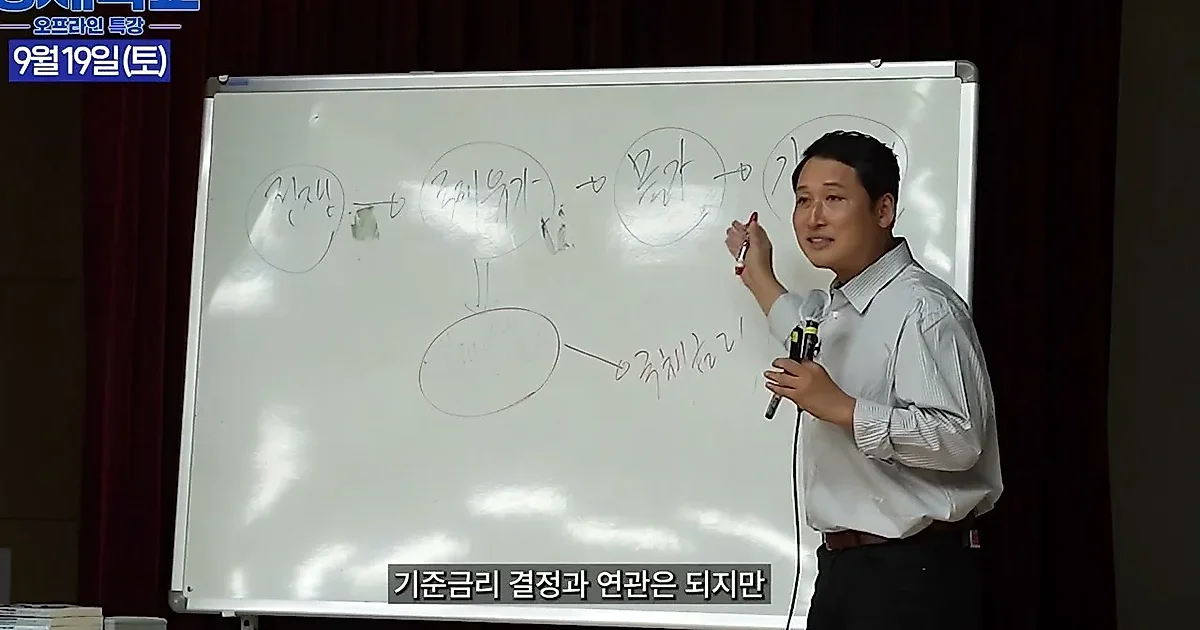
Kim Kwang-seok, author of economic forecasts, defined the economic flow of 2027 as the "reverse flow of money brought by AI," presenting major variables that will change economic indicators and the phased flow of the future.
The Era of 'Products' in 2027... Phased Development of the AI Industry and the Shift in Bottlenecks
Director Kim Kwang-seok explained the development stages of the AI industry by year. According to the explanation in the video, 2025 will be the stage of conception, 2026 will be the stage of planning, and 2027 will be the era of 'Physical AI' where products emerge. In particular, regarding the semiconductor industry, he analyzed that DRAM export volume has increased numerically due to surging prices, and if price increases stop in the future, it could affect the Korean economy. He also presented the view that economic bottlenecks will shift as power shortages arise, hindering the construction of data centers.
Price Refraction Caused by the Middle East War and Changes in Monetary Policy
Kim explained that the Middle East war is a key variable that has refracted the flow of the global economy. His analysis is that the Middle East war caused international oil prices to rise, stimulating inflation, which led to decisions by central banks in various countries to raise benchmark interest rates. The video explained that the Middle East war stimulates expected inflation through rising oil prices, and consequently induces a rise in government bond yields. Accordingly, he stated that major countries experienced a change in monetary policy stance, attempting to provide confidence in the dollar and government bonds by showing their will to fight inflation and trying to suppress interest rate rises by strengthening government bond purchase trends.
Expansion of Fiscal Policy Influence and Outlook for Changes in the Housing Market
Regarding the change in leadership of economic policy, he mentioned that the power of fiscal policy is at least twice as large as that of monetary policy. Kim emphasized that liquidity should not be viewed simply as interest rate cuts, but that one must look at the flow where fiscal policy and monetary policy interlock. Meanwhile, regarding the housing market, he predicted that it would be difficult to see an improvement in move-in volumes within the next five years and that an era centered on monthly rent and jeonse will continue. In particular, regarding the housing infrastructure of advanced-country-style monopolar regions like Seoul, he conveyed the view that one must accept the changed era flow where monthly rent prices rise, unlike in the past.

0Comments
Comments are currently disabled.