
Kwak Soo-jong urges youth to adopt business mindset during overseas travel
During a recent visit to Osaka, Japan, Dr. Kwak Soo-jong observed the profound impact of Japan's "Lost 30 Years" and urged South Korean youth to adopt a business-oriented perspective when traveling abroad. He emphasized that the government and corporations must provide practical financial and diplomatic support rather than merely encouraging overseas expansion through words.
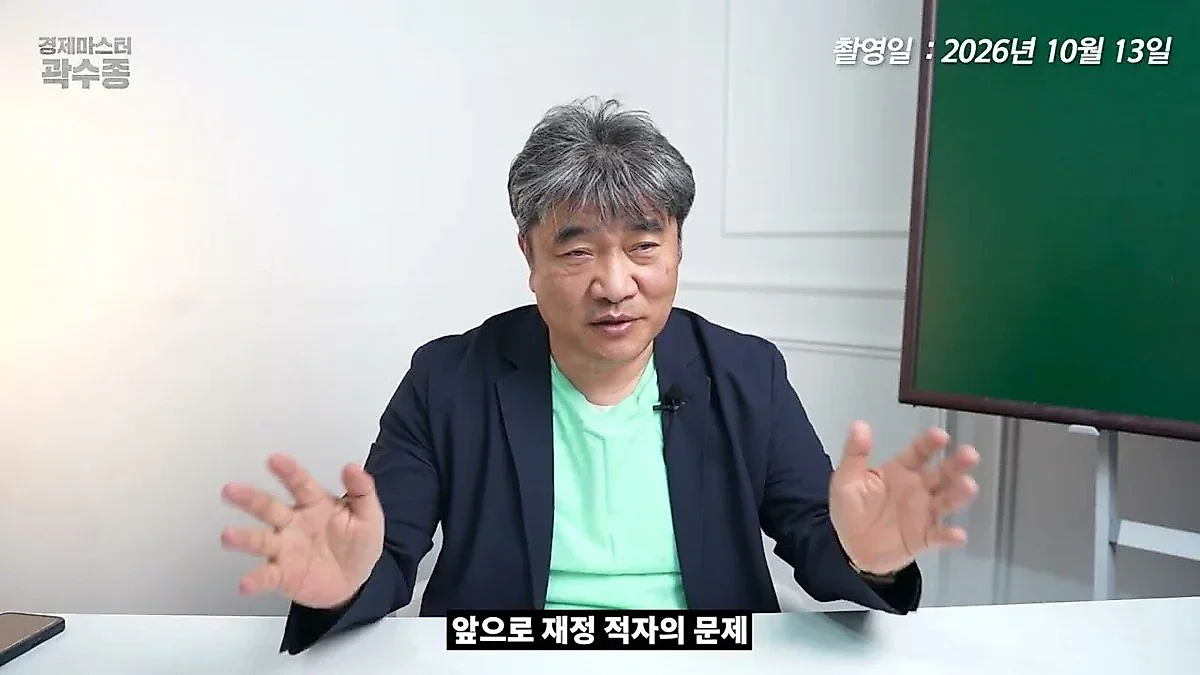
During recent visits to Osaka, Dr. Kwak Soo-jong highlighted Japan's economic stagnation and called for South Korean authorities to provide practical financial and diplomatic support to help young people conduct business abroad. He noted that Japan's currency system has remained unchanged since 1945, reflecting a society shaped by 30 years of stagnation.
During a recent visit to Osaka, Japan, Dr. Kwak Soo-jong observed the profound impact of Japan's "Lost 30 Years" and urged South Korean youth to adopt a business-oriented perspective when traveling abroad. He emphasized that the government and corporations must provide practical financial and diplomatic support rather than merely encouraging overseas expansion through words.
A stagnant society and currency unchanged for 80 years
Dr. Kwak Soo-jong described the overall atmosphere of Japanese society as "dark" based on his two recent visits to the country. He noted a pervasive stillness, from the transit from the airport to hotels to the behavior of people on public transportation, where individuals refrain from talking on mobile phones. He observed that the atmosphere was so quiet that perhaps only 0.2 people out of a group would be seen looking at a smartphone while crossing a crosswalk.
This quietude, he analyzed, is linked to Japan's economic stagnation. Dr. Kwak noted that even during Japanese Cabinet meetings in Osaka regarding fiscal deficits and interest rate issues, the atmosphere in the Diet was quiet rather than energetic. He explained that instead of the expected excitement caused by inflation, the quiet proceedings suggested that the effects of 30 years of economic stagnation continue to influence the spirit of the Japanese younger generation.
The state of the currency was particularly striking. Dr. Kwak noted that banknotes used for department store purchases or transportation cards were as clean and crisp as new bills. He explained that this reflects the identity of the Japanese economy, where the currency system—including 100 yen, 50 yen, 500 yen, 1,000 yen, 5,000 yen, and 10,000 yen notes—has remained unchanged since the end of World War II in 1945, without currency reform for 80 years.
"Avoid empty talk of overseas expansion" as roles for government and corporations are emphasized
Before encouraging youth to expand overseas, Dr. Kwak pointed out that a practical support system must be established at the national level. He criticized the fact that current venture and startup capital support remains focused on the domestic market, arguing that specific financial support, such as guarantees from the Korea Development Bank or the Export-Import Bank of Korea, is necessary so that young people can conduct business activities abroad. He suggested that instead of merely telling young people to go abroad, the focus should be on how to provide the necessary conditions and capital.
Furthermore, he called for the expansion of diplomatic infrastructure to protect citizens when venturing abroad. He argued that national strength is not measured by building grand embassy buildings, but by the ability to secure personnel who can perform practical tasks in medical, police, and financial sectors to deeply protect citizens. Citing recent kidnapping incidents in places like the Philippines, he emphasized that true national power lies in expanding and strengthening overall systems, including health, hygiene, and finance, noting that the functional expansion of consular services leads to national competitiveness.
Dr. Kwak diagnosed Koreans as having a genetic "nomad" tendency. While he noted that the frequent overseas travel of young people is an expression of this genetic trait, he emphasized the need for a "constructive perspective" to connect these trips to business opportunities rather than limiting them to simple consumption or shopping. He added that Japan could be a very attractive market due to similar income levels, word order, and cultural similarities.
The art of travel from a business perspective
Dr. Kwak proposed a specific way to travel: even if two-thirds of travel time is dedicated to sightseeing and gastronomy, the remaining one-third should be spent observing the local area from the perspective of "What if I were to do business here?" He suggested approaches such as imagining whether one could make Korean tteokbokki popular in areas like Namba in Osaka.
Specifically, he stated that it is important to study local corporate laws, incorporation laws, bankruptcy laws, and tax laws, and to understand how the information networks of local Korean communities are organically connected to South Korean embassies and consulates. He noted that in the age of AI, where simultaneous interpretation via smartphone is possible, the decisive factor is now preempting hidden local information and networks. He also encouraged producing constructive content on YouTube, such as sharing business success and failure cases.
Finally, Dr. Kwak mentioned the potential and opportunities held by South Korea, stating that the government, corporations, and individuals must move as one to break down the concept of borders. He suggested seizing opportunities to preempt global markets such as LA or San Francisco through online markets, and urged creating an environment where youth can demonstrate an enterprising spirit without fear of failure. Noting that Japan is a net creditor holding massive overseas assets rather than a debtor nation, he emphasized that South Korea should also actively capture these global opportunities through immigration and foreign policies.
Source: original video (YouTube)

0Comments
Comments are currently disabled.