
"Senate to be held by Republicans, House to be retaken by Democrats"... Will Trump strengthen external pressure?
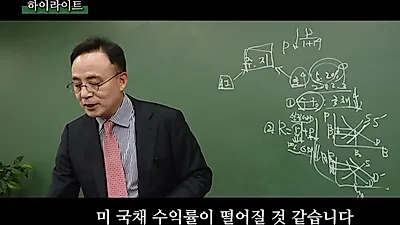
Professor Min Jeong-hun of the Korea National Diplomatic Academy analyzes the likely outcomes of the upcoming U.S. midterm elections and how they will impact the Trump administration's foreign and trade policies. The analysis suggests that while Republicans may retain the Senate, Democrats are likely to retake the House, potentially leading to a scenario where the administration relies heavily on executive orders to push its agenda.

As the U.S. midterm elections approach, attention is focused on the future direction of the U.S. administration's trade policies and foreign relations. The core issue is whether the Trump administration's foreign policy stance will change depending on the changes in the composition of Congress, or whether it will be strengthened through the administration's independent authority.
According to the analysis by Professor Min Jeong-hun of the Korea National Diplomatic Academy, reported by The Man Who Explains the Economy (Kim Kwang-seok TV), the most likely scenario in the U.S. midterm elections to be held on November 3 is that the Republican Party will defend the Senate and the Democratic Party of Korea will retake the House. This is because the Republican Party is currently in a state of 'single government' controlling the White House, the Senate, and the House, but in midterm elections entering the second year of an administration, the ruling party tends to lose.
Scenario of Republican Senate defense and Democratic House takeover is likely
Professor Min diagnosed that the scenario where the Republican Party completely loses the Senate in this election is unrealistic. Currently, the Republican Party leads the Senate 53 to 47, and for the Democratic Party of Korea to secure a majority (51 seats), it would have to take a significant number of seats in competitive states. Professor Min mentioned the situations in Republican-leaning areas such as Ohio, Maine, Alaska, Iowa, and Texas, and Democratic-leaning areas such as Michigan and Georgia, explaining that the Democratic Party of Korea faces the difficult task of increasing its seats from 47 to 51 or more to take the Senate.
In particular, he analyzed that the issue of scalability is raised because the candidate nominated by the Democratic Party of Korea in competitive areas like Michigan has Democratic Socialists (DSA) tendencies, and the 'Shy Trump' variable—conservative Republican supporters who are not captured in opinion polls—could support the Republican Party's defense of the Senate. If the Democratic Party of Korea achieves a landslide victory by securing 60 or more Senate seats to prevent a filibuster, President Trump's lame duck period could accelerate, but the consensus is that the possibility of a landslide victory is realistically low.
On the other hand, the possibility of a victory for the Democratic Party of Korea in the House is predicted to be high, at over 75%. The current House seats consist of 118 Republican, 224 Democratic, 1 Independent, and 2 vacancies, and the simple majority required for passing laws is 218 seats. Professor Min predicted that the Democratic Party of Korea is highly likely to win by securing about 225 to 230 seats, a difference of around 10 seats from the majority.
'Strong Administration' foreign policy that could be reenacted in 2018
Professor Min warned of future scenarios by citing the case of 2018. At that time, the Republican Party defended the Senate and lost the House. Former President Trump pushed his policies under the pretext of having defended the Senate, and in that process, the U.S.-China tariff war began in earnest. If the Republican Party defends the Senate this time as well, the Trump administration is highly likely to actively utilize executive orders, which are the exclusive authority of the administration, to avoid legislative checks from Congress.
If a situation arises where the Democratic Party of Korea controls both the Senate and the House, the possibility that President Trump will continue his political moves by claiming election fraud regarding the election results was also mentioned. However, as long as he does not achieve a landslide victory, President Trump is expected to push his policies using the authority of the administration. A point to note in particular is the administration's will to leave a 'Trump legacy.' While domestic policy is difficult to legislate due to political conflict, foreign, security, and trade policies are areas where the administration's authority is strong.
Professor Min projected, "In order to leave a legacy as a great president, the president will aggressively push what he wants to do in foreign policy where the administration's authority is strong," and "Even after the midterm elections, there is not a high possibility that the Trump administration's foreign policy stance and the direction of South Korea-U.S. relations will change." Especially in the case of South Korea, since the revival of U.S. manufacturing through investment in the U.S. is the top policy agenda of the Trump administration, the analysis suggests that trade pressures such as investment pressure or the imposition of tariffs could continue.
The vote that inflation will decide, Trump caught by his own 'bat'
The biggest variable for this midterm election is the economic situation, especially inflation. Professor Min evaluated, "In the history of U.S. governments, there has never been a case where a subsequent government that tolerated inflation received support from the people." This is because rising prices reduce the real income of ordinary people and increase the interest burden due to interest rate hikes, which acts unfavorably toward the ruling party.
It is pointed out that the Trump administration is also not free from the problem of rising oil prices and inflation caused by geopolitical risks such as wars in the Middle East. Just as the Biden administration lost votes due to the surge in oil prices and inflation caused by economic sanctions following the Russia-Ukraine war, the analysis suggests that the Trump administration could also end up hurting itself with the 'bat' of economic dissatisfaction. Professor Min explained that actions such as President Trump starting a war in the Middle East could ultimately cause a surge in international oil prices and inflation, stimulating negative sentiment among the public.
Source: original video (YouTube)

0Comments
Comments are currently disabled.