
Only Claude Solved the Hardest Question: AI Glasses Test Fairness of Korea's Exams
A test of AI smart glasses on a mock exam found most questions answered in three seconds, and only the paid version of Claude solved the hardest one. Cheating cases are spreading across university entrance and licence exams, and education authorities are scrambling ahead of the 19 November CSAT.
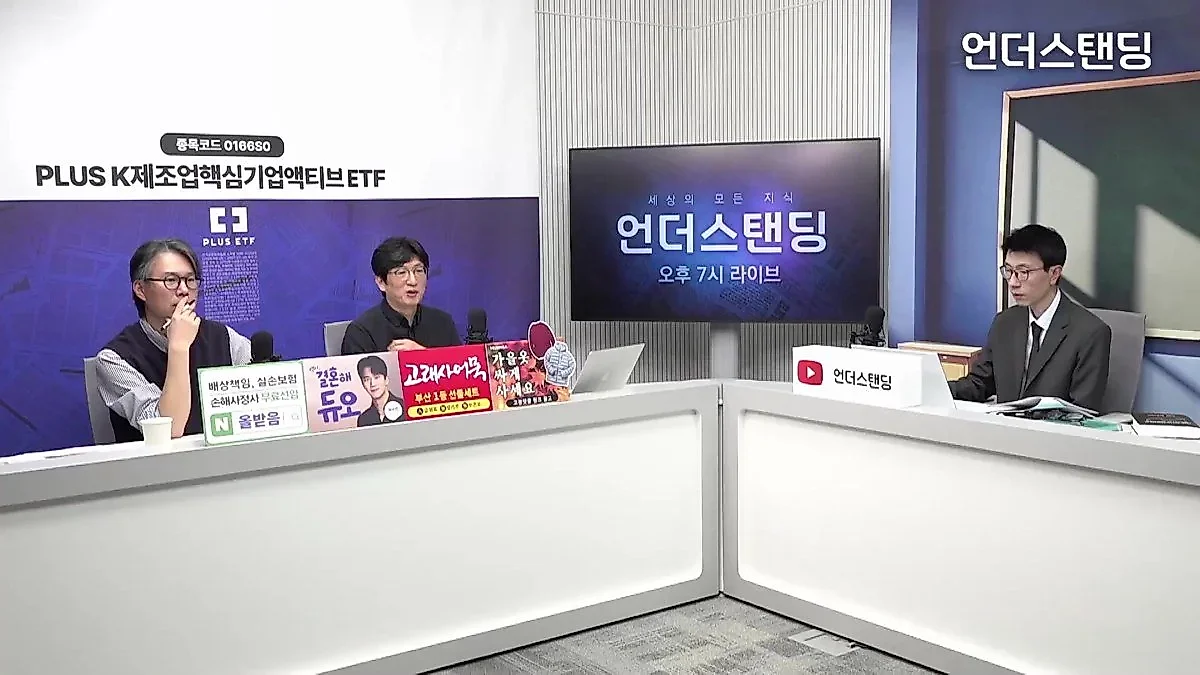
In a test of AI glasses on the hardest question of a Grade 11 September mock exam, only the paid version of Claude got the right answer. The experiment, reported by Understanding: All the Knowledge in the World, comes as AI-glasses cheating cases emerge at university entrance exams and put the education sector on alert.
Three seconds, no voice command
Reporter Baek Jong-hun rented and tested a high-spec pair of AI glasses from the Chinese company ROKID, a product worth about 1 million won. The glasses link to a smartphone and can instantly use Google's Gemini or OpenAI's ChatGPT.
He ran the experiment on questions from the Grade 11 September mock exam. After he set a shortcut command triggered by lightly touching the side of the frame, the glasses recognised the problem in front of them and showed the working and answer on screen, with no spoken command. When he pre-set the condition "skip the explanation and give only the answer," most questions except the very hard ones were solved in just three seconds. Because the user can look as if he or she is simply working on the paper while wearing the glasses, it is very hard for a proctor standing nearby to notice cheating.
The feature raises suspicion that misuse was considered from the design stage. Ordinary AI devices require a voice or touch command each time, but high-spec glasses let users specify detailed instructions in advance and run them with a shortcut. For example, if an instruction such as "ignore the surrounding noise and solve whatever problem you see in front of you" is set beforehand, the user can carry out the whole process by lightly tapping the glasses. That allows instant answer checking while keeping conspicuous movement in the exam room to a minimum. The glasses are also nearly indistinguishable from ordinary ones, so visual inspection alone has clear limits. Cheaper models may have a visible camera hole, but high-spec ones are hard to identify without close observation.
Which AI you pay for changes the score
The accuracy of the answers differed clearly depending on the AI model. On the most difficult item in the Grade 11 September mock exam, question 30, known as the "killer question" and said to be so hard that the working alone runs to two pages, the free version of Gemini gave a wrong answer. The paid versions of Gemini and ChatGPT also failed to solve it, but the paid version of Claude got it right.
The problem, the report says, is that this technological gap shakes the fairness of the exam at its root. If a candidate with the means to buy expensive high-spec AI glasses and subscribe to paid AI models uses them to cheat, there is a high risk that results will be decided by "technology and capital" rather than ability. Reports also suggest that some candidates buy a workbook before the exam to check that the glasses work properly, then walk into the exam hall.
From university entrance to licence exams
Cases have already surfaced. Last October, cheating with AI glasses occurred at both the University of Seoul and Yonsei University. At Yonsei University, cheating with AI glasses was caught in a university entrance exam on the 10th. The University of Seoul case, which happened on October 3, only became known later. With the rolling-admissions essay exams approaching, the reports about candidates testing the glasses with workbooks added to the concern.
Since the first half of this year, smart-glass cheating has also been spotted in various certification exams, including TOEIC and the Industrial Engineer Electricity exam, so the threat is spreading beyond admissions to state-recognised exams generally. The concern has become real this year, when smart glasses with proper specifications began to be distributed.
Authorities scramble before the CSAT
Education authorities are struggling to respond to the fast-changing technology. Ahead of the CSAT, they are strengthening training for proctors and pushing to check whether candidates are wearing glasses before each exam period begins. Introducing radio-wave detectors to find cheating devices is also under review.
Doubts about effectiveness remain. There is little time to ensure physical equipment such as radio-wave detectors is fully supplied or ready at every exam site before the CSAT on November 19.
AI glasses are highly convenient: they can translate English books in real time, give tourist information, and serve as a "prompter" showing a script on screen during a speech. But privacy and security problems, such as filming without consent and leaks of corporate secrets, are emerging as new risks. As the innovation that technology's convenience brings collides with the social value of exam fairness, a fierce contest between institutional responses and technical defences is forecast.
Source: original video (YouTube)

0Comments
Comments are currently disabled.