
"The 40,000 Won Butterfly Effect"... Support for Youth's 'First Lifetime Pension' to Begin in 2027
A video featuring financial YouTuber Park Gom-hui and the National Pension Service explains strategic ways for the 2030 generation to utilize the National Pension and introduces a new support system for youth starting in 2027.
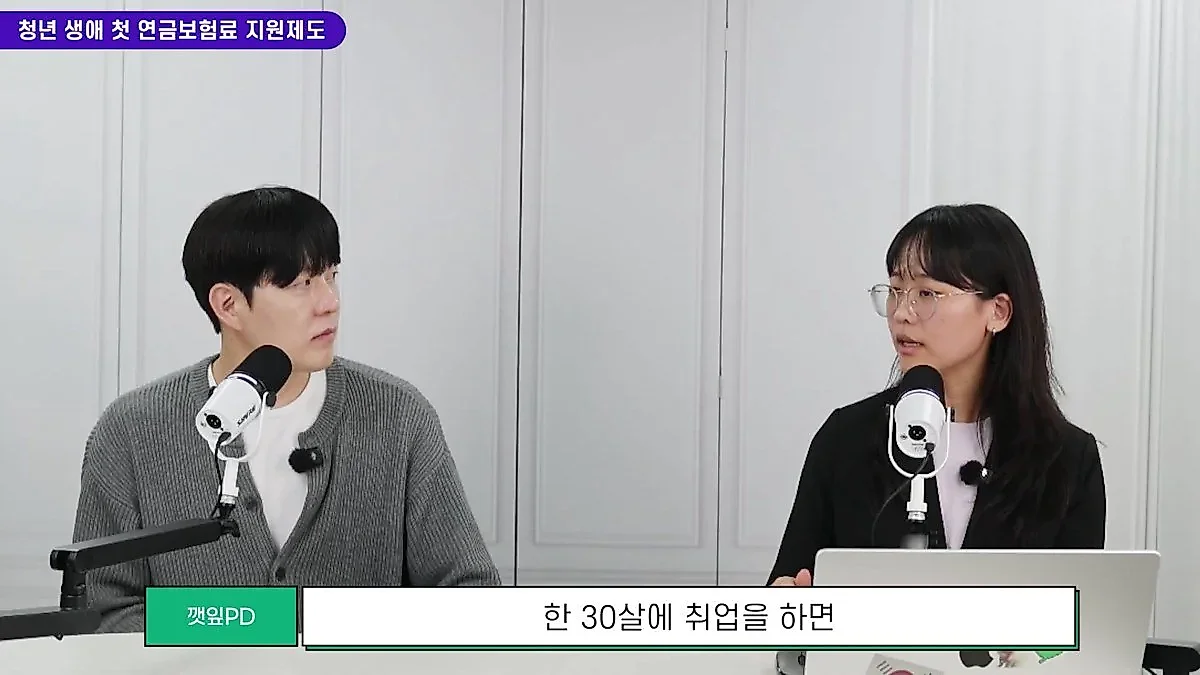
The key to retirement preparation lies not simply in how much money you pay, but in securing the 'enrollment period'—how long you receive the pension. In a recent video featuring financial investment YouTuber Park Gom-hui and the National Pension Service, strategic ways to utilize the National Pension that the 2030 generation might easily miss were introduced, along with a new support system to be implemented from 2027.
"Earn for 30 years, endure for 40 years"... How to prepare for longevity risk
In modern society, increased life expectancy brings 'longevity risk,' which is both a blessing and an economic threat. According to the video, assuming one starts social life at age 30 and retires at age 60, the working period is 30 years, but if they live to 100, the period of spending living expenses without income reaches 40 years. It is a structure where the money earned during 30 years must take responsibility for the subsequent 40 years of retirement.
The most powerful tool to bridge this imbalance is the National Pension. This is because the state pays a fixed amount of cash for life until death. Park Gom-hui emphasized, "The National Pension is not something you just leave alone, but a system you must understand and use strategically," noting that the longer the enrollment period, the more dramatically the received amount increases. In fact, data confirmed a very large difference in the average monthly pension received between those who paid for 10 to less than 20 years, those who paid for 20 to less than 30 years, and those who paid for 30 years or more.
'Retroactive Payment' to fill career gaps; the starting point is key
Periods where one cannot pay insurance premiums due to job preparation, job changes, or business preparation may occur. This is called a 'payment exception period,' and since this period is excluded from the National Pension enrollment period, it becomes a cause for lowering future pension benefits. The system that can be utilized in this case is 'Retroactive Payment (Chunap).'
Retroactive payment is a system where one can have the period recognized as an enrollment period by paying the insurance premiums for the period in the past when they had no income and could not pay. While general financial products rarely retroactively fill past gaps, the National Pension has a unique mechanism to fill such past gaps. The video metaphorically described this as "sending a message to your past self to fill your future."
However, to effectively utilize the retroactive payment system, a starting point called an 'enrollment history' must exist. This is because if one has not started social life or has no National Pension enrollment history, the eligibility for retroactive payment itself does not arise. Park Gom-hui explained, "What is more important than whether you are employed is creating a starting point early through National Pension enrollment," explaining that even during college years, creating an enrollment history by paying a minimum amount through voluntary enrollment, etc., will return as a great benefit later. If one has enrolled during college, the option to fill past gaps at the time of employment will be much greater.
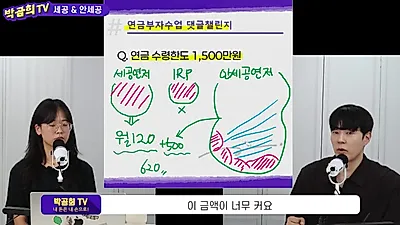
The period that can be filled through retroactive payment is a maximum of 10 years (120 months). However, since retroactive payment is carried out after having already created an enrollment history by paying the first premium, the structure is that one can actually fill up to 119 months, excluding the starting month.
The meaning of the 'Youth's First Lifetime Pension Premium Support' to be introduced in 2027
There have been criticisms that, until now, only children of households with information or economic abundance have enjoyed institutional benefits, such as securing retroactive payment rights by enrolling early through parental support or voluntary enrollment. To supplement this, the government plans to introduce the 'Youth's First Lifetime Pension Premium Support System' starting in 2027.
This system targets youth born in 2009 who will turn 18 years old in 2027. The core of the plan is for the state to support the first-ever pension premium (equivalent to approximately 40,000 won) to help all youth have an equal 'starting point' of National Pension enrollment.
Beyond simply providing 40,000 won, the enrollment history formed through this support serves as a stepping stone for the youth to secure an additional enrollment period of up to 10 years (119 months) through 'retroactive payment' after getting a job. In this sense, the initial support of 40,000 won causes a massive 'butterfly effect' that determines the lifelong pension amount received in old age. The core intention of this system is to ensure all youth can meet at an equal starting line.
Source: original video (YouTube)
0Comments
Comments are currently disabled.