
Father-in-law reveals he opposed daughter's marriage to Italian man
A family formed through international marriage shared their experiences of cultural differences and conflicts on the channel Dongchimi. One participant revealed that her father-in-law had initially opposed her marriage to an Italian man due to stereotypes regarding Italian men.
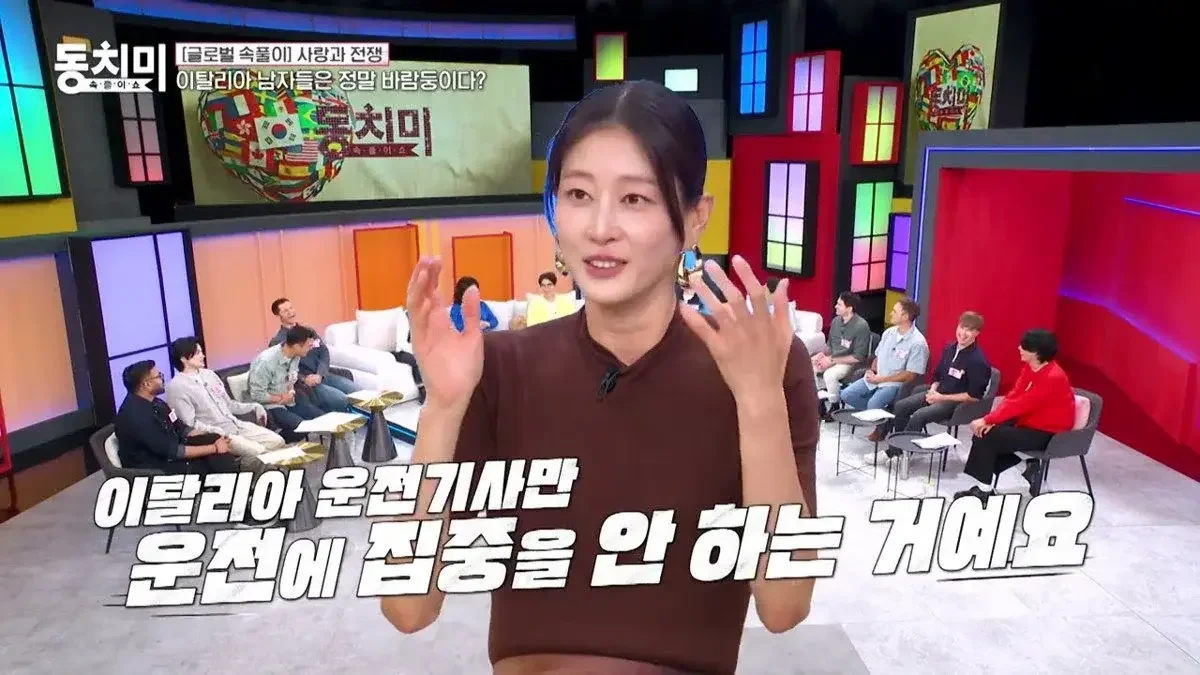
A woman discovered 12 years after her wedding that her father-in-law had opposed her marriage to an Italian man due to prejudices regarding the temperament of Italian men. During a Dongchimi broadcast on the 31st, families in international marriages shared how cultural differences and physical distance can influence their relationships.
A story has been revealed where a woman finally learned her father-in-law's true feelings 12 years after her marriage. In the broadcast of the channel Dongchimi on the 31st, families formed through international marriage gathered to share their respective cultural differences, family conflicts, and the processes of overcoming them.
"Are Italian men unfaithful?" The reason for the father-in-law's opposition revealed after 12 years
The main topic of the broadcast was an unexpected confession heard from a father-in-law 12 years after marriage. One participant revealed that she learned 12 years later that her father-in-law had considered the union with a foreign son-in-law and had opposed the marriage. The background of the father-in-law's initial difficulty in accepting the son-in-law was rooted in prejudices against Italian men.
The father-in-law shared that when he told his friends that his daughter's marriage partner was Italian, his concerns deepened as he heard stories from those around him regarding the temperament of Italian men. In particular, it was analyzed that concerns arose because the cultural characteristics of Italian men—viewing women like works of art with excellent aesthetic sense and expressing affection actively, such as kissing cheeks when greeting—could clash with conservative South Korean sentiments.
In fact, the participant mentioned experiencing these cultural differences during meetings with the Italian family. The Italian family has a culture of kissing on the cheek so closely that lips touch when greeting, which was an unfamiliar experience for the family accustomed to South Korean greeting methods. Additionally, the free-spirited nature of Italian men and behaviors such as speaking to women passing by while driving were depicted as being far from South Korean sentiments.
Between the French son-in-law's informal speech and the British son-in-law's gentlemanly demeanor
The appearance of families in international marriages showed different aspects depending on the nationality of the sons-in-law. While the Italian son-in-law was seen narrowing the distance with his father-in-law through their common interest in soccer while adapting to Korean culture after marriage, the case of the second son-in-law from France provided another cultural shock.
Although the French son-in-law is aware of the distinction between formal and informal Korean speech, he caused laughter among the family by showing a communication style somewhat distant from Korea's Confucian hierarchical culture, using speech mixed with informal language toward his father-in-law, such as "Father, eat this" or "Father, drive well." On the other hand, the son-in-law from the United Kingdom maintained a relatively gentlemanly attitude, contrasting with the sons-in-law of other nationalities.
These cultural differences also appeared in daily lifestyles, such as preparing holiday food or dividing household chores. It was explained that when the son-in-law from the United Kingdom clashed with the conservative values of the Korean mother, he learned to handle conflicts wisely by taking his wife's side. This is interpreted as a flexible response method unique to international marriage families, which differs from traditional South Korean patterns of conflict between a mother-in-law and daughter-in-law.
Peace provided by distance: "The shorter the conversation, the more beautiful"
"Physical distance" was suggested as one of the solutions to conflicts experienced by international marriage families. The French son-in-law said that when conflicts with his mother-in-law occur, the fact that their residences are far apart, about 8,000km, actually acts as a buffer that prevents the intensification of conflict. The fact that frequent friction can be avoided by securing physical distance was mentioned as a paradoxical advantage of international marriage.
Furthermore, an interesting perspective emerged that linguistic barriers can also serve as a "tool for peace" that reduces conflict. Because the languages of each other do not communicate perfectly, conversations are kept simple and clear, which reduces clashes caused by sensitive topics. The explanation that short and clear conversations following "Hi, How are you? I'm fine, thank you" actually contribute to maintaining a peaceful relationship without conflict demonstrated the unique communication methods of international marriage families.
Source: original video (YouTube)



0Comments
Comments are currently disabled.