
Non-tariff barriers identified as key to K-food exports through price analysis in Japan, India, and Australia
A new video released by aT shows employees analyzing local snack prices and non-tariff barriers in markets including Japan, India, Australia, China, and the United States to assist K-food exporters.
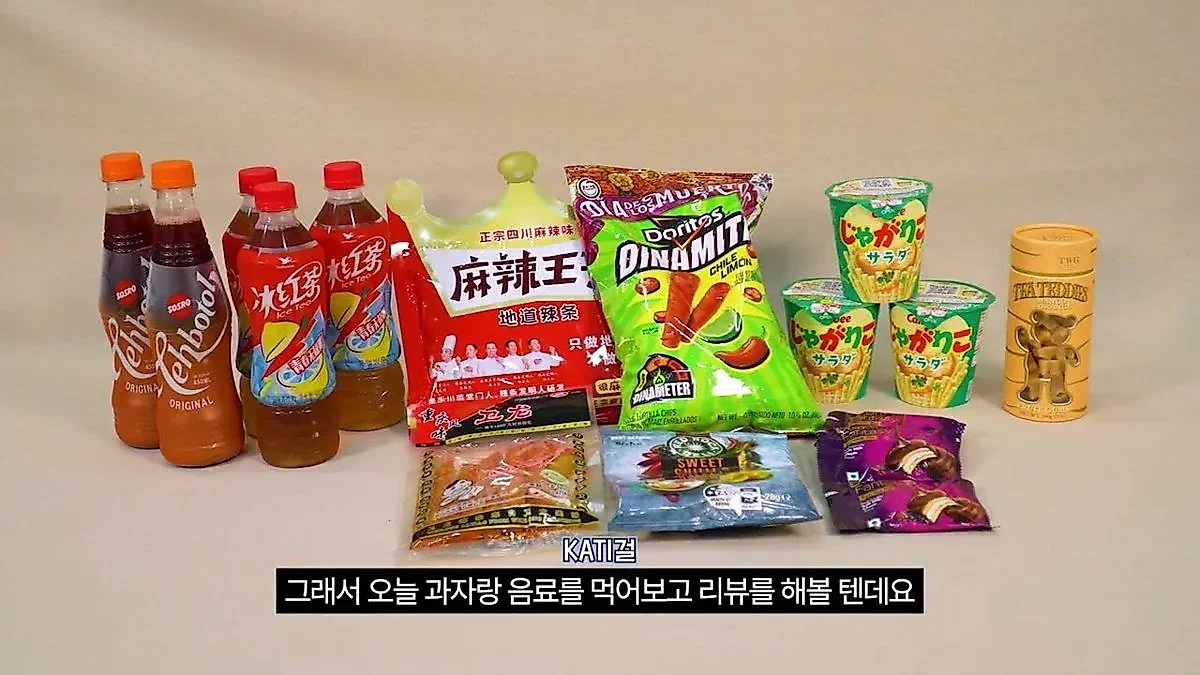
For companies preparing to export K-food, the most critical factors are the prices perceived by local consumers and the stringent regulations set by each country. A video has been released showing five employees of aT purchasing representative products from overseas supermarkets to analyze local market price ranges and non-tariff barriers. The video features a "price prediction game" where the five employees attempt to guess the local prices of representative snacks from various countries, alongside a detailed big data collection process that goes beyond simple tasting to analyze export regulations by nation.
Price predictions and hidden regulations in Japan, India, and Australia
The five aT employees identified the characteristics of local markets using representative snacks from Japan, India, Australia, China, and the United States. First, they analyzed the price range of the Japanese market using the national snack 'Calbee Jagarico.' While using Korean snack prices as a baseline, the employees predicted a low price of around 2,000 yen, taking the weak yen into account. However, the actual local price was found to be around 500 yen, showing a discrepancy with the prediction. During this process, they checked the 'Positive List' standards, which are packaging-related regulations that must be observed when entering the Japanese market.
In the case of the Indian market, the "Veg mark" for food was cited as a key variable. An employee, drawing on experience from a business trip to India, introduced the local number one biscuit, 'Sunfeast,' and emphasized the importance of the vegetarian label that must be attached to Indian food. The video explains the labeling standards for Indian food, noting that products with a red triangle mark are those that vegetarians cannot consume. This is an essential labeling standard that must be verified when entering the Indian market.
In the Australian market, they examined the nutritional labeling system through 'Red Rock Deli,' the number one potato chip product. Australia operates a 'Health Star Rating' system that represents a product's healthiness with stars. The video captures the process of analyzing the price ratio of a 28g miniature product compared to the standard 155g size, suggesting that for companies exporting to Australia, managing nutritional content and labeling according to this system is a crucial factor.
Localization and the importance of Halal certification seen through Chinese 'Latiao'
The localization strategy and certification systems were addressed through 'Latiao,' a representative snack in the Chinese market. While tasting a product from the brand with the number one market share in China, they analyzed the local palate, noting its chewy texture and strong salinity. In particular, they mentioned that the product is a premium item that has received 'Halal certification,' confirming the value that religious and cultural certifications hold for global market expansion.
The process continued with predicting prices by considering the additional costs incurred when importing Chinese products into South Korea. Based on a predicted local price of approximately 400 yuan, the video suggested that prices could rise when imported to South Korea due to logistics costs and tariffs. The product's characteristics, such as a chewy dough-like texture and being very oily yet strongly salty, were mentioned as key elements of the localization strategy used to target local Chinese consumers.
The key to successful K-food exports: non-tariff barriers and utilizing kati.net
In the case of the United States market, they compared price differences between countries by converting local snack prices into dollars. In the video, they predicted US snack prices to be around 5 dollars, confirming that snack prices in the United States are relatively low compared to other countries. Additionally, it was noted that the US market contains a diverse spectrum of flavors, including products where spiciness hits late or products that have a sourness as if vinegar were sprinkled on them.
The comparison of products from various countries revealed that overcoming "non-tariff barriers"—such as hygiene, packaging, nutritional content, and religious certification required by each country—is the core factor determining the success or failure of exports, moving beyond simple differences in taste. An aT official stated that this activity was a meaningful time to share how consumers compare products and prices and to understand the food characteristics of various countries.
aT guided that companies can check these country-specific export regulations and detailed market information through 'kati.net.' The analysis concluded by emphasizing that securing local market price data and regulatory information in advance is a winning strategy for K-food exports.
Source: original video (YouTube)



0Comments
Comments are currently disabled.