
Unique Good Company turns profit in six months using Agentic Organization
Unique Good Company transformed from a company facing a 2 billion won deficit with 58 employees to a profitable entity where just 6 people handle the workload previously managed by 60, through the implementation of an 'Agentic Organization' model.
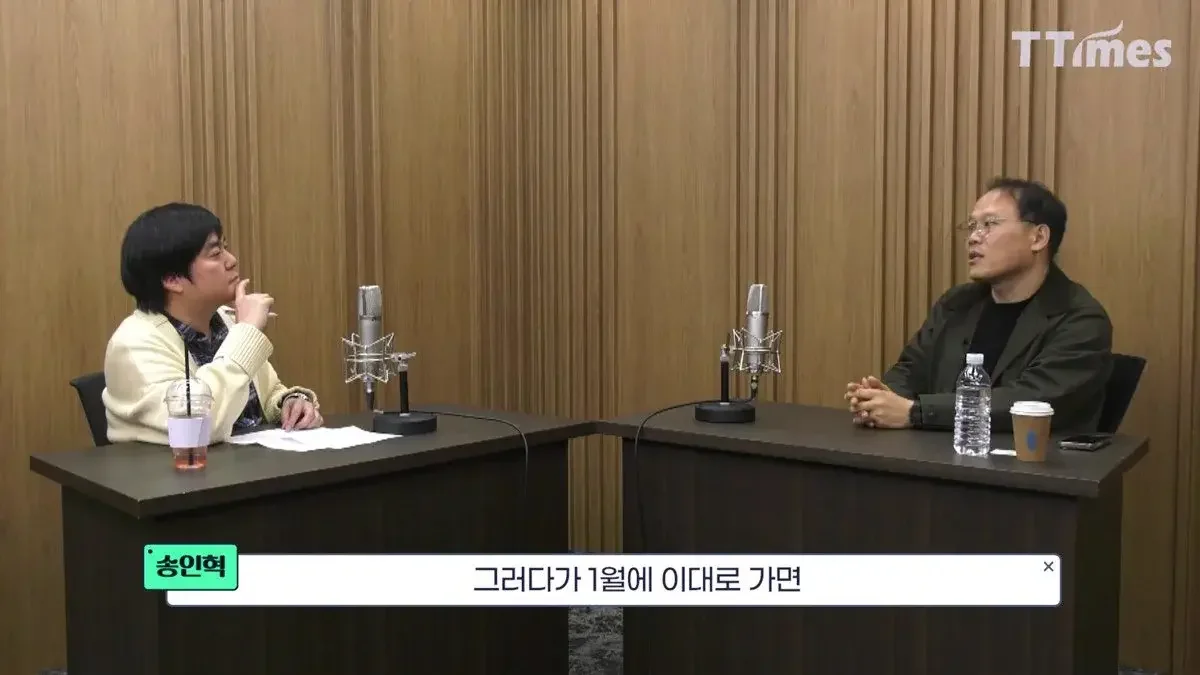
After facing a 2 billion won deficit and seeing 80% of its 58 employees resign, Unique Good Company achieved a turnaround to profit in just six months. By implementing an "Agentic Organization" model, the remaining six staff members now perform the work previously handled by 60 people.
An experiential content company with 58 employees stood on the brink of collapse after facing a 2 billion won deficit. The company was trapped in a vicious cycle where the workforce increased while the deficit widened. Following a candid confession by the CEO, 80% of the staff resigned, shrinking the organization to just 12 people. However, this crisis paradoxically became the catalyst for a complete structural overhaul. The case of Unique Good Company, which achieved a turnaround to profit in just six months by having six people perform the work of 60, presents a new management model called the 'Agentic Organization (AO)'.
"Empty areas where no one knew whose work it was were the shackles of the deficit"
Unique Good Company has operated an offline experiential content business centered around its Seongsu-dong store, attracting 100,000 annual visitors. While it grew by leading trends for the MZ generation, it hit structural limits where increasing business scale led to higher manpower input and deepening deficits. "As the business expanded, we had to input more people, but revenue did not increase proportionally to the headcount, trapping us in a cycle of deficits," Song In-hyeok, CEO of Unique Good Company, recalled during an interview with T Times TV.
CEO Song identified the 'empty areas' that arise as an organization grows as the core cause of the deficit. Essential business operations such as marketing, PR, IR, and newsletter publishing were often left neglected or remained as tasks belonging to no one, as they were not defined as specific team responsibilities. "While planning, design, and development exist in 'safe zones' where they simply fulfill their given lifespan, the core business areas—meeting customers and driving contracts—always remained empty spaces," he explained. The company experienced typical growing pains where increasing personnel led to unclear accountability and decreased efficiency.
The decisive crisis arrived late last year. While preparing a large-scale project, a contract with a partner fell through, putting a project with a 2 billion won deficit at risk of failure. "At that time, I truly thought the company was ending," Song said. "Judging that we could not survive even six months at this rate, I gathered all employees and transparently disclosed the company's cash situation."
To start organizational AX, one must break the individual 'black box'
After the staff departure, Unique Good Company, which had to maintain existing businesses with a small number of remaining personnel, chose 'organizational AX (AI Transformation)' as its survival strategy. During this process, CEO Song discovered the decisive reason why individual AI utilization capabilities do not translate into total organizational productivity: the 'black box' phenomenon, where work processes remain confined to an individual's computer or mind.
The reality discovered during the handover process was shocking. Although all data was uploaded to the cloud, there were no records of which prompts were entered using AI or what processes were followed to produce results. Even if an individual uses AI as a tool, if the context is not shared, the work process evaporates the moment the person in charge leaves. "I realized we could not solve this problem unless we created organizational AX rather than individual AX," Song said.
Additionally, the 'resistance to habit' that occurs when introducing new AI tools was a major obstacle. Forcing members accustomed to collaboration tools like Slack or Notion to adopt new systems created additional learning costs. "The key was a design that naturally integrates AI without changing existing habits," Song explained. "The goal was to create an environment with no learning curve, so that users feel no difference from using existing tools."
The era of one person managing multiple businesses led by the agent 'AXIT'
The solution reached by Unique Good Company is the 'Agentic Organization (AO)'. Instead of calling individual agents for various roles, they built 'AXIT', a single interface that handles all instructions in an integrated manner. When a user gives an instruction to AXIT, AXIT calls other internal agents as needed or processes tasks in parallel.
The biggest change in this model is that the unit of work has expanded from 'projects' to 'businesses'. A single member can now command a project through AXIT that previously required multiple people. "When one person gives an instruction, the agent creates a legion as large as necessary to perform the role," Song emphasized. "It has now evolved to the level where one person goes beyond one project or even ten projects to lead an entire business."
This change is also altering the role models of the members. Employees are no longer mere laborers performing given tasks, but act like 'chairpersons' commanding a legion of AI agents. As a result, the company successfully turned a profit in six months by having six people handle the work previously done by 60, and a two-fold growth compared to this year is already confirmed for next year. The Agentic Organization, born from crisis, is proving a new growth equation that increases organizational density rather than scale.
Source: original video (YouTube)


0Comments
Comments are currently disabled.