
Hyundai donates medical robots and ambulances to National Fire Hospital
HYUNDAI has donated ST1-based ambulances and X-ble MEX wearable medical robots to the National Fire Hospital to support the rehabilitation and return to duty of firefighters. This initiative follows previous donations of hydrogen electric buses and unmanned firefighting robots.
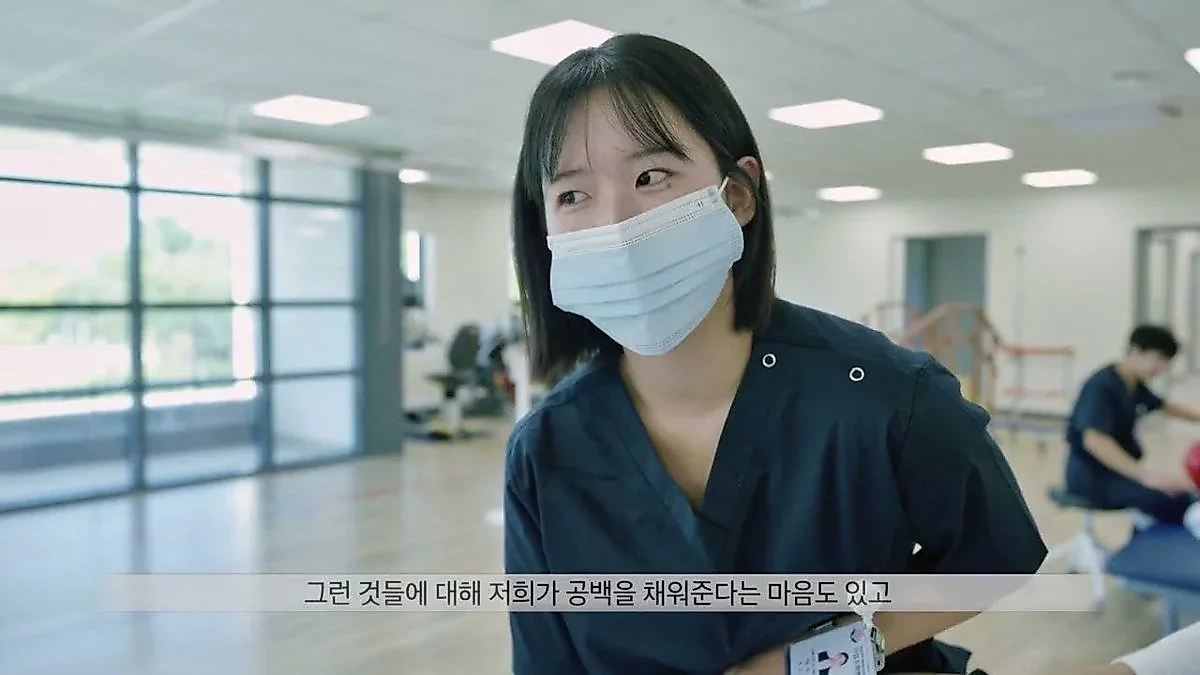
HYUNDAI donated ST1-based ambulances and X-ble MEX wearable medical robots to the National Fire Hospital this August to assist firefighter rehabilitation. The equipment aims to help personnel overcome physical injuries and return to duty, such as retired firefighter Lee Jae-cheon who transitioned from using a cane to walking without one in ten days.
HYUNDAI has stepped in with technical support to help firefighters, who struggle to save lives at disaster sites, overcome injuries and trauma to return to the field. The group announced it recently donated rehabilitation and treatment equipment, including ST1-based ambulances and the X-ble MEX wearable medical robot, to the National Fire Hospital. This donation was made this past August and follows previous efforts involving hydrogen electric buses for rest at disaster sites and unmanned firefighting robots to support dangerous scenes.
"Back to the Field"... Wearable Robots Aiding Firefighter Rehabilitation
Injuries sustained in the field present a high barrier beyond simple treatment: the "return to duty." In January, firefighter Kwon Hyeok-gyu, who underwent surgery after his left elbow buckled while towing a weight of approximately 120kg from a five-story height, received technological assistance during his rehabilitation process. This is because firefighters must prove their physical ability to withstand the pressure of their equipment to return to the field. "When wearing equipment and helmets, the pressure becomes more intense, so I have to confirm if my body can endure the field," Kwon said.
The X-ble MEX wearable medical robot introduced by the National Fire Hospital encourages active participation from patients during the rehabilitation process. By wearing the robot, the walking width and speed can be adjusted to fit the patient's body, helping them engage in rehabilitation through direct walking. Lee Jae-cheon, a retired firefighter undergoing rehabilitation after a stroke, also experienced a change through walking rehabilitation using the robot, moving from using a cane to walking without one in about ten days.
A hospital official stated, "Thanks to the equipment donated by HYUNDAI, professional rehabilitation has become possible, such as conducting physical fitness evaluations before firefighters return to duty. We are working to contribute to firefighters returning to society and their professional fields."
From Ambulances to Robots... HYUNDAI's "Firefighting Companion" Technology
HYUNDAI's support extends beyond simple equipment donations, developing in a direction that encompasses firefighter safety and efficient emergency response. The group is focusing on expanding the scope of activity for firefighting personnel, including hydrogen electric buses for rest at disaster sites, unmanned firefighting robots for dangerous scenes, and the recently donated ST1-based ambulances.
In particular, the ST1-based ambulance is designed to maximize the efficiency of emergency treatment by increasing internal space utilization. According to an explanation from an official in a video, the spacious interior makes it easy to use various medical instruments, allowing treatment to be conducted with little difference from what is done within a hospital. This spatial advantage increases the efficiency of emergency treatment, protecting patient lives and contributing to the safety of firefighters who face risks of back injuries during transport.
Unerasable Scars and the "Weight of a Hero"
As much as physical injuries, Post-Traumatic Stress Disorder (PTSD) also plagues firefighters. The gruesome scenes encountered in the field and the guilt of not being able to save lives suggest a need for structural mental health management. Due to the nature of the job, firefighters show a high prevalence of PTSD, which is pointed out as a structural issue arising from job characteristics rather than an issue of individual vulnerability.
Firefighters met in the field say they "hope [accidents] do not come," yet they feel a responsibility to return to the field to fill the void left by colleagues. Some rush to return early due to the guilt of having to distribute work among teammates despite the risk of recurring disc issues. Firefighter Choi Jong-hong said, "Because my disc is pressing on a nerve, returning to the field immediately could cause a recurrence, but the responsibility of distributing work to team members feels heavy, so I want to receive treatment and return as soon as possible."
HYUNDAI plans to continue its companionship through technology so that firefighters dedicating themselves at disaster sites can achieve complete recovery beyond mere treatment.
Source: original video (YouTube)



0Comments
Comments are currently disabled.