
"Resilience over Cost"... The 'Plan B' Companies Must Prepare in the Era of Supply Chain Risk
Jeong Cheol, president of the Korean Association of International Trade, explains that companies must shift their focus from cost-efficiency to supply chain resilience to navigate increasing trade barriers and geopolitical risks. He suggests strategies such as multi-sourcing, strategic inventory, and traceability to mitigate unpredictable uncertainties.

The global trade environment is rapidly shifting from 'Rule-based' to 'Power and transaction-based.' While in the past, 'Just-in-time' supply—receiving products from the cheapest locations at the right time to maximize cost efficiency—was the core, 'Resilience' to prepare for unexpected supply disruptions has now emerged as the key factor determining a company's survival.
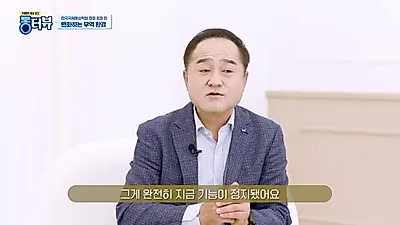
The interview with Jeong Cheol, president of the Korean Association of International Trade, shared by Trade Lounge, contains the crises our companies face in an era where uncertainty has become a constant, as well as the strategic directions to overcome them. President Jeong cited 'unpredictable costs,' or uncertainty, as the element companies must be most wary of.
"Uncertainty More Terrifying Than Cost"... Three Major Trade Barriers Pressuring Companies
President Jeong summarized the difficulties of the current trade environment facing companies into three key issues. First is the overlapping tariff barriers. Not only are there tariffs by item, but retaliatory tariffs based on reciprocity are intricately intertwined, making it difficult for companies to even calculate accurate costs.
Second is the strengthening of rules of origin. The burden has increased to prove not only the final country of manufacture but also where parts and raw materials originated. President Jeong pointed out, "Proving the source of all raw materials and parts is a task that is nearly impossible for small and medium-sized enterprises." Third is the risk of retaliation and export controls arising from the US-China conflict. The structure is such that companies must shoulder all the risks arising between the interests of the two nations.
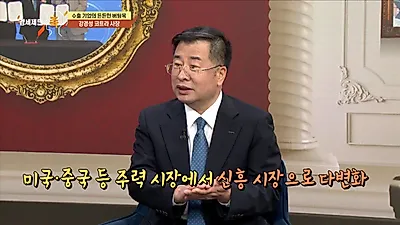
Due to these changes, overseas expansion through simply increasing exports as in the past is no longer effective. It has become an era where production, procurement, technology, investment, and the trade regulations of each country must be responded to as a single integrated strategy. In fact, as of 2025, the United States and China are South Korea's largest trading partners, but while exports to these countries have decreased somewhat, exports to the EU and ASEAN markets have reached record highs, showing that market diversification policies are achieving some results.
Supply Chain Resilience is 'Insurance'... Multi-sourcing and Traceability are Key
President Jeong emphasized the change in the supply chain paradigm by mentioning the COVID-19 pandemic and the 2021 urea solution crisis. At that time, South Korea's dependence on China for urea solution reached 97%. While they had relied on Chinese products based on economic logic, when the supply was blocked due to China's domestic circumstances, it led to a national crisis. President Jeong explained this as "a case that showed resilience is more important than cost efficiency in the supply chain."
To respond to this, he presented five specific countermeasures that companies should equip themselves with: ▲'Multi-sourcing' to not put all eggs in one basket ▲'Strategic inventory accumulation' to buy time during supply disruptions ▲'Securing alternative transport routes' to reduce risks in transportation paths ▲'Early warning systems' that use data and AI to detect risks in advance ▲And 'Traceability' to understand the entire supply chain.
In particular, President Jeong compared traceability to 'insurance.' He emphasized, "Just as insurance may feel like a cost when no accident occurs, it is the same as playing a decisive role when an accident happens," adding, "Mapping every stage of the supply chain (from primary suppliers to their sub-tiers) to find vulnerabilities is an essential asset to prevent production halts."
Semiconductors Compete with 'Technology Gap', Automobiles and Batteries with 'Localization'
Differentiated strategies by industry are also necessary. For strategic technology industries such as semiconductors and AI, he said the top priority is to maintain a technology gap by accumulating core technology and personnel domestically. At the same time, he suggested that a strategy of strengthening joint research and development (R&D) and standardization with reliable countries should be carried out in parallel to make South Korean standards global standards.
On the other hand, he analyzed that for the automobile and battery industries, which directly receive demands for local production from the United States and Europe, a 'Localization' strategy is effective. This is a method of directly entering major markets to produce and compete locally to avoid tariff barriers. However, he added that in the case of the automobile industry, since the vast 'ecosystem' of 20,000 to 30,000 parts must be considered, an advanced strategy involving the establishment of cooperation systems with local companies must accompany the move beyond simply relocating finished product production facilities.
President Jeong predicted, "In the future, with whom you cooperate and how you produce will become more important than where you produce," and stated that building a sophisticated 'production base portfolio' that considers market accessibility, production costs, technology levels, and geopolitical risks will be a core task for companies.
Source: original video (YouTube)
0Comments
Comments are currently disabled.