
Refusal to Contract Due to "Planned Vacancy for 1 Year and 6 Months" for Reconstruction is Not Interference with Premium Recovery, Rules Supreme Court of Korea
The Supreme Court of Korea ruled that a landlord refusing a new tenant's contract by stating the building will remain vacant for 1.5 years for reconstruction…
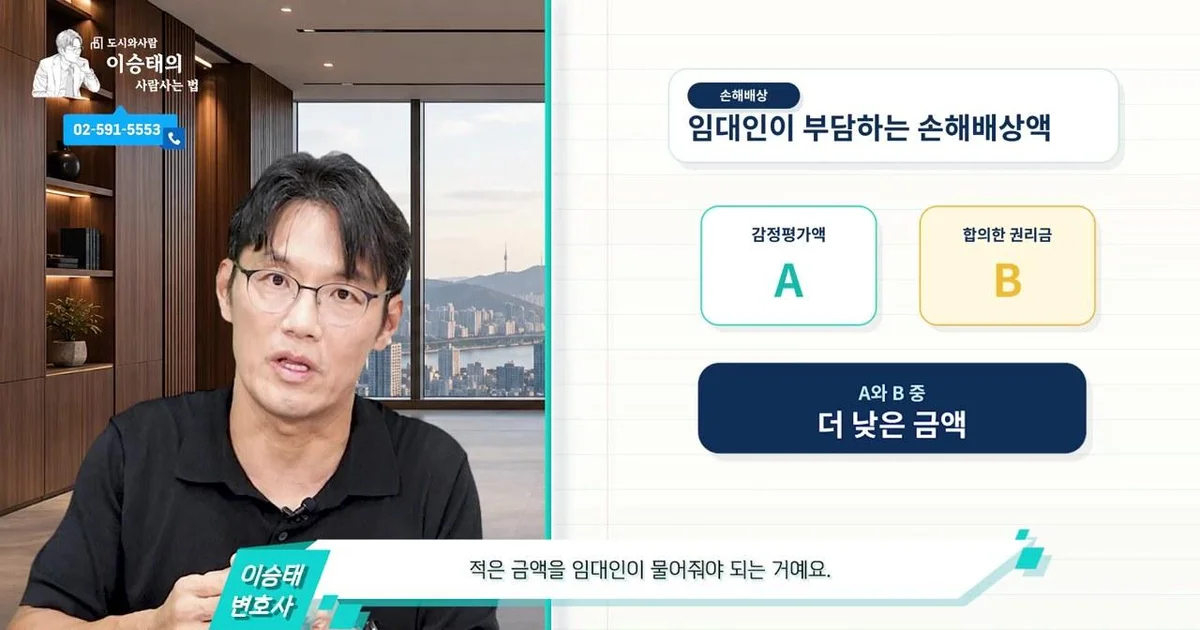
A ruling has been issued by the Supreme Court of Korea stating that if a landlord, who notified the termination of a commercial lease due to reconstruction, refuses to contract with a new tenant by stating they "plan to leave the building vacant for the next 1 year and 6 months," this cannot be viewed as interference with the recovery of premium. It clarified that the standard for interpreting "cases where the building is not used for profit purposes for 1 year and 6 months or more" under the Commercial Building Lease Protection Act lies in "facts to be realized in the future" rather than "past facts."
Lower Court "Must Recognize Only Past Facts According to the Law" vs. Supreme Court "Includes Future Facts"
According to the video "How People Live" by Lee Seung-tae of DosiwaSaram, this dispute began when a tenant who had operated an optical shop for several years received a notice of reconstruction. The tenant requested an opportunity to recover the premium by introducing a new tenant, but the landlord refused to sign the contract, stating they would keep the building vacant for the next 1 year and 6 months for reconstruction.
According to Article 10-4 of the Commercial Building Lease Protection Act, a landlord must not interfere with the recovery of premium by refusing to contract with a new tenant introduced by the tenant without justifiable grounds. However, if the commercial building subject to the lease is not used for profit purposes for 1 year and 6 months or more, it is considered to be a justifiable reason, making it possible to refuse the contract.
Regarding this matter, the lower court (High Court) interpreted the legal text strictly. The lower court judged the phrase "cases where [the building] has not been used for profit purposes for 1 year and 6 months or more" as being in the past tense. In other words, the logic was that a justifiable reason is only recognized if the landlord has already kept the building vacant for more than 1 year and 6 months. Accordingly, the lower court ruled in favor of the tenant, seeing the landlord's refusal to contract before completing the 1 year and 6 months as lacking justifiable grounds.
Supreme Court Reverses Ruling, Deciding "Must Judge Based on Facts to be Realized in the Future"
However, the Supreme Court's judgment differed from the lower court. The Supreme Court ruled that the phrase "cases where [the building] has not been used for profit purposes for 1 year and 6 months or more" in the legal text is not limited to past facts, but must be judged based on "future facts" that are actually realized after the termination of the lease.
According to the presenter, the Supreme Court's logic is that if a landlord refuses a new contract by planning not to use the building for the next 1 year and 6 months due to reasons such as reconstruction, this does not constitute interference with the recovery of premium. If the landlord actually realizes a non-profit state of 1 year and 6 months or more by leaving the building vacant during that period, it falls under the justifiable reasons prescribed by law.
The video explained that such a ruling will serve as an important standard for disputes between landlords and tenants. The core point is that it clarified the scope in which refusing to contract with a new tenant by announcing a planned vacancy due to reconstruction can be legally permitted. The presenter summarized the Supreme Court's judgment, stating, "It is not interference just because they didn't give the opportunity because they planned not to use it for the future 1 year and 6 months."
As a result, if it is clear that the landlord will not use the building for profit purposes for more than 1 year and 6 months in the future, it has become highly likely that the landlord will not bear liability for damages resulting from interference with premium recovery, even if a new tenant is introduced.


0Comments
Comments are currently disabled.