
"The Pursuit by China's CXMT and YMTC is Terrifying"... Survival Tasks for Korean Semiconductors Amidst the Triple Challenges of the AI Industry
As the AI industry expands, it faces a triple challenge of power supply, heat control, and rising capital costs.

As the AI (Artificial Intelligence) industry develops rapidly, a triple challenge consisting of power supply, heat control, and rising capital costs is emerging as a major task across the industry. In particular, as intense pursuit from Chinese companies continues, analyses have been raised regarding the technical and economic environments faced by Korean semiconductor companies.
Physical Limits and Social Regulation Issues of the AI Industry
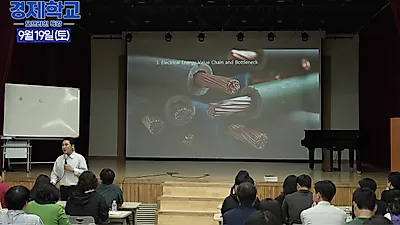
The expansion of the AI industry involves physical infrastructure issues beyond simple software development. According to the explanation in the video, the massive power demand for driving AI, cooling systems to resolve heat generation in data centers, and securing water supplies are cited as essential elements. The analysis suggests that research into a new generation of semiconductors and materials that can minimize heat generation while reducing the size of data centers must continue.
Risks in social and political aspects are also mentioned. Along with the problem of errors that can be caused by blind faith in AI-generated outputs, biochemical risks that may arise when AI technology is combined with industries such as bio-industry, and the possibility of political public opinion manipulation were identified as major targets for regulation and social instability factors. Regarding this speed of technological advancement, while NVIDIA CEO Jensen Huang emphasizes continuous evolution, there coexist views that speed control considering social impact is necessary.
Correlation Between Rising Capital Costs and Power Infrastructure
From an economic perspective, the core issue is the impact of the surge in capital costs due to high interest rates on the profitability of the AI industry. Massive capital is invested in building data centers, and interest rate hikes increase this cost burden. Additionally, the cost of producing electricity to drive AI also becomes a factor that triggers inflation in conjunction with rising oil prices.
The power supply and demand issue is a practical constraint on data center operations. In the video, difficulties in infrastructure management, such as conflicts with local residents and the possibility of future electricity rate increases, were mentioned as power demand in data centers surges. Ultimately, the analysis states that the speed of the AI industry's expansion depends on how quickly power production is carried out and how data center construction costs are managed.
China's Pursuit and the Design Competitiveness of Korean Memory Semiconductors
The survival of the Korean semiconductor industry is unfolding urgently in conjunction with the technological pursuit of Chinese companies. The video reported that Chinese memory semiconductor companies such as CXMT and YMTC are pursuing aggressively, such as developing HBM (High Bandwidth Memory) products and submitting them to Huawei.
Semiconductors are defined as the 'rice' and 'weapon' of future technology. The victory or defeat of the semiconductor industry in the future depends not just on the market share of manufacturing processes (Fab), but on the design capability optimized for various platforms where AI will be installed, such as humanoids, drones, and aerospace. The video explained that just as each component of a car—such as the engine, electronics, and screen—comes together to form a single system, semiconductor blueprints and functions must also change in accordance with the direction of AI development. In particular, the focus of domestic companies such as Samsung Electronics and SK hynix in the field of high-performance memory design, which can maximize heat control and information transmission volume, is expected to be the key to future competition.


0Comments
Comments are currently disabled.