
Kim Young-ik warns of simultaneous AI bubble and credit crisis
Professor Kim Young-ik warns that the current economic cycle may see a simultaneous collapse of asset prices driven by AI optimism and a credit crisis, suggesting that a significant opportunity to buy stocks at low prices could emerge in the first half of next year.

Professor Kim Young-ik warned that a credit crisis is the most likely outcome for the economy, as an AI asset bubble could overlap with existing credit issues. He noted that the KOSPI market capitalization to nominal GDP ratio reached 143.3% as of October 23, significantly exceeding the long-term average of 70% since 2000.
While the innovation of artificial intelligence (AI) technology is indisputable, the "flow of money" driving the market is pointing in a completely different direction. Warnings have emerged that a pattern could repeat where optimism regarding technology creates an asset price bubble, which eventually combines with credit issues to cause a market collapse.
Based on the core contents of his book, *The End of Debt Created by the AI Bubble*, published this past April, Professor Kim Young-ik presented his future economic outlook through "Kim Young-ik's Economics School." "Technology has a massive impact on the economy and society, but the problem is never the technology itself; it is always the money supporting that technology," Kim analyzed. "Excessive expectations for technology, such as the electric vehicle era bubble in the 1920s or the internet bubble in 2000, have led to crashes in asset prices."
He explained the divergence between technological innovation and asset prices through historical precedents. He pointed out that in the mid-1920s in the United States, the spread of electricity and the activation of automobiles significantly increased productivity, but excessive optimism caused a bubble in the Dow Jones Industrial Average, which collapsed in 1930, falling approximately 90% from its peak. He also mentioned that during the "New Economy" period from 1996 to 2000, when labor productivity nearly doubled compared to the past and the United States economy achieved high growth and low inflation, the Nasdaq Composite plummeted by nearly 80% from its peak.
Changes in AI Corporate Financing and the Possibility of a Credit Crisis
Kim identified the combination of an "asset price bubble" and "credit issues" as the core risk factor of this cycle. While the 2000 dot-com bubble manifested as a collapse of the stock market bubble and the 2008 financial crisis manifested as a credit issue within the financial system, he argued that these two could occur simultaneously this time. "In 2000, the problem was the stock market bubble, and in 2008, the crisis revealed credit issues in the financial system," he explained. "This cycle overlaps both."
He specifically noted the changing financing methods of AI companies. While expectations that AI investment would lead to massive profits were dominant in the past, doubts are growing regarding whether companies that have raised funds through private credit or corporate bonds can actually generate sufficient returns. "AI companies have raised massive funds through private credit and corporate bonds to build data centers, etc., but the narrative regarding their profitability is changing among investors recently," Kim explained. He analyzed that as the inflow of funds through private credit decreases, financing for AI companies could become extremely difficult.
Furthermore, the fact that the yield on the 10-year U.S. Treasury note has exceeded 5%, raising the cost of financing, is also a risk factor. "The 10-year U.S. Treasury yield exceeding 5% is a very dangerous range," Kim forecasted. "It increases the discount rate for overvalued stocks, making a large decline centered on tech stocks highly likely." Borrowing from Minsky's classification, he diagnosed the current situation as an extreme state that could move toward "Ponzi Finance," where it is difficult to pay principal and interest. This is a more dangerous state than "speculative finance," where interest can be paid but principal requires refinancing, or "hedge finance," where principal and interest can be repaid through cash flow.
KOSPI as the 'Canary in the Coal Mine'... Adjustment Possible Until First Half of Next Year
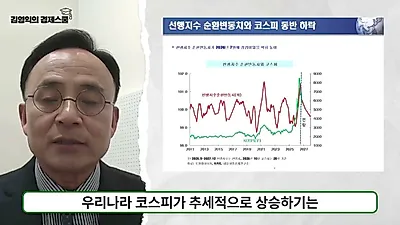
Kim compared the South Korean market to a "canary in a coal mine" that shows the direction of the global economy in advance. He analyzed that South Korean stock prices reflect the economic trends of the United States ahead of time. In fact, he explained that the sharp drop in the KOSPI this past July and the recent downward trend in the KOSDAQ are signals pre-reflecting the contraction of investment and financing difficulties for AI companies. "Our stock prices fell first, and U.S. stock prices may follow us with a significant adjustment," he warned.
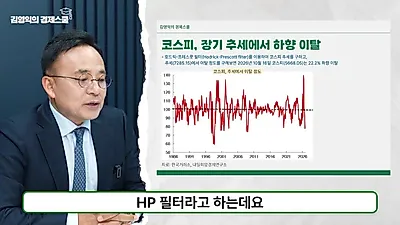
Looking at indicators, the position of the KOSPI shows mixed results. Based on indicators using average daily export amounts, the KOSPI is in an undervalued zone by about 7%, suggesting a possibility of a rebound; however, compared to nominal GDP or money supply (M2), it remains overvalued. Kim pointed out that "as of October 23, the ratio of KOSPI market capitalization to nominal GDP was 143.3%, which significantly exceeds the long-term average of 70% since 2000." He added that the proportion of KOSPI market capitalization in the money supply also far exceeds the average of 58% since 2005.
In conclusion, Kim maintained a conservative stance on the direction of the KOSPI. "Looking through the leading index forecasting function, the KOSPI could continue its adjustment phase until the first half of next year," he said. Among three scenarios—soft landing (20%), long-term low (30%), and credit crisis (50%)—he predicted that a credit crisis is the most likely to occur. He specifically mentioned that the credit spread between U.S. high-yield and investment-grade corporate bonds has been rising rapidly recently, noting that political uncertainty in the United States and financial market uncertainty are being added to the mix.
Securing Liquid Assets and Asset Allocation Strategies
As a countermeasure to prepare for the upcoming uncertainty, Kim emphasized "asset allocation." He advised, "During periods when leading indices are falling, the proportion of stocks should be reduced to around 20%, and liquid assets and short-term bonds should be held appropriately." Conversely, he recommended maintaining a stock proportion of around 60% when the stock market rises.
In particular, he added, "As early as the first half of next year, or at the latest, during the second half, an opportunity to buy stocks very cheaply will come. To wait for this period, it is necessary to avoid leveraged investing and follow a strategy that emphasizes stability at present." He urged investors to continuously monitor key indicators, such as daily credit spreads in the United States, and respond to the U.S. market.
Source: original video (YouTube)

0Comments
Comments are currently disabled.