
Basic Pension with 30 Trillion Won Annual Investment, Fiscal Burden Increasing Due to 'Bottom 70%' Standard
The South Korean basic pension system is placing a significant burden on national finances due to rapid demographic changes and rising income levels.
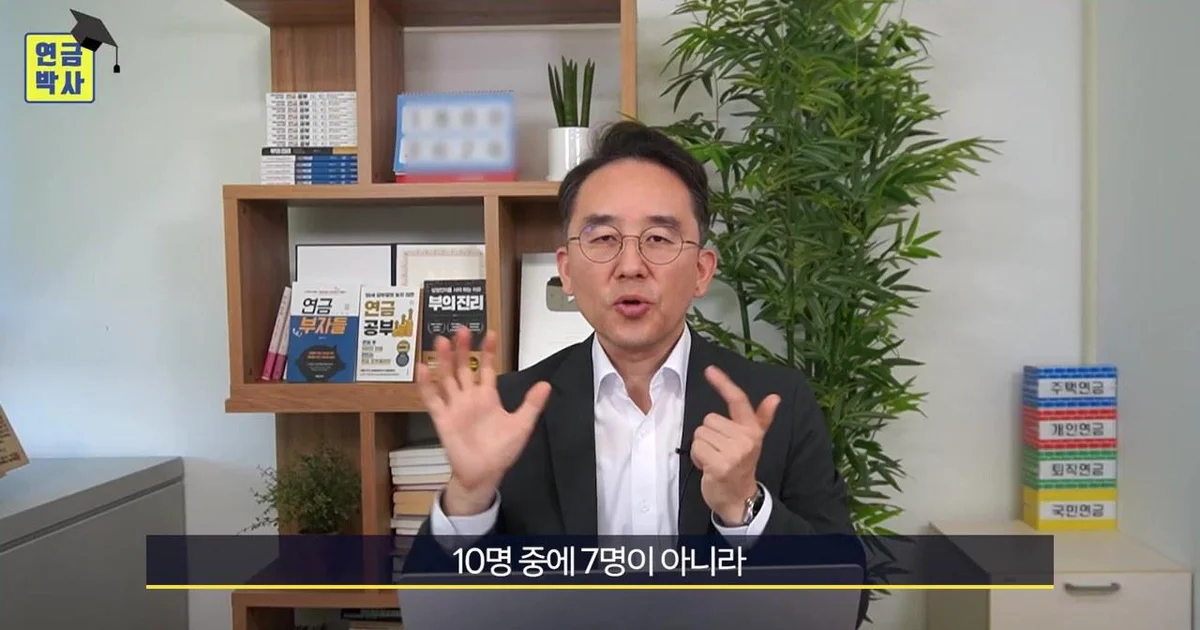
Concerns have been raised that South Korea's basic pension system is placing a significant burden on national finances due to rapid changes in demographic structure and rising income levels. It has been revealed that the number of basic pension recipients, targeting the bottom 70% of the elderly population aged 65 and older, has exceeded 7 million, with annual expenditures approaching 30 trillion won.
The Discrepancy Between Changed Economic Levels and the 'Bottom 70%' Selection Standard
According to a video from the YouTube channel 'Pension Doctor', the basic pension system, which began as the 'Basic Old-Age Pension' in 2008, was introduced to support elderly individuals who lacked preparation for old age at that time. Back then, because it had not been long since the National Pension Service began implementation, many elderly people had short contribution periods or had not joined at all, making state-level support for basic living expenses desperate. The eligibility was set at the bottom 70% of seniors aged 65 and older.
The problem is that although national income levels have significantly improved compared to the past, the 'bottom 70%' selection standard for recipients maintains the framework of the past. The video pointed out, "Society has become better to live in, but since the standard remains the same, people within the bottom 70% who have financial leeway are starting to be included." It explains that cases are occurring where people earning a monthly income of 5 to 6 million won or those owning houses worth 1 to 2 billion won in Gangnam receive the basic pension according to current standards. Due to this, criticism is arising that the basic pension is becoming a form of 'free money' given even to those with means, rather than support for those who are truly struggling.
700 Million Recipients and 30 Trillion Won Annual Expenditure... Projected to Surpass 50 Trillion Won in 2035
Changes in demographic structure are further accelerating the fiscal burden. South Korea has already entered a super-aged society, with the elderly population aged 65 and older exceeding 20% and approaching 11 million. Considering that 70% of them are eligible recipients, the number of basic pension recipients will exceed 7 million as of 2026.
If the monthly payment per recipient is calculated at the current standard of 349,700 won (approximately 350,000 won), about 2.45 trillion won in budget is injected every month. When converted to an annual figure, it reaches approximately 30 trillion won. This corresponds to about 4–5% of South Korea's total national budget (approximately 730 trillion won). The presenter in the video emphasized the financial aspect, stating, "It is not money paid by the recipients, but the state is paying it with taxes."
The future outlook is even more pessimistic. According to the video, the elderly population is expected to reach 15 million in 2035. If the current bottom 70% standard is maintained, the number of recipients will exceed 10 million, and annual fiscal expenditure is expected to surge to over 50 trillion won. This is a figure that could threaten national fiscal soundness.
"Support Should Be Concentrated on Those Truly in Need"... Calls for System Improvement
The video reaffirmed that the purpose of the basic pension lies in 'support for those who are truly struggling' and emphasized the need for system improvement to match the changing times. The presenter noted, "Rather than the fact that the state pays 50 trillion won, the bigger issue is how reasonably it is paid to those in need."
In particular, regarding the basic pension improvement plan recently announced by the government, the video criticized it as being "like a dragon's head and a snake's tail (starting strong but ending weakly), as they failed to conduct proper reform because they were walking on eggshells after a large initial announcement." The point is that, much like the National Pension reform, the basic pension reform is also being conducted in a hesitant manner, resulting in insufficient outcomes. If reform is delayed, the fiscal burden will increase and will inevitably be passed on to future generations.
The presenter suggested that the basic pension system should be redesigned to provide thicker support to the actual impoverished class and to increase fiscal efficiency. The core point of the video is that as society changes, the system must be modified accordingly to create a structure where both the elderly generation and the young generation can live happily.

0Comments
Comments are currently disabled.