
"No reduction for income up to 5.19 million won"... Key points of the changed National Pension system in 2026
Major reforms to the National Pension system will take effect on July 1, 2026, including relaxed criteria for pension reductions for working recipients and an increase in insurance premium rates. The changes also include expanded credits for childbirth and military service, alongside strategies for managing pension savings funds and reverse mortgages.
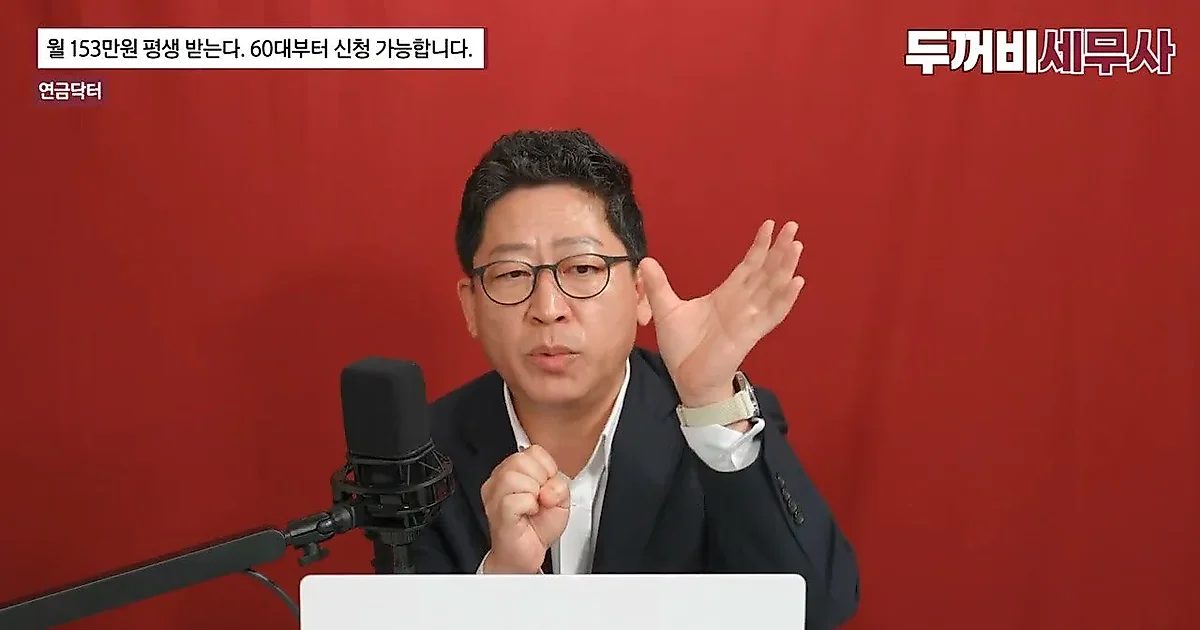
As major reforms to the National Pension system are implemented starting July 1, 2026, changes will occur across the entire system, including the pension reduction criteria for recipients engaged in income-generating activities and the insurance premium rates. According to the content of a video released on the YouTube channel 'Finance with Toad Tax Accountant', one of the biggest changes is the relaxation of the criteria for the 'reduction system' that cuts the pension amount of recipients with income.
A-value criteria raised... Full pension can be received for income up to 5.19 million won without reduction
Previously, the pension amount was reduced during income-generating activities based on the 'A-value', which is the average monthly income of National Pension subscribers over the most recent three years. For 2026, the A-value has been set at 3.19 million won. Through this reform, even if there is income exceeding the A-value, an additional income bracket of 2 million won more than before will be recognized. As a result, up to a monthly income of 5.19 million won (A-value of 3.19 million won + additional 2 million won) can be received in full without National Pension reduction. Converted to an annual salary, this is at the level of approximately 60 million won.
In addition, the National Pension insurance premium rate is scheduled to increase by 0.5%p every year from the current 9% until 2028, reaching a maximum of 13%. The credit system will also be expanded; the childbirth credit, which previously applied starting from the second child, has been changed to apply from the first child, and the military service credit has seen its recognized subscription period increased from the existing 6 months to 12 months. Furthermore, the targets and scale of state insurance premium support for low-income local subscribers will be expanded.
Reasons for the increase in early pension receipt and pension savings fund management strategies
Regarding the recent phenomenon of increasing early National Pension recipients, the video mentioned the 'income crevasse (income gap period)'. The analysis suggests there are many cases where people cannot endure the several years of income gap that occurs between retirement and the time they can receive the National Pension. Additionally, anxiety regarding the depletion of the National Pension and health issues were cited as major reasons for the psychological tendency to receive the pension as early as possible.
Regarding the management of pension savings funds, a strategy of managing assets over the long term while securing tax credit benefits was presented. Instead of recommending specific products, the video emphasized asset allocation principles, mentioning methods such as using bonds or bond-type ETFs as safe assets, and ETFs that track major US indices such as the S&P 500 or Nasdaq-100 as growth assets. In particular, TDF (Target Date Fund), which automatically adjusts the proportions of stocks and bonds, was suggested as a method of asset management.
A calculation method to reduce the tax burden when receiving pensions was also provided. If withdrawals exceed the pension receipt limit from pension savings and IRP, a 16.5% miscellaneous income tax is imposed. According to the video, the pension receipt limit can be calculated as 'the value of the account's valuation as of January 1st divided by 11, multiplied by the number of years of pension receipt, and then multiplied by 1.2'. One must withdraw within this limit to be subject to the low pension income tax of 3.3% to 5.5%.
Utilization of reverse mortgages and considerations when holding loans
Reverse mortgages were introduced as a means to supplement retirement asset structures heavily concentrated in real estate assets. Due to the recent rise in housing prices, it has been found that the average housing price of reverse mortgage subscribers has risen to approximately 500 million won. Based on a 500 million won house, if one joins at age 70, a monthly cash flow of approximately 1.53 million won can be expected (receipt amounts vary by age).
In particular, it is possible to join a reverse mortgage even if there is a loan on the house. However, the structure is such that the pension receipt amount is reduced by the remaining loan balance. The video explained that if it is difficult to repay loan principal and interest with only National Pension income after retirement, it is necessary to carefully consider ways to reduce the burden of loan repayment through a reverse mortgage while simultaneously securing living expenses.



0Comments
Comments are currently disabled.