
"7% Increase Every Year if Delayed" There is No Single Answer for National Pension Timing
As concerns over the depletion of the National Pension grow, interest is rising in the optimal timing for receiving benefits. Dr. Hong Chun-uk explains that the decision depends on individual economic conditions, health, and potential impacts on health insurance eligibility.
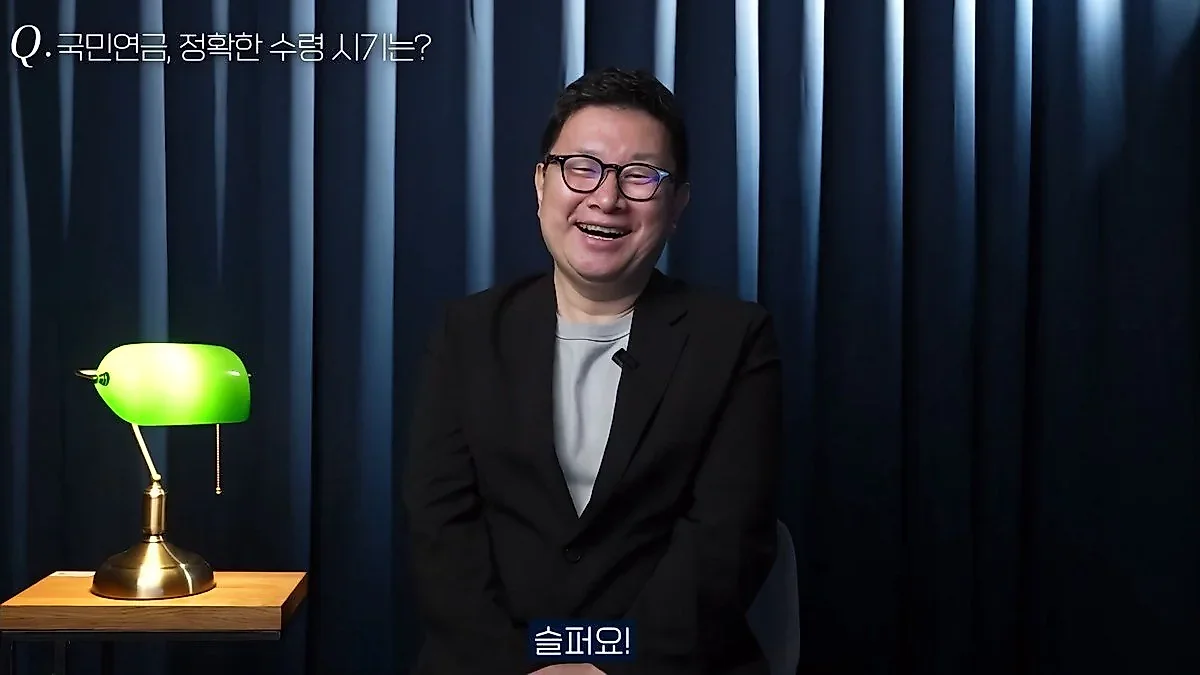
As concerns regarding the depletion of the National Pension grow, interest is increasing in determining when it is most advantageous to begin receiving the National Pension, which is a core component of retirement funds. This is because the amount received changes significantly depending on whether the timing of receipt is advanced or delayed.
According to the analysis by Dr. Hong Chun-uk provided by Hong Chun-uk's Economics Lecture Notes, the key indicator when deciding the timing of National Pension receipt is '7%'. This is because the pension amount increases by approximately 7% for every year the receipt is delayed. For example, if a person who could receive 1 million won every month starting from age 65 delays receipt by 5 years to start at age 70, they would receive approximately 1.37 million won every month.
Conversely, if one chooses 'early receipt' by advancing the timing, the amount received decreases significantly. If one opts for early receipt starting from age 60, they receive an amount reduced by nearly 30% compared to the amount at age 65. Dr. Hong advised, "It is impossible to say whether early receipt or delayed receipt is the correct answer," adding, "One must make a comprehensive judgment based on individual economic circumstances and health status."
Differences in Receipt Strategies Based on Health and Income Status
The first variable in determining the timing of receipt is 'current economic conditions.' If there is an immediate shortage of living expenses, securing funds through early receipt may be a realistic choice, even if it involves a loss. On the other hand, if there is continuous income after retirement or if there is economic leeway, it is advantageous to delay the timing of receipt to maximize the pension amount.
The second variable is 'health status.' Dr. Hong explained that if one has low confidence in their health, has a family history of illness, or is judged to have a relatively short life expectancy, early receipt may be a better choice. Conversely, if one expects longevity through health management, it is advantageous in terms of returns to secure the pension amount, which increases by 7% every year, through delayed receipt.
However, there are also points to be careful about when delaying the timing of receipt. If the pension amount rises above a certain level, one may lose eligibility as a dependent for health insurance. Dr. Hong emphasized that this part must be considered, stating, "Due to the characteristics of our country's system, if the pension amount becomes large, cases may occur where one loses eligibility as a health insurance dependent of their children."
Ways to Increase Pension Amount... Utilizing 'Extended Payment' and 'Retroactive Payment'
For those who have already met the National Pension coverage period or are contemplating the timing of receipt, there are ways to increase the pension amount itself. Dr. Hong identified 'extended payment' and 'retroactive payment' as two key strategies that contributors around the age of 60 can utilize.
First, 'extended payment' is a method of continuing to pay pension insurance premiums even after turning 60. Considering that the National Pension's investment return rate is high, increasing the payment period can be an effective way to raise the pension amount. Additionally, it is possible to fill the minimum 10-year coverage period or increase the payment amount through 'retroactive payment,' which covers periods when premiums could not be paid due to unemployment, leave of absence, or career breaks.
In addition to this, it is necessary to actively check systems such as 'credits,' which recognize periods of childbirth or military service as coverage periods. Dr. Hong said, "The National Pension should not be the entirety of retirement funds, but should serve as a solid 'floor,'" adding, "A strategy is needed to secure basic retirement living expenses through the National Pension and then supplement the lacking parts with retirement pensions or individual pensions."
Meanwhile, regarding the fear of the National Pension depletion, he predicted, "It is virtually an obligation to pay even if national finances must be injected," and "If the scale of managed assets approaches 2,000 trillion won and the return rate improves, the depletion point can be pushed much further back." He reiterated that it remains the most powerful means of preparing for retirement, noting that the National Pension adjusts the payment amount by reflecting the inflation rate.
Source: original video (YouTube)


0Comments
Comments are currently disabled.