
18 million won in retroactive payments vs. pension savings investment: Which choice increases National Pension payouts?
The YouTube channel Park Gom-hee TV analyzed whether it is more advantageous to make a 18 million won retroactive payment to the National Pension or to invest that amount in a pension savings account. The analysis also compared the benefits of delaying pension payouts versus reinvesting them.
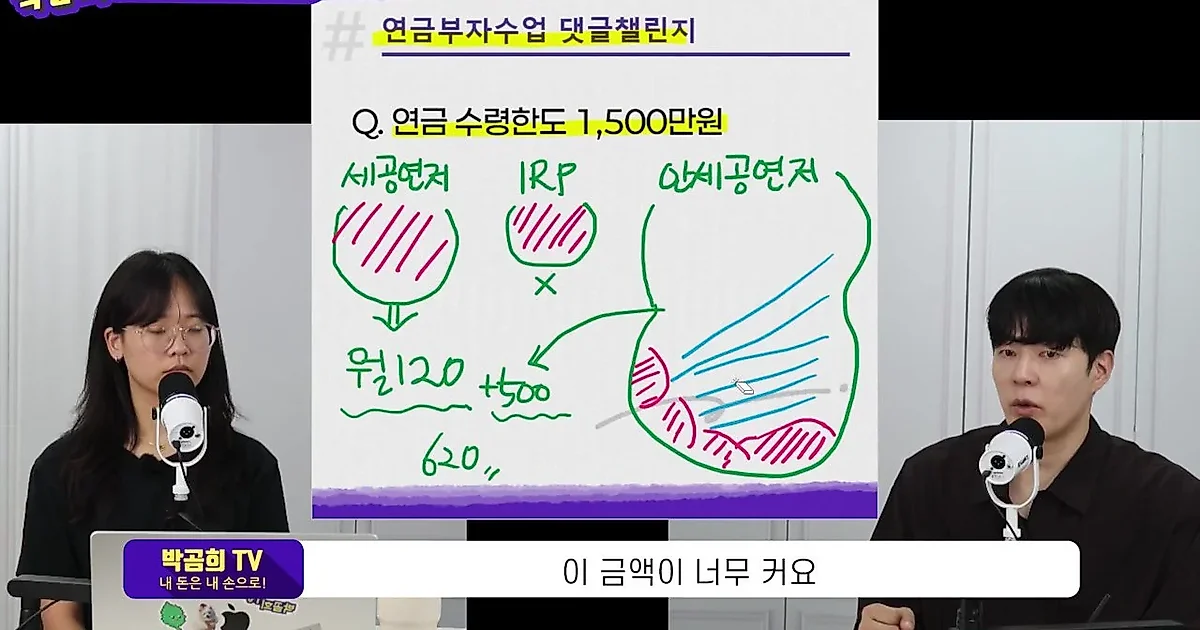
Specific simulation results have been presented regarding whether retroactive payments to the National Pension or individual pension savings are more advantageous. Based on a subscriber's question, the YouTube channel Park Gom-hee TV conducted a comparative analysis of the expected returns for a 53-year-old woman with a career break if she makes an 18 million won retroactive payment versus investing that amount in pension savings.
An additional 250,000 won per month when injecting 18 million won in retroactive payments... potentially more advantageous than pension savings returns
According to the video, if the 53-year-old inquirer uses 18 million won for National Pension retroactive payments, the pension amount received from age 65 will increase by approximately 250,000 won every month. On the other hand, if the same 18 million won is placed in pension savings and managed at an annual return of 7% for 12 years, the balance at age 65 will be approximately 40 million won. Assuming this 40 million won is managed with an annual dividend yield of 6%, an additional monthly income of between approximately 200,000 won and 260,000 won will be generated.
Park Gom-hee TV pointed out that the required rate of return for pension savings investment to create an additional 250,000 won in monthly payouts is higher than expected. In particular, considering that the National Pension reflects inflation, calculations show that the entire principal paid can be recovered after age 71. Accordingly, it was explained that making a lump-sum retroactive payment to secure a stable cash flow could be a more certain option than general investment.
Delaying deferred pension by 5 years increases it by 36%... results equivalent to reinvestment returns
An analysis of the 'deferred pension' system, which delays the timing of receiving the National Pension, also followed. For every year the National Pension receipt is delayed, the total amount increases by 7.2%, and it can be delayed for up to 5 years. If delayed for the full 5 years, the payout amount increases by 36% compared to the original amount.
The video compared a recipient receiving 300,000 won of National Pension every month and reinvesting it in a pension savings fund for 10 years, versus delaying the pension for 5 years to receive a 36% increased pension. It was confirmed that there was no significant numerical difference between the result of reinvesting at an annual return of 7% for 10 years and receiving the increased pension after a 5-year delay. Park Gom-hee TV mentioned that while investments carry the risk and stress of failing to achieve expected returns, the deferred pension is a method where the state fixes the increase rate, so it could be a more certain choice for the parents' generation.
Tax options when pension receipt exceeds 15 million won
An explanation was also provided regarding tax issues that arise when receiving a pension. If the annual pension receipt exceeds 15 million won, the recipient can choose to have it added to their comprehensive income tax or opt for a 16.5% separate taxation.
The video analyzed that if a recipient is in a bracket where the comprehensive income tax rate does not exceed 16.5%, it is advantageous to choose comprehensive income tax, and if the tax rate is higher than that, it is reasonable to choose the 16.5% separate taxation. Through this, it was explained that even if the scale of pension assets is large, there is a structure in place to adjust the tax burden while receiving the funds.



0Comments
Comments are currently disabled.