
How to Use ISA, Pension Savings, and IRP: The Core of Profit-Loss Offsetting and Tax Credits
The National Tax Service provides guidance on strategically managing Individual Savings Accounts (ISA), Pension Savings, and Individual Retirement Pensions (IRP) to maximize tax benefits such as tax exemptions, separate taxation, and tax credits.

As 'tax saving' is cited as one of the core elements of investment strategies, specific ways to utilize representative tax-saving accounts such as the Individual Savings Account (ISA), Pension Savings, and Individual Retirement Pension (IRP) are drawing attention. According to information released by the National Tax Service, each account offers different benefits, such as tax exemption, separate taxation, and tax credits, necessitating strategic management tailored to an individual's income and investment purposes.
ISA's 'Profit-Loss Offsetting' that deducts losses and taxes only profits
An ISA is an account that allows various financial products, such as deposits, funds, and stocks, to be managed within a single account. Its most significant feature is that it allows for 'profit-loss offsetting,' which calculates the sum of profits and losses among products within the account. For example, if a profit of 10 million won is generated from a specific product and a loss of 5 million won is incurred from another, taxes are levied only on the total profit of 5 million won. This is a more advantageous structure than general accounts that levy taxes on the profits of each individual product.
The scale of tax benefits varies depending on the type of subscription. General subscribers can receive tax exemption benefits on net profits of up to 2 million won. For the 'Commoner Type' subscribers, who have relatively lower incomes, the tax exemption limit is higher. For profits exceeding the tax exemption limit, a low tax rate of 9.9% is applied through separate taxation, which can lower the tax burden. However, to enjoy these benefits, one must comply with a minimum mandatory subscription period of 3 years.
The annual contribution limit for an ISA is 20 million won, and a maximum of 100 million won can be contributed over 5 years.
Pension Savings and IRP: Combining Retirement Preparation with Tax Credits
Pension Savings and IRP, which aim for retirement preparation, provide tax credit benefits during year-end tax settlements. There is a difference in eligibility between the two accounts. While anyone from children with no income to adults can subscribe to Pension Savings, only those with income can subscribe to an IRP. An IRP is also used for managing retirement benefits, and since retirement benefits can be received into the account to be managed and then withdrawn as a pension, it is utilized as a key means of retirement asset management.
Another advantage of pension accounts is the 'tax deferral' effect. Instead of immediately deducting taxes on dividends or interest income generated during the management process, taxation is postponed until the time when the pension is actually received. This allows for the maximization of the compound interest effect by securing funds for reinvestment. The combined annual tax credit limit for Pension Savings and IRP is a maximum of 9 million won. However, caution is required because if funds that received a tax credit are withdrawn prematurely before the age of 55, the tax credit received must be returned. Unless there is a legally defined special reason, a premature withdrawal may require the account to be closed.
Transferring ISA maturity funds to pension accounts for 'double tax credits'
Linking an ISA with pension accounts can maximize tax-saving effects. When the mandatory subscription period (3 years) of an ISA ends, the matured funds can be transferred to Pension Savings or an IRP, at which time an additional 10% of the transferred amount (up to a limit of 3 million won) can be received as a tax credit. This benefit is applied separately from the existing annual tax credit limit of 9 million won for pension accounts.
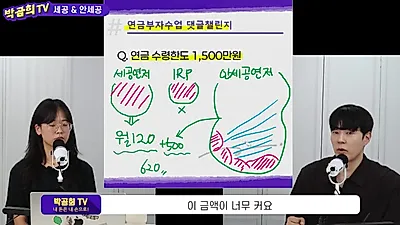
The video explains that the amount transferred from an ISA account is unrelated to the existing contribution limit. By transferring ISA maturity funds to a pension account, one can enjoy additional tax credit benefits in addition to the existing annual credit limit, enabling double tax savings. The National Tax Service emphasizes that this movement of funds between accounts operates separately from the existing contribution limits and recommends management strategies that combine the characteristics of each account for long-term asset formation.
Source: original video (YouTube)


0Comments
Comments are currently disabled.