
Former fund manager Park Jae-hun shares investment principles to minimize losses
Former fund manager Park Jae-hun advises individual investors to strictly adhere to loss limits and avoid the psychological trap of "capitulation" by maintaining disciplined selling principles.
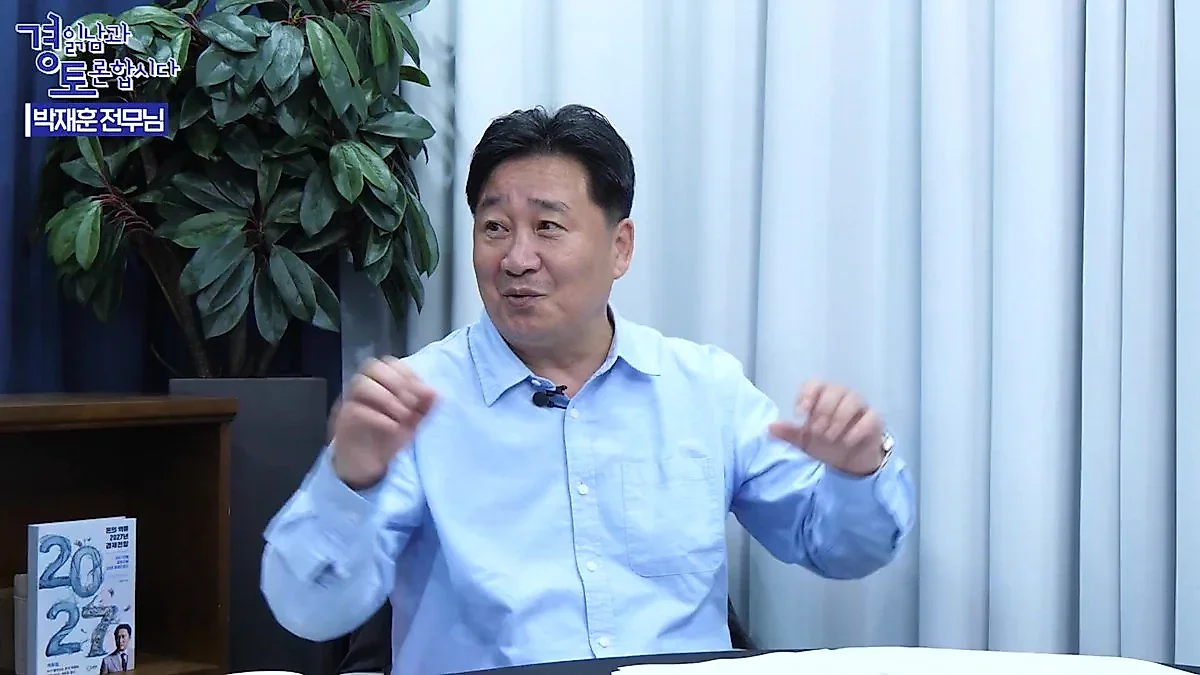
Park Jae-hun, a former executive with 35 years of experience as a fund manager, advises investors to strictly adhere to pre-set stop-loss limits to avoid market capitulation. To manage psychology and prevent FOMO, he recommends selling "cruelly" and waiting for peak market fear to identify optimal buying opportunities.
As volatility in the investment market increases, individual investors often face psychological instability. When stock prices fall, investors frequently delay their stop-loss points, eventually falling into a state of "capitulation" where they dump their holdings at the lowest point. Park Jae-hun, a former executive with 35 years of experience as a fund manager, identified "strict adherence to principles" as the key to preventing such mistakes.
"Delaying stop-loss leads to capitulation"... Selling principles to control psychology
Park Jae-hun defined the core of his investment philosophy as "minimizing the damage." He stated that to minimize losses, he sets a loss limit for the entire portfolio in advance and strictly adheres to it. He warned that many investors set stop-loss levels but tend to push those support lines back due to fear and uncertainty when prices reach those levels, which ultimately leads to greater losses and drives them toward the "capitulation" stage of leaving the market.
He emphasized that "cruelty" is required when it comes to selling. After selling a specific stock, he chooses to not look at that stock for at least one week, or even deletes it from his list of stocks of interest entirely. This measure is intended to prevent the mistake of re-entering at a peak due to the sense of alienation felt when a stock rises after being sold, a phenomenon known as FOMO·Fear Of Missing Out. Park emphasized that "breaking the principles you have set for yourself is a shortcut to certain failure," asserting that even if others break them, the moment an individual breaks their own principles, it leads to failure.
"The best time to buy is when fear is concentrated"... Warning against liquidity FOMO
Regarding the question of "what to buy," Park answered, "Buying unconditionally when it is cheap." He advised waiting for the moment when market fear reaches its peak. He provided empirical evidence that the market bottoms often occur when massive fear sweeps the market and people leave, such as during the Trump administration's declaration of a tariff war or the outbreak of war in the Middle East. He added, "Waiting for fear is the key to catching investment timing."
Conversely, he expressed caution regarding "liquidity FOMO," a phenomenon that appears when the market overheats. He noted that when a market begins an upward trend, the financial sector tends to increase credit limits, which serves as a signal that public investment sentiment has heightened. Park mentioned a real instance where he received a call from a credit card company regarding a limit increase this past June, explaining, "I received notice that my card limit increased exactly in June, and looking back, that was correct." He emphasized the need to be careful during periods when such liquidity supply occurs.
Furthermore, he distinguished between FOMO and "JOMO" (presumably the opposite concept of FOMO) and urged investors not to enter because of FOMO and not to exit because of JOMO. He meant that it is important not to act rashly when a period arrives where people around you are saying, "You were right not to invest in stocks."
"Buy and sell at the closing price"... Practical tips for individual investors
He also provided practical advice to reduce the trading fatigue experienced by individual investors. In addition to the principles he emphasizes to junior managers when managing funds, Park recommended "closing price trading" to individual investors. This is because fund managers typically conduct split purchases within a week of funds arriving, and they experience psychological distress due to valuation losses that occur when the closing price ends lower than the price bought during the day or higher than the price sold. He stated that he advises his juniors to "perform split selling for one-fourth to three-fourths of the position during the trading day and sell the remainder at the closing price."
For individual investors, he said, "If the scale is not large, rather than going through the headache of split purchasing, if you have decided to buy, buying everything at the closing price of that day is psychologically comfortable and advantageous for moving in tandem with the market price." He explained that trading at the closing price has the effect of essentially starting in sync with the market price, which provides peace of mind.
Finally, Park mentioned the necessity of a "barbell strategy" for the generation approaching retirement after their 50s. A barbell strategy is to balance a portfolio by dividing it into two axes, a "Stability Bucket" and a "Growth Bucket," much like a barbell in weightlifting where weights are placed on both sides. He advised, "From the 50s onward, if you make a mistake, there is no time to recover, so the asset accumulation system must be transitioned to this perspective in preparation for retirement."
Source: original video (YouTube)

0Comments
Comments are currently disabled.