
Kim Young-ik warns KOSPI is overvalued and advises securing cash
Professor Kim Young-ik warns that the KOSPI remains overvalued based on GDP and M2 indicators, advising investors to reduce stock holdings to 20% and secure cash amid concerns over a potential credit collapse in the United States.
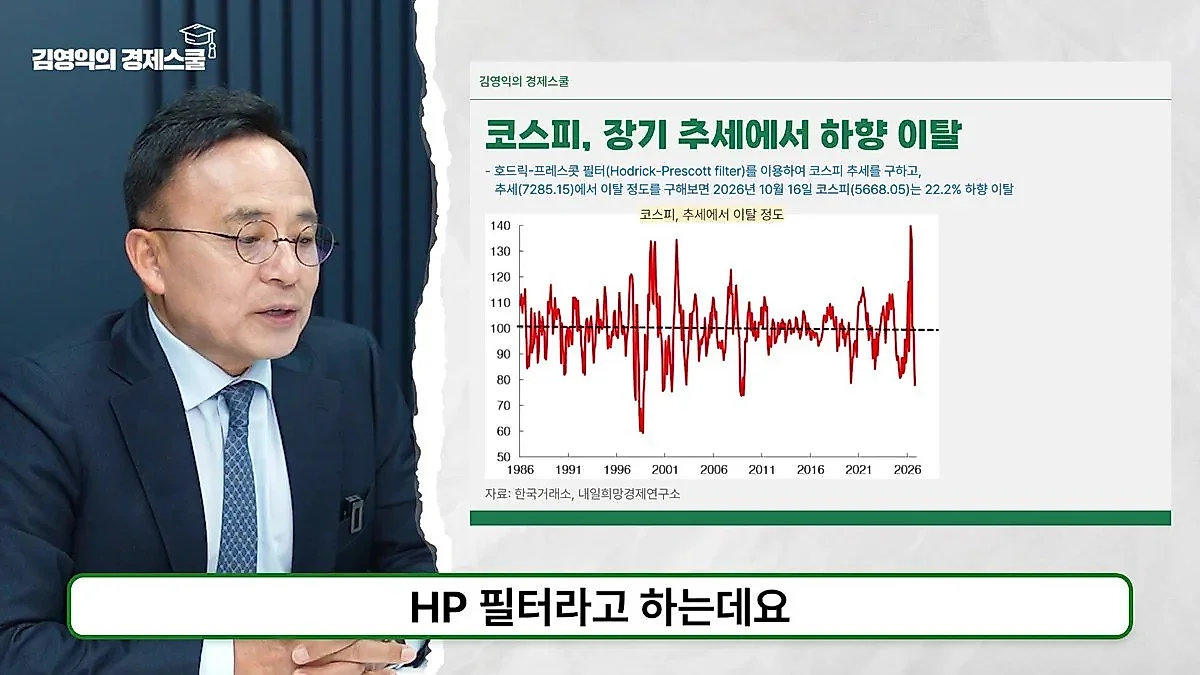
Professor Kim Young-ik advised reducing stock weight to 20% during a broadcast on the 20th, warning that the KOSPI remains overvalued by more than 30% relative to nominal GDP. He cautioned that US credit loans remain at a historical peak of $1.5 trillion, which could trigger a market plunge similar to the decline seen in July.
Uncertainty regarding market direction is growing as the KOSPI undergoes significant corrections in October, following a similar movement in July. While mid-to-long-term indicators suggest the market remains in an overvalued zone, short-term technical indicators point to the possibility of a rebound, necessitating careful observation from investors.
During a broadcast of "Kim Young-ik's Economics School" on the 20th, Professor Kim Young-ik re-evaluated the current KOSPI market, clearly distinguishing between mid-to-long-term and short-term perspectives. Based on mid-to-long-term indicators using nominal GDP and money supply (M2), Kim diagnosed that "the KOSPI is still in an overvalued area."
KOSPI remains high relative to nominal GDP and M2; short-term indicators suggest rebound
Kim assessed market bubbles using the "GDP-KOSPI ratio," which divides KOSPI market capitalization by nominal GDP. Assuming nominal GDP grows by 19.5% this year, the KOSPI was overvalued by more than 30% as of October 16. Compared to the average of 70% since 2000, the current figure of 146% remains significantly above the average.
Analysis based on M2 (broad money) yielded similar results. While the average ratio between KOSPI market capitalization and M2 was 58% from 2005 to last year, it surged to 144% this past May, indicating a large bubble. Although it dropped to 96% following sharp declines in July and October, Kim analyzed that it "is still at a higher level than the price average" and is likely to gradually approach the average in the medium term.
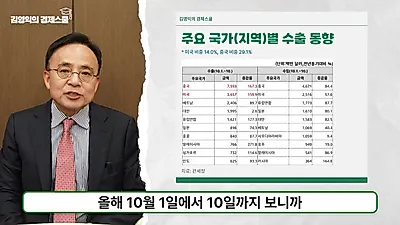
Conversely, analysis suggested signs of a rebound from a short-term perspective. Kim estimated the average daily export amount for this month to be $5.33 billion, explaining that the appropriate KOSPI level based on this figure is 5,994. Furthermore, citing the technical indicator "H-Filter," he added that there is sufficient possibility for a short-term rebound as the KOSPI has fallen approximately 22% below its long-term trend.
Leading indicators enter decline; advised to reduce stock weight to 20% to secure cash
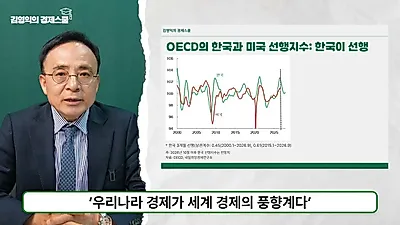
Despite the possibility of a short-term rebound, Kim did not recommend aggressive buying due to the market's "direction." He analyzed that the cyclical fluctuations of leading indicators and the OECD South Korea leading index peaked in July and have entered a declining phase, meaning a trend-based rise for the KOSPI is difficult.
In particular, he interpreted the narrowing of the long-term and short-term interest rate spread as a signal of economic slowdown. As an asset allocation strategy for this economic phase, Kim suggested reducing stock weight. "When leading indicators are rising, it is good to maintain a stock weight of around 60%, but when they are falling, it is appropriate to reduce it to around 20%," he advised, adding, "Since it is an important phase to protect cash, it is good to hold a lot of short-term bonds or cash-like assets."
Concerns over US 'credit collapse'; possibility of KOSPI plunge like in July
The largest variable is the movement of the United States market. Kim warned that the scale of credit loans in the US stock market remains at a historical peak. US credit loans reached a record high of $1.5 trillion this past June and, while they have decreased slightly since, they remain at a historically maximum level.
Looking at past cases, a pattern has repeated where stock prices plunge after credit loans peak. During both the IT bubble burst in 2000 and the 2008 financial crisis, stock prices fell sharply after credit loans hit their peak. "As US Treasury yields have recently exceeded 5%, the discount rate has risen, which could affect technology stocks," Kim projected. "If US stock prices plunge due to emerging credit issues of AI companies, the Korean market could experience a vicious cycle where credit loans decrease and stock prices fall, similar to what happened in July."
In conclusion, Kim emphasized that while there is room for a short-term rebound in the KOSPI, investors must prepare for shocks that may occur as US market credit issues and stock overvaluation become apparent. He suggested, "It would be best to look for short-term rebound points at a time when US stock prices may plunge."
Source: original video (YouTube)

0Comments
Comments are currently disabled.