
Hyundai AutoEver deploys Spot robots to improve manufacturing efficiency
Hyundai AutoEver's RX Business Execution Team is optimizing robot solutions, including Boston Dynamics' quadruped robot Spot, for industrial environments to enhance operational efficiency.

The Hyundai AutoEver RX Business Execution Team is deploying Boston Dynamics' Spot robot to industrial sites, including a painting plant in the United States where temperatures exceed 40°C. The team developed an inspection accuracy measurement module to provide numerical verification for previously vague quality results.
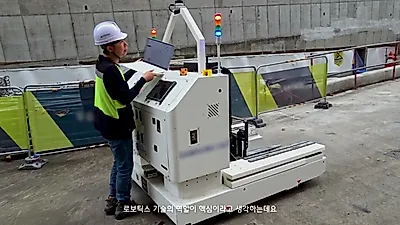
The future of manufacturing is being transformed by robots performing dangerous and repetitive tasks in place of humans. A video released by HYUNDAI showcases the work process of Hyundai AutoEver's RX Business Execution Team, which optimizes and applies robot solutions to manufacturing sites.
The Hyundai AutoEver RX Business Execution Team plans and develops various robot solutions, including the quadruped robot Spot from Boston Dynamics, tailored for industrial sites. Their core goal extends beyond merely building technology; they aim to increase the completeness of field applications so that robots can improve work efficiency in actual factories and drive customer satisfaction.
Robot path design and data visualization to withstand 40°C heat and chemicals
Deploying robots into actual manufacturing lines requires an understanding of the field environment as much as technical perfection. In particular, a project applying robots to a painting plant in the United States faced the challenge of overcoming extreme conditions. Due to the nature of painting plants, which feature temperatures exceeding 40°C, high humidity, and the presence of chemicals, ensuring stable robot operation was difficult.
Considering the narrow and complex interior of the painting lines, the RX Business Execution Team designed detailed robot movement paths and inspection points. Furthermore, to ensure that sensor data collected by the robots could be used as practical information on-site, they worked on visualizing this data through the ORBIT integrated dashboard. This improved field applicability by implementing an alert function that can detect abnormal situations early.
"Turning vague quality into numbers"... developing verification modules not requested by customers
This role requires a broad technical stack, including robot platforms, ROS-based technology, Python, AI vision, and sensor data processing. Simultaneously, communication skills to bridge the gap between the field and development, along with the ability to test and verify that systems function correctly in actual environments, are essential.
The Hyundai AutoEver RX Business Execution role finds the greatest reward in identifying needs that customers have not yet requested and implementing them as solutions. For example, after identifying that there was no process to quantitatively verify how accurate the inspection results of the Spot robot actually were, the team directly planned and developed an "inspection accuracy measurement module" using an image comparison model.
As inspection quality, which previously felt vague, could now be proven with numerical values, customer satisfaction increased. Filling gaps in the field with technology to establish a practical, data-based management system is the direction pursued by the Hyundai AutoEver RX Business Execution Team in its robot business.
Source: original video (YouTube)

0Comments
Comments are currently disabled.