
Kia deploys 161 logistics robots to mass production lines
Kia has successfully completed a large-scale project to deploy 161 logistics robots to its assembly lines, marking a transition from simple automation to intelligent manufacturing logistics solutions.

Kia has successfully integrated a fleet of 161 logistics robots into its assembly lines following six months of testing at an external site to minimize deployment risks. The project marks a shift toward intelligent manufacturing solutions capable of real-time optimization and judgment.
The core factor determining the efficiency of automotive production lines is rapidly shifting toward "intelligent logistics systems." This evolution moves beyond simple automation that follows fixed paths toward a stage where systems can judge and optimize themselves based on real-time data.
According to a job introduction for the Kia Manufacturing Control and Logistics Development Team shared by Hyundai Motor Group, Kia recently successfully completed a large-scale project applying a total of 161 logistics robots to its assembly lines. This project is drawing attention as a case of successfully settling a large robot fleet into a mass production plant.
Six months of persistent verification leads to stable operation of 161 robots
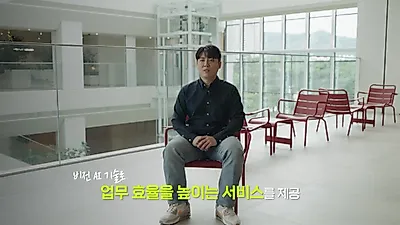
The process of applying 161 logistics robots to the mass production line all at once was not smooth. Because of the vast number of robots being deployed, unexpected variables were constantly present. Kang Gyeong-hwa, a member of the Manufacturing Control and Logistics Development Team, cited the "persistence" of team members as a key factor in the project's success.
For the project, the team conducted test runs at an external OLT (Off-Line Test) site for six months to identify all possible problems in advance. The discovered issues were managed through systematic history tracking, and a process was implemented to verify on-site whether each item was actually resolved. Through this thorough verification process, the risk associated with the large-scale robot deployment was minimized.
Kang explained that the design of the logistics robots' electronic components and the establishment of care systems are also major tasks. Because the internal space of the logistics robots is very narrow, precise design capabilities are required to minimize electronic components and optimize cable layout to maximize space efficiency. Furthermore, the team ensures operational stability through an incoming inspection of developed robots and a "logistics robot care system" that monitors the status of robots operating in the mass production plant in real time.
Transition from simple automation to "integrated manufacturing logistics solutions"
The future of manufacturing logistics depends on "intelligence." While existing logistics systems operated according to pre-set rules, future intelligent logistics will possess the ability to respond flexibly to bottlenecks, inventory status, and process changes based on real-time data.
"The biggest change is the evolution into a logistics system capable of judgment and optimization beyond simple automation," Kang predicted. "The focus will shift from individual automation technologies to 'integrated manufacturing logistics solutions' that encompass the entire factory." While individual technologies with proven effectiveness have been applied one by one until now, it is expected that the main approach will be the wholesale application of integrated systems—where logistics operations, process monitoring, and automation are organically connected—to mass production plants.
These technologies have a high possibility of expanding to other industrial sectors beyond automotive plants. This is because control technology for managing multiple robots, status monitoring, and safety control technology are common foundational technologies. However, to apply them to general industrial sites where there are many external variables and frequent unstructured situations, the development of advanced response technologies based on existing technology must come first.
"I feel a great sense of accomplishment when I collaborate with experts in various fields covering both hardware and software to solve problems based on the actual field," Kang stated. "I want to grow into an engineer who accurately understands the field and connects it to practical results."
Source: original video (YouTube)


0Comments
Comments are currently disabled.