
China's ultra-price strategy threatens South Korea's core industries
Kim Gwang-seok, an adjunct professor at Hanyang University, warns that China's aggressive "ultra-price" strategy—which prioritizes market dominance through zero or negative margins—is systematically displacing South Korean industries, with semiconductors now facing the same threat.
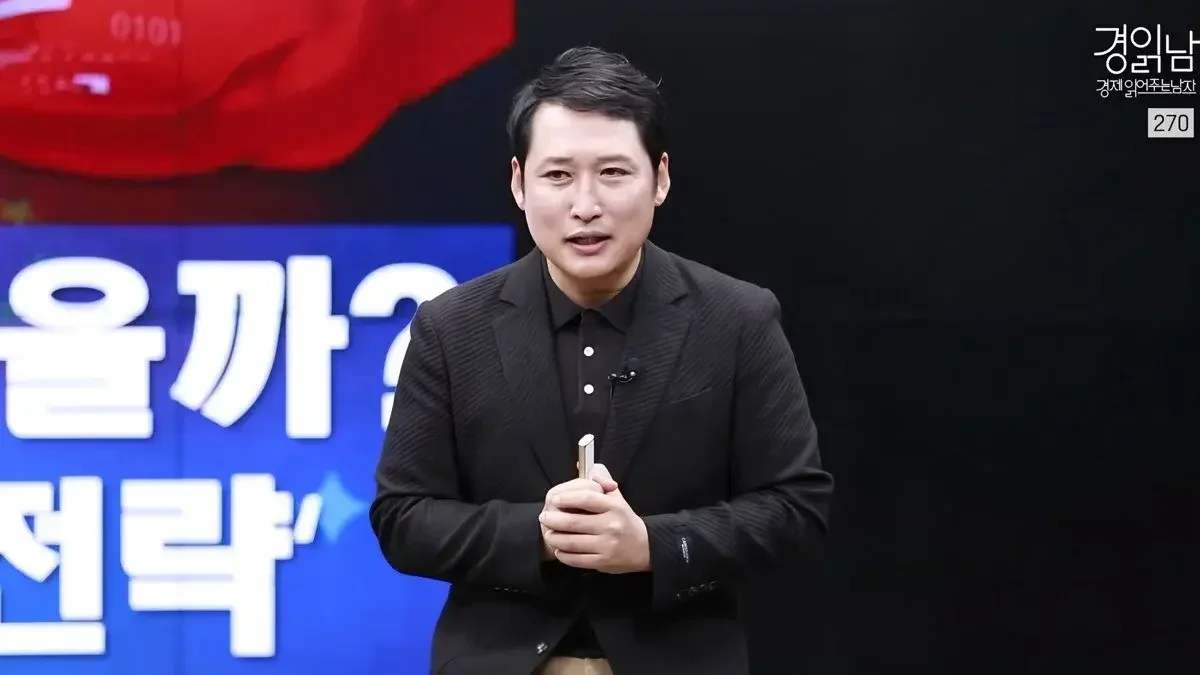
China is targeting South Korea's semiconductor industry using an aggressive "ultra-price" strategy that prioritizes market dominance over profit margins. This approach has already seen Chinese companies seize global market shares in shipbuilding and use LFP batteries priced 30% lower than ternary alternatives to penetrate the automotive market.
The trend of China encroaching upon South Korea's flagship industries is becoming increasingly serious. Following heavy industry, shipbuilding, steel, automobiles, displays, and batteries, semiconductors—the final bastion of the South Korean economy—are now being targeted by China. Kim Gwang-seok, an adjunct professor at Hanyang University, has defined the core of China's industrial penetration as an "ultra-price" strategy. He warned that the "super-gap" and premium strategies maintained by South Korea could be neutralized by China's aggressive price offensives. Kim, who serves as an advisory member for the Ministry of Trade, Industry and Energy, perceives this Chinese threat as a grave matter, having organized and delivered these findings in that capacity.
The fear of 'ultra-price' that swallows markets by abandoning margins
Professor Kim analyzed that the method China uses to enter markets is extremely aggressive. He noted that in the initial stages, they adopt a strategy of not considering margins at all, or even enduring negative margins to drive out existing companies. This method of raising prices only after completely dominating the market has become a powerful weapon to dismantle global leading companies that once held technological advantages. Kim explained, "At first, they don't look at margins at all; the strategy is that it's okay to see negative margins."
A representative case is LiDAR, a core component for autonomous vehicles. While the United States-based Velodyne Lidar was recognized for its technological prowess as the world's first developer of LiDAR, the market landscape shifted with the emergence of Chinese companies. While LiDAR prices, which initially reached $75,000, dropped to the $30,000 level to promote technology adoption, Chinese companies leveraged their independent value chains to drive prices down to $2,000 or even $200. Ultimately, Velodyne Lidar, which failed to preoccupy the market, met the end of being absorbed through a merger.
A similar pattern appeared in the drone industry. The U.S.-based 3DR targeted the market with high-performance filming drones, but DJI from China dominated the market by releasing all-in-one drones with built-in camera functions at much lower prices. DJI seized the market with prices 7% to 10% lower than 3DR. As a result, 3DR had to completely wind down its hardware business and transition into a software company, and ironically, it now serves as a software supplier to DJI.
Industries where premium strategies collapsed: from steel to batteries
China's "ultra-price" strategy has already been realized across various flagship industries in South Korea. The German solar cell company Qcells dominated the global market until the late 2000s with a premium strategy emphasizing "Made in Germany," but its profitability deteriorated extremely when Chinese companies, which vertically integrated their value chains, launched offensives by lowering prices by about 7% to 10%. Ultimately, Qcells lost its status as an independent brand after being acquired by Hanwha Group. This process also had the effect of collapsing the renewable energy industry ecosystem within Europe.
The steel and shipbuilding industries also knelt before China's massive facility investments and subsidy policies. Even though South Korea's POSCO has maintained world-class levels through premium technology strategies such as high-quality automotive steel sheets, China expanded its facilities on a large scale through a method of the government taking on debt to grow its domestic companies. As a result, Chinese companies currently control 55% of the global market, and South Korean steel companies, including POSCO, have suffered hits as their export destinations decrease. In the shipbuilding industry, despite South Korea claiming technological superiority in high-performance areas, China has already risen to number one in the world in terms of market share.
The trend in the battery industry is also changing rapidly. South Korean companies such as LG Energy Solution, SK On, and Samsung SDI have focused on premium ternary (NCM) batteries with high energy density. However, China's LFP (lithium iron phosphate) batteries have penetrated the market using prices more than 30% cheaper than ternary batteries as a weapon. China has carried out mass production based on domestic demand to reduce fixed costs and launch low-price offensives. The trend of global major automakers, including Tesla, Hyundai Motor Company, Kia, Mercedes-Benz, and Volkswagen, adopting LFP batteries en masse serves as evidence that the market has ultimately chosen "ultra-price" over "super-gap."
Semiconductors, the last line of defense for the South Korean economy
Summarizing these industrial trends, Professor Kim emphasized that attention must now turn to semiconductors. Given that many of South Korea's promising industries—such as heavy industry, shipbuilding, steel, automobiles, and displays—have already yielded significant ground to Chinese penetration, there is concern that if semiconductors are also taken, the growth engine of the economy could be completely broken. He expressed a cautious stance, stating, "If China even takes the semiconductors, our economy could really break."
China is currently showing movements to break through United States sanctions by building an independent semiconductor ecosystem centered around CXMT and Huawei. Whether the "super-gap" strategy, centered on high performance and high technology that South Korea has maintained, can block the "ultra-price" strategy combined with China's massive capital power will be a key variable determining the future survival of South Korean industry.
Source: original video (YouTube)

0Comments
Comments are currently disabled.