
How auction theory and sequential selection can distort human choice
Professor Han Sun-gu explains how the sequence of selection and voting systems can distort human judgment, linking economic principles like auction theory and Bayesian Update to real-world decision-making.

Professor Han Sun-gu from Yonsei University explained how sequential selection and voting systems can lead to unfair outcomes, such as the election of a "lesser evil" newcomer when leading candidates are eliminated through successive scandals.
A situation where leading candidates are eliminated one after another due to scandals, eventually resulting in the election of an unexpected newcomer, is not merely a political coincidence. As seen in the election process of the Pope in the film 'Conclave', the order of selection in reality often shakes the fairness of the outcome. This phenomenon can be explained through economic principles.
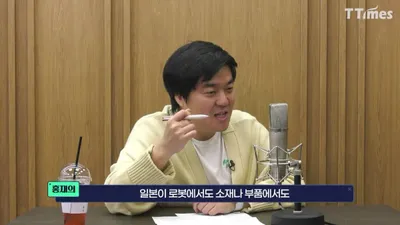
The channel Understanding: All the Knowledge in the World invited Professor Han Sun-gu from Yonsei University to analyze common errors in human judgment by linking them to Nobel Memorial Prize in Economic Sciences theories. Professor Han explained why human choices can be distorted through auction theory, voting systems, and the probabilistic judgment model known as Bayesian Update.
"The first is criticized, the last is crowded": The trap of sequential selection
Professor Han pointed out the "distortion of choice" that occurs when candidates are reviewed sequentially one by one. Even for objects with similar values, evaluations can diverge extremely depending on the order. He used five paintings of sunflowers by Van Gogh as an example. Even if the five paintings have nearly identical value, if the first painting is presented on Monday, people are likely to find small flaws and assign a low price. Conversely, the last painting on Friday is highly likely to be sold at the highest price due to the psychological effect of having no alternatives.
This phenomenon also appears in organizational personnel decisions or royal successions. Citing the film 'Conclave', Professor Han explained a situation where leading candidates are eliminated as scandals are revealed in succession, eventually leading to the election of a newcomer with no information. This is not necessarily because the newcomer is clean, but rather a structural issue where information is exhausted during the process of verifying the disqualifications of previous candidates, leading to the selection of the "lesser evil." According to the explanation in the video, the newcomer elected in the film was selected partly because there was no time to investigate scandals, and as a result, sometimes ends up being a figure with even greater problems.
The case of Emperor Yang of Sui from the Sui dynasty also supports this. Emperor Yang of Sui became emperor after ousting his elder brother, the Crown Prince, but subsequently led the Sui dynasty toward destruction. "If candidates are reviewed sequentially, only the minor flaws of a specific individual may be highlighted, leading to their elimination," Professor Han emphasized. "To allow for a fair evaluation, similar candidates should be reviewed simultaneously to provide sufficient opportunity for comparison." This aligns with the core principles of auction theory established by Nobel Memorial Prize in Economic Sciences laureates Milgrom and Wilson, who proposed methods to ensure fair evaluation by conducting auctions for similar items simultaneously.
Differences in auction methods also affect judgment. There is the "Dutch auction," where the price descends from a high point, and the "English auction," where the price rises from a low point. Professor Han explained, "The Dutch auction has a nature of fear, where participants compete over who is more pressured, and it is difficult to guess how much others are thinking." In contrast, the English auction features an opportunity for participants to learn that "this price is worth it" by observing the process of other participants bidding prices.
The trap of majority rule: Voting that fails to reflect "everyone's preference"
The problem of choice extends to voting systems. Professor Han mentioned Arrow's impossibility theorem, noting that no voting system can perfectly reflect the preferences of all people. In particular, "simple majority rule," commonly used when there are three or more candidates, can cause a "majority trap" where a candidate not wanted by the majority of voters is elected. This is because the result can change depending on how pairs are attacked or how votes are cast when there are three or more candidates.
As alternatives to supplement this, Professor Han presented two methods: the Condorcet method, which determines a winner through one-on-one matchups between candidates, and the Borda count, which assigns points based on preference rankings. Although these methods are also not perfect solutions, he explained that they can reflect more of the public will than existing voting methods by allowing voters to express rankings not only for their most favorite candidates but also for their least favorite candidates.
The cases of the Qing dynasty emperors provide an interesting look at these institutional considerations. The Qing dynasty did not pre-determine the Crown Prince, instead inducing infinite competition until just before an emperor's death. "If the Crown Prince is decided in advance, judgment can be clouded by the concentration of specific factions and slander," Professor Han analyzed. "Wise monarchs in the early Qing dynasty exercised their ruling power within this competitive structure." By not clarifying the successor until just before death, the Qing dynasty emperors maintained a structure that forced princes to compete without slandering one another.
How to overcome experience bias: 'Bayesian Update'
Errors in judgment stem not only from a lack of information but also from an individual's "biased experience." Through the concept of Bayesian Update, Professor Han explained how humans should revise their existing beliefs when encountering new information. People estimate probabilities based on the limited experiences they have had, but if those experiences are biased, they make judgments that are far from reality.
He explained how excessive optimism or distrust leads to failure through the cases of the Roman emperor Commodus and the Joseon kings Yeonsangun and Gwanghaegun. Relying solely on one's own experience to view the world is dangerous, and the process of constantly accepting new information to revise one's perception is essential. These are examples of how an individual's limited experience distorts probabilistic judgment.
"For rational judgment, one should not rely solely on limited personal experience but should constantly revise their perception through diverse information and learning," Professor Han advised. Ultimately, the core of economic thinking is the attitude of constantly asking oneself whether the judgments we are certain of are based on objective reality or are illusions created by biased past experiences.
Source: original video (YouTube)


0Comments
Comments are currently disabled.