
Herd mentality and unstable minds drive individual investor mistakes
Reporter Kim Won-jang explains that the biggest enemy for individual investors is not macroeconomic indicators or corporate fundamentals, but an unstable mindset driven by herd mentality.

Individual investors recorded a net purchase of more than 35 trillion won between mid-May and June 17 of this year. Reporter Kim Won-jang warned that chasing rising prices and fleeing during plunges, often driven by seeing others profit, undermines investment judgment more than macroeconomic indicators.
It is human instinct to feel excitement when asset prices rise and panic when they plunge. However, when this instinct intervenes in investment decisions, the results are disastrous, as investors repeat a pattern of chasing purchases when stock prices rise and fleeing in fear when prices fall.
An investment dialogue featuring reporter Kim Won-jang, shared by The Man Who Explains the Economy (Kim Kwang-seok TV), contains insights into the "mindset" that is more important than the skill of reading market trends. Mentioning the increased market volatility following the recent announcement of the United States midterm election results, Kim pointed out that the greatest enemy facing investors is not macroeconomic indicators or corporate fundamentals, but an "unstable mind."
"Seeing a friend get rich destroys judgment"... Investors trapped in herd mentality
Kim analyzed why investors flock to buy at specific times. "Nothing undermines my judgment more than seeing a friend suddenly become rich," he emphasized, noting that news of profits around one's social circle is a primary culprit in breaking investment principles. In fact, between mid-May and June 17 of this year, individual investors recorded a net purchase of more than 35 trillion won over a one-month period. Kim explained that this movement was closer to the result of herd mentality—where people hesitate and then jump in late after seeing stock prices rise—rather than movements based on sophisticated analysis, economic indicators, or statements from the Fed chair.
This phenomenon repeats in historical cases. From anecdotes in Manhattan during the 1929 Great Depression to the speculative frenzy of the South Sea Company in the United Kingdom, historical investors always showed a tendency to "run along with others" rather than analyzing corporate value. Kim added that "we are beings who just run whenever we see something else running," noting that similar phenomena appear in the real estate market. He explained how market fear and greed distort prices by citing the era when Banpo Xi was shunned due to concerns over unsold units and the recent case of Dunchon Jugong. Specifically, regarding Dunchon Jugong, he mentioned a case where unsold units almost occurred during the special supply phase because the sale prices were higher than surrounding market rates, despite the supply of 12,000 households.
Difference between capital markets and the real economy: Distinguish 'mind' from 'substance'
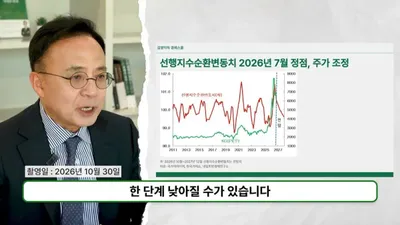
The core of the dialogue is the need to clearly distinguish between capital markets and the real economy. Kim defined it by stating, "The capital market is determined by the 'mind,' while the real economy is determined by 'substance'." He noted that a time lag exists between the point when market sentiment shrinks extremely and stock prices hit a bottom, and the point when actual economic indicators deteriorate and hit the real economy.
For example, market fear may increase due to the announcement of a specific tariff policy, causing stock prices to plunge, but the point at which that policy actually affects the real economy may be several months later. As a real-world example, in April 25, the market plunged and stock prices formed a bottom due to uncertainty following the announcement of reciprocal tariffs, but the point where the tariffs began to fully affect the real economy was August 25. Therefore, investors should not be swept away by temporary movements of the market's "mind," but should manage their impatience by reading the "substantive" flow of the economy. Kim advised that during periods when stock prices are adjusting, investors should instead cast aside impatience and observe the market.
Why individuals fail to profit despite high levels of understanding
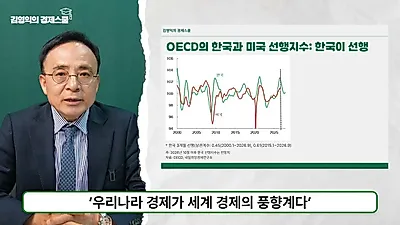
An interesting point is that the market understanding of South Korean individual investors is very high. Kim contrasted this with retirees in the United States who earn 8–10% annual returns through 401k or IRP, noting that South Korean investors are fast at acquiring information and have a high level of understanding, to the extent that they study the contents of the Fed's FOMC meetings in real time. South Korean investors are even passionate enough to study directly from the early morning hours, going beyond the summaries provided by Yonhap News Agency or Reuters.
However, high understanding does not necessarily lead to high returns. Kim cited the difficulties faced by securities company PBs as an example. While clients with large asset scales desire stable returns, they often shake off their existing portfolios and undertake excessive investments because they are swayed by news of profits from those around them, such as hearing that "a daughter-in-law doubled her money in a month," when the market surges. Ultimately, more important than high knowledge is the ability to maintain one's own principles amidst market volatility.
Source: original video (YouTube)

0Comments
Comments are currently disabled.