
Treasury yields expected to peak before declining in high interest rate era
Professor Kim Gwang-seok predicts that while Treasury yields are set to peak and descend, the era of high interest rates will structurally continue due to energy security, fiscal expansion, and shifts in demand.
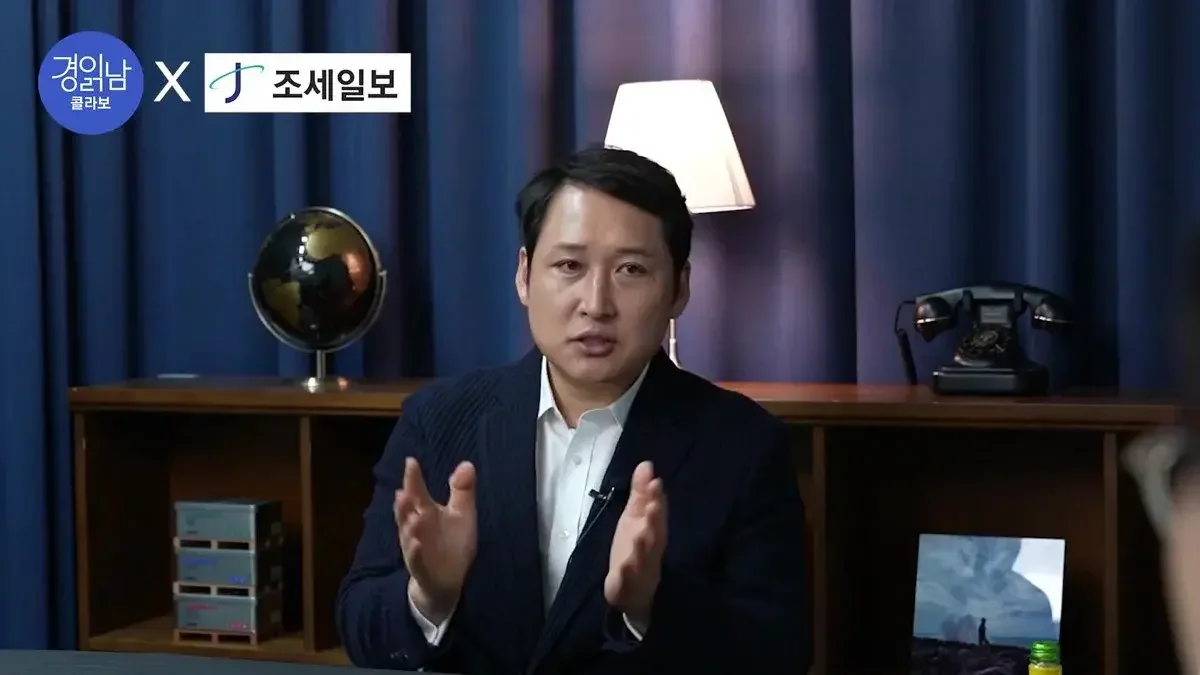
Professor Kim Gwang-seok predicts United States Treasury yields will eventually descend after peaking, though structural factors like energy security and fiscal expansion through 2027 will maintain a high interest rate era.
Amid rising long-term interest rates globally and surging United States Treasury yields, an analysis of future interest rate paths has been released. Professor Kim Gwang-seok predicted that while Treasury yields are on a path to peak and then descend, the interest rate levels themselves will not drop significantly, as a "high interest rate era" will be structurally maintained.
In a dialogue with Jose Ilbo reported by The Man Who Explains the Economy (Kim Gwang-seok TV), Kim explained the recent rise in Treasury yields by distinguishing between temporary and structural factors. "Temporary factors can change the direction, but structural factors remain unchanged," he analyzed, adding, "The era of high Treasury yields will be maintained, but a trend will emerge where Treasury yields hit their own peak and then fall."
An 'Era of High Costs' Created by Energy Security and Fiscal Expansion
The first structural factor identified by Kim is the "settling into an era of high costs." He cited the movement toward strengthening energy security due to factors such as wars in the Middle East as a core reason. He explained that while the economic logic in the past prioritized finding the cheapest energy sources, the economic paradigm has now shifted toward prioritizing security, even if it incurs higher costs.
In the case of South Korea, for instance, efforts are being made to diversify energy sources, such as increasing imports of crude oil from the United States and LNG, to reduce dependence on Middle East oil. Kim diagnosed that "the move toward energy diversification or the introduction of renewable energy and nuclear power involves enduring higher costs than fossil fuels in the short term," which creates a high-cost structure for the overall economy.
The second structural factor is the global expansion of fiscal spending. As government fiscal injections are expected to increase throughout 2026 and 2027, the volume of Treasury bond issuance to support this will rise, putting upward pressure on interest rates due to the principles of Treasury supply and demand. Kim added that this expansion of fiscal spending is also a factor that will be difficult to change in the short term.
The third factor is the "handover" of Treasury bonds. Regarding United States Treasuries, he pointed out that the primary source of demand has completely shifted from the Fed to non-Fed (private) entities. When dividing demand into the Fed and non-Fed, or public and private, demand for U.S. Treasuries has already fully transitioned to the private sector. "The private sector and non-Fed entities have no choice but to demand higher interest rates," Kim explained, stating that this change in demand structure supports high Treasury yields. He predicted that because these structural factors will persist through 2027, even if Treasury yields fall, they will be difficult to drop significantly.
Easing Concerns Over Rate Hikes... "The Inflection Point is Early 2027"
Conversely, the temporary factors that drove interest rates up are expected to gradually weaken. Kim classified geopolitical instability, international oil prices, inflation, and concerns over interest rate hikes as temporary factors. "I do not see geopolitical instability intensifying further in 2027," he said, predicting that inflation pressure will ease as the growth rate of international oil prices slows down.
Specifically, he analyzed that after international oil prices peak at over 100 dollars in 2026, even if oil prices maintain 100 dollars in 2027, the growth rate compared to the same period of the previous year could be 0%. His logic is that if the oil price growth rate turns negative, it will serve to lower the consumer price inflation rate. This is similar to the case in 2023, when the decline in the oil price growth rate following the 2022 oil price surge helped lower inflation.
In particular, he predicted that the period of concern regarding interest rate hikes would be the final stretch from the end of 2026 to as late as the first quarter of 2027. From March 2027, the effect of slowing international oil price growth will appear, and once the market judges that "interest rate hikes are over," market interest rates will fall, providing momentum to lower Treasury yields. However, Kim added a caveat: "If wars intensify further, the premises regarding inflation and interest rate hikes could be wrong."
Regarding the recent decision by the FOMC in October to freeze interest rates, he explained based on the mechanisms of monetary policy. Citing remarks from John Williams, President of the Federal Reserve Bank of New York, Kim analyzed that "the recently heightened Treasury yields are performing the role of the Fed." This means that even without raising the base interest rate, market interest rates are already high enough to increase the loan burden on corporations and households and suppress demand, reducing the need for additional rate hikes. He explained that the Fed must consider its two mandates, price stability and employment, and is in a period where it must observe the effects of the interest rate hike from this past September.
"Perceived Stagflation" Already Present if Semiconductors are Excluded
Kim provided a sharp diagnosis of the South Korean economic situation, evaluating that the South Korean economy has entered a period of "perceived stagflation." He stated, "Since the growth rate itself is very high, it is inappropriate to say it meets the definition of stagflation, so the expression 'perceived stagflation' is more suitable." He expressed concern that if policy is responded to by concluding it is stagflation in a situation where perceived prices are high but the actual inflation rate may not be, it could lead to unusual results.
He emphasized the phenomenon of industrial polarization. While major industries including semiconductors and those related to AI continue to show robust growth, other sectors have already entered a stagflation phase where economic recession and inflation occur simultaneously. In other words, his analysis is that industries excluding the semiconductor sector have effectively entered a recessionary phase.
Accordingly, Kim suggested a way for the government to respond with policy. He emphasized the need for sophisticated policy design that reflects the temperature difference between industries, stating, "It is necessary to simultaneously release both total aggregate indicators, including the semiconductor industry, and indicators that exclude semiconductors."
Source: original video (YouTube)


0Comments
Comments are currently disabled.