
Productivity gaps drive wage disparities as non-semiconductor industries stagnate
KDI analysis reveals that while the economy grew by 0.6% in the second quarter of this year, real wages remain low due to significant disparities in profit productivity between industries.
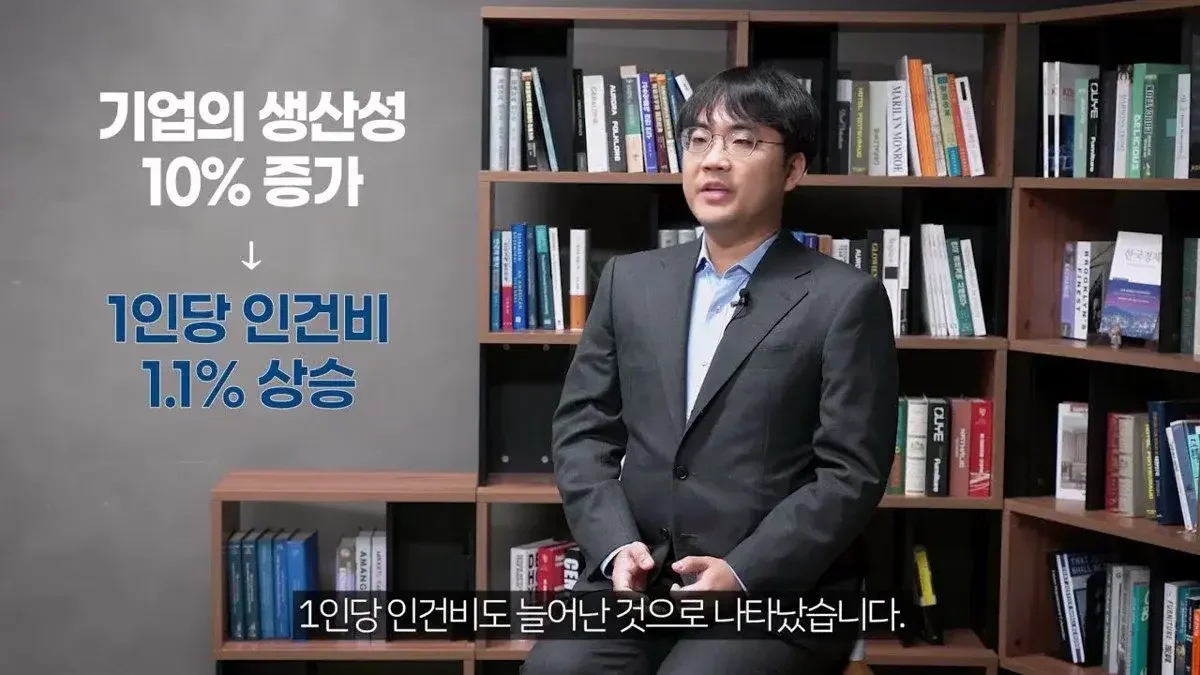
While the Korean economy grew by 0.6% in the second quarter, real wages remain lower than previous years due to declining profit productivity in most sectors. KDI analysis shows that the rise in marginal firms is primarily driven by this productivity decline rather than rising interest rates.
The Korean economy rebounded with 0.6% growth in the second quarter of this year, driven by increases in exports and consumption. However, despite the rise in the economic growth rate, real wages felt by many workers remain at levels lower than those of the past two years. KDI analyzed that the cause of this wage stagnation lies not merely in inflation, but in the gap in "profit productivity" across different industries.
Semiconductors rise alone while other industries stagnate in productivity
According to KDI's analysis of corporate data, the electronic component manufacturing industry, which includes semiconductors, was the only sector where inflation-adjusted fixed wages (excluding performance bonuses) rose significantly since 2021. This directly translated into differences in wage growth rates between industries. Companies with higher profit productivity—the ability to create value relative to the labor and capital invested—tended to see increases in labor costs per person.
The gap is even more pronounced when examining profit productivity trends by industry. While profit productivity in semiconductor manufacturing rose significantly, other industries showed a gradual decline since 2021. Notably, when companies excluding semiconductors were classified into three groups based on productivity levels, the top group's productivity remained stagnant, while the middle and lower groups showed a downward trend. The analysis found that industries where profit productivity rose by 10 percentage points saw real fixed wage growth rates that were, on average, about 0.9 percentage points higher. Approximately one-third of the wage growth gap between semiconductor manufacturing and other industries can be explained by this difference in productivity.
Productivity decline, rather than interest rates, drives increase in marginal firms
Sluggish profit productivity is leading not only to wage stagnation but also to the deterioration of corporate health. In industries with low productivity, the proportion of so-called "marginal firms"—those unable to cover interest payments with their earnings—has increased significantly. Notably, the primary factor behind the increase in these marginal firms was found to be the decline in profit productivity rather than rising interest rates.
KDI pointed out that because the increase in marginal firms stems from poor productivity, extending the lifespan of companies through simple financial support cannot be a fundamental solution. Instead, the institute suggested creating a structure where labor and capital can naturally move to high-productivity areas by supporting business restructuring and the job transfers and retraining of workers.
Ultimately, the analysis suggests that to ensure the benefits of economic growth steadily flow into wages, the growth structure must move away from its heavy reliance on the semiconductor industry. It is a time to focus on securing new growth engines and increasing profit productivity so that industries other than semiconductors can also create high added value.
Source: KDI (YouTube)



0Comments
Comments are currently disabled.