
Chinese food brands use stealth infiltration to enter Korean market
Chinese food service brands, or C-brands, are entering a "prelude" stage of infiltrating the Korean market through "stealth infiltration" using massive capital and advanced data systems. Park Seung-chan, director of the China Management Research Institute, warns that current brand presence is merely a preview before a massive main force arrives.
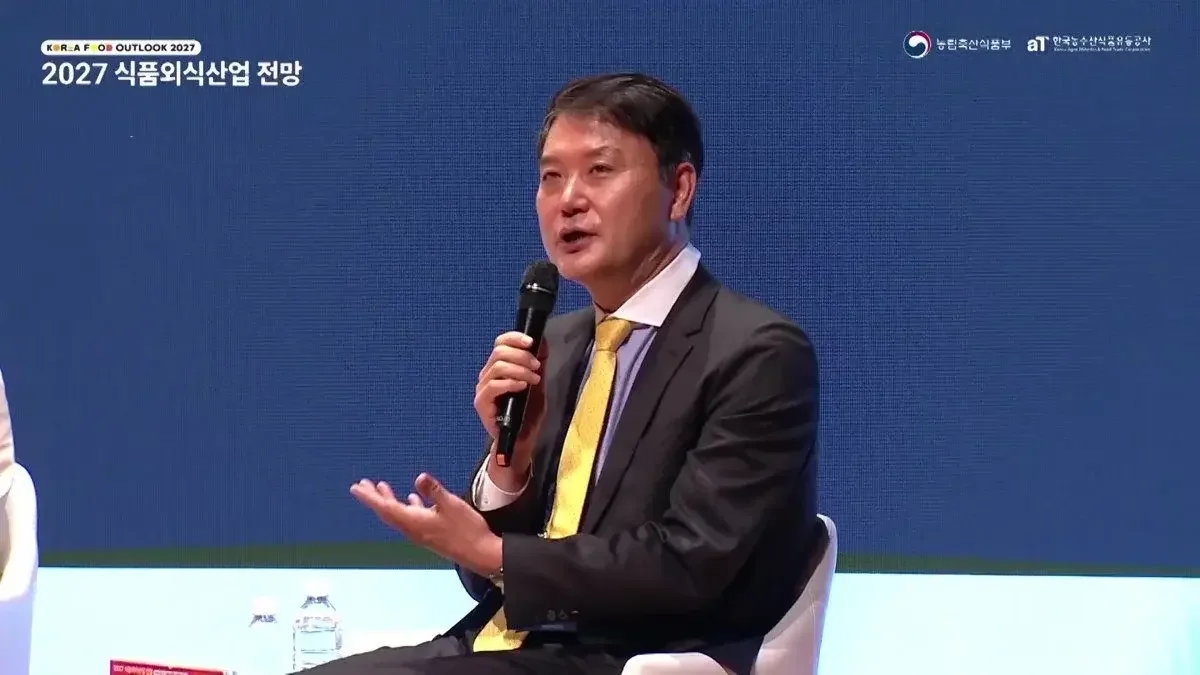
Chinese food service brands are conducting a "stealth infiltration" of Korean commercial districts like Gangnam and Hongdae using sophisticated data systems and massive capital. During a lecture at COEX in Seoul on the 5th, Professor Park Seung-chan warned that the current visible brands are merely a preview before a massive main force arrives.
The entry of Chinese food service brands (C-brands) into the Korean market has moved beyond a simple trend and entered a "prelude" stage that is shaking the industrial ecosystem. Driven by massive capital and sophisticated data systems, their movements are quietly and secretly penetrating Korean commercial districts.
During a lecture on the "2027 Food Service Industry Outlook" held at COEX in Seoul on the 5th, Park Seung-chan, director of the China Management Research Institute and professor at Yong In University, analyzed the current status and strategies of C-brands entering the domestic market. Park defined the current offensive as "stealth infiltration," warning that the brands currently visible are merely a preview before a massive main force arrives.
"Quietly and Secretly"... C-brands' 'Stealth Infiltration' Armed with Data and Systems
Park defined the way Chinese brands approach the Korean market as "stealth infiltration." This strategy involves quietly seeping into major commercial districts based on proven business models rather than launching highly visible, large-scale offensives. According to Park, traces of these brands can already be easily found in major commercial areas such as Gangnam Station, Sinnonhyeon Station, and Hongdae. This phenomenon, particularly visible around Gangnam Station, is accelerating beyond last year's levels.
The core competitiveness of C-brands lies not in simple price competition, but in "systematized operations." Beverage category brands such as CHAJI, HEYTEA, BAWANG CHAJI, and ZABEKDO collect precise customer transaction data to utilize for location-based marketing and real-time inventory management. Their manufacturing processes are also highly systematized to maintain consistent quality. The video mentions that the product quality is high enough that an official visiting China for the first time felt they "wanted to eat it every day" after experiencing HEYTEA's mango tea, which is expected to be a driver for future market expansion.
Haidilao was identified as the vanguard of the food service sector. Haidilao operates flagship stores through a 100% directly managed system and is transplanting its supply chain management (SCM) into the Korean market. The dessert army, represented by Tanghulu, also employs a "photogenic strategy." Through emotional marketing that maximizes visual stimulation to encourage customers to post photos on social media themselves, they are rapidly occupying the market with a low-cost model. They are showing a pattern of occupying commercial districts by building a bakery dessert portfolio.
The offensive of C-brands is also intense in the retail sector. All-around infiltration is occurring as retail brands like MINISO, YOUSU, and Palm Mart, as well as LABUBU, which utilizes Chinese character IP, target the Korean MZ generation and cause people to line up.
Escaping China's Internal 'involution'... Korea as a 'Testbed' for Global Expansion
The reason Chinese brands are knocking on the Korean market with massive capital is due to "involution," the extreme competitive environment within China. Due to market saturation in China and sanctions from Western regions such as the United States, "overseas expansion" has become inevitable for survival. As competition between brands in China becomes excessively fierce and sales no longer reach past levels, the "overseas expansion" phenomenon is accelerating as a means of survival.
Among these, Korea is the most attractive target. Due to geographical proximity, logistics and supply chain management (SCM) costs can be minimized, and the fact that Korean consumers have very discerning tastes actually serves as an opportunity. This is because being recognized in the Korean market can secure a powerful reference for expanding into the global market beyond Asia. Park analyzed that "because Korean consumers are very discerning, succeeding in Korea is equivalent to securing a powerful reference for expansion into the Asian and Western regions."
Brands that have already created success stories in Korea, such as Haidilao or CHAJI, already exist, and accordingly, the movement of agency companies that handle the launching of Chinese brands in Korea is becoming active. Korea serves as a strategic stronghold and a testbed for Chinese brands for global expansion.
The Landscape of Gangnam in 2036: A Food Service Market Dominated by Data and Automation
Park warned of the speed of change by imagining the appearance of Gangnam, Seoul, ten years from now in 2036. It is a scenario where smartphone apps remember an individual's eating habits and payday to recommend restaurants, and a scene where many of the recommended restaurants are Chinese brands could become a daily occurrence. The video emphasizes that this is not mere imagination but grounded logic, assuming a situation where a smartphone coupon notification rings and a search app recommends five restaurants near Gangnam Station, three of which are Chinese brands.
These changes lead beyond a simple replacement of brands to payment methods, data flows, and service automation. The analysis suggests that if Chinese capital expands beyond delivery platforms (such as the case of Meituan acquiring Baedal Minjok) and beyond B2C into the B2B realm, the data sovereignty of the entire food service industry could change. While the entry of American franchises into Korea in the past was accepted as part of a lifestyle due to low cultural heterogeneity, the difference now is that current C-brands are targeting the Korean lifestyle itself by combining strong technological prowess with capital.
Park emphasized, "The current offensive is not simple competition between brands," but rather "the influx of a massive system combining capital, data, and infrastructure." He diagnosed the current situation as being even more difficult than the onslaught of AliExpress, Temu, and SHEIN, stating that it is urgent for K-brands to prepare response and approach strategies.
Source: original video (YouTube)


0Comments
Comments are currently disabled.