
Managing the pension trio to bridge the income crevasse
Dr. Hong Chun-uk provides a guide on managing the three essential pension types—National Pension, retirement pension, and individual pension—to prepare for the "Income Crevasse," the gap between retirement and pension receipt.
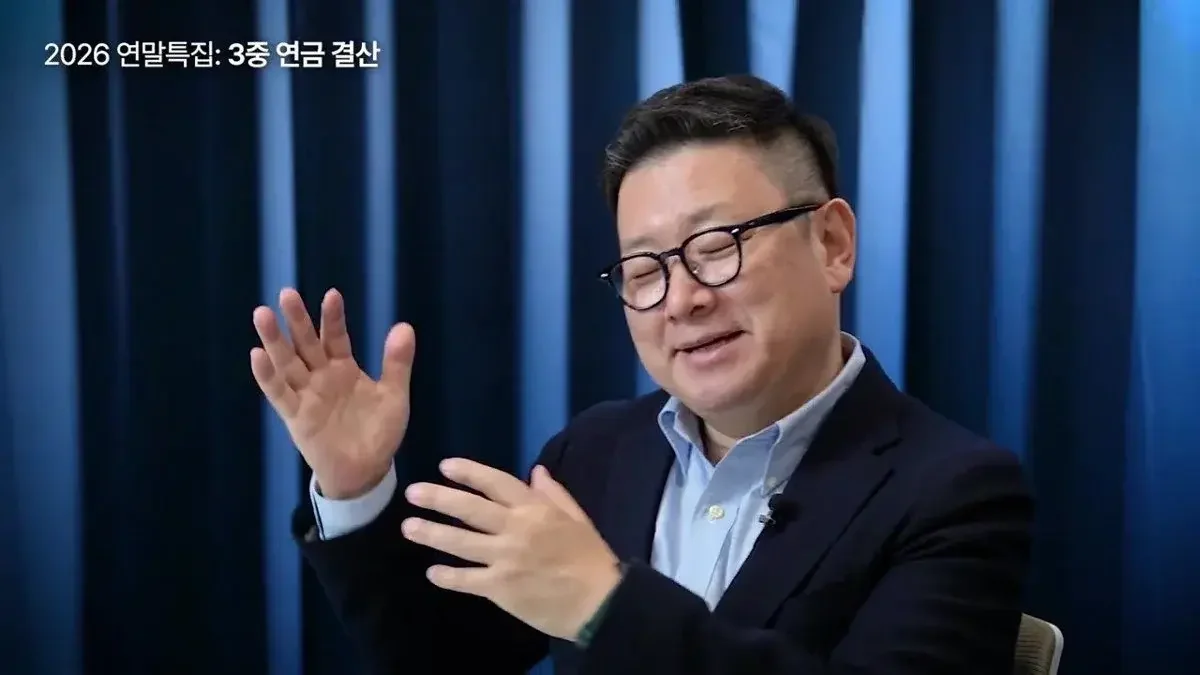
Dr. Hong Chun-uk suggests adjusting National Pension receipt timing and switching retirement pension management methods to mitigate the 12-year income gap that can occur between retirement and pension eligibility. While 85% of retirement pensions favor stable products, these assets have averaged only 2.6% returns over the last 10 years, failing to beat the 3% average inflation rate.
As the end of the year approaches, many people review their annual investment returns, but few take the time to check their pension assets, which form the foundation of old-age security. The quality of life in retirement is determined by how one manages the "pension trio," which includes the National Pension, retirement pension, and individual pension.
In this lecture, Dr. Hong Chun-uk presents core management methods for these three essential pensions required for retirement preparation. Dr. Hong emphasized the need for regular annual reviews, highlighting the adjustment of National Pension receipt timing, switching retirement pension management methods, and utilizing tax credits for individual pensions.
"A 12-year gap with no income"... National Pension timing strategy is key
The first area to examine is the National Pension. Dr. Hong explained that due to National Pension reforms, the insurance premium rate is expected to rise from the current 9% to 13% in the future. A particularly noteworthy point is the "Income Crevasse," which refers to the period of income gap that occurs after retiring from a primary job but before receiving the National Pension. If a person retires at age 53 and receives the pension at age 65, a gap of approximately 11 to 12 years without income occurs.
To fill this gap, Dr. Hong suggested three strategies. The first is to increase the coverage period, as the most important factor in determining the National Pension amount is the payment period. If there are periods of payment exception, it is advantageous to use the "additional payment" system to fill those gaps. Dr. Hong advised, "It is good to make additional payments for about three years."
The second strategy is adjusting the timing of receipt. If the income gap is a concern, one can choose "early receipt" to receive the pension sooner; conversely, if income is sufficient and there is a concern about the pension amount being reduced, one can choose "deferred pension." Using his own case, Dr. Hong explained, "Choosing a deferred pension has the effect of increasing the pension amount by about 36%." In contrast, choosing early receipt five years ahead effectively eats into future earnings, resulting in a reduction of the pension amount by about 30%.
The third is customized design for individual receipt timing. Dr. Hong mentioned that if a monthly salary is 5.19 million won or more upon receiving the pension at age 65, the pension may be reduced, suggesting deferring receipt to age 70 as an example to avoid this. He emphasized, "When checking the expected pension amount, one must comprehensively consider the coverage period, income level, and when the pension will be received."
Neglected retirement pensions: Warning of "returns that cannot beat inflation"
The state of retirement pension management is even more serious. According to Dr. Hong, nine out of ten people in Korea do not receive their retirement pay as a pension but instead receive it as a lump sum at the time of retirement. This is often an unavoidable choice to secure living expenses for the aforementioned Income Crevasse period. However, for high-income earners, receiving a lump sum imposes a high retirement income tax burden of over 30%.
The gap in returns based on management methods is also stark. Retirement pensions are divided into DB managed by the company and DC managed directly by the individual. Recently, an increasing number of people are switching to the DC type to match the period of slowing wage growth. In fact, the trend of switching from DB to DC is distinct, with as many as 150,000 people switching in just June and July of this year.
Dr. Hong pointed out, "Many retirement pensions are left neglected in principal-and-interest-guaranteed products, such as bank deposits." This is because the default option chosen by 85% of retirement pensions tends to lean toward stability. Over the past 10 years, the average return on principal-and-interest-guaranteed products was only around 2.6%, which is less than the average annual inflation rate of 3%. On the other hand, if one achieves returns at the level of the National Pension (in the 6% annual range) through active management, the asset size could be nearly double after 10 years. Dr. Hong explained, "If you achieve returns even at the level of the National Pension, your assets will almost double."
Therefore, one must check through the Integrated Pension Portal whether retirement funds remaining in IRP accounts are being neglected or if they are staying as cash even after maturity. Another benefit not to be missed is that if received as a pension, retirement income tax can be reduced by 30% if received for 10 years or less, 40% from the 11th year, and 50% for more than 20 years.
How to maximize year-end tax settlement benefits using individual pensions
The final component is the individual pension. Dr. Hong recommended distinguishing between "pension savings," which aims for year-end tax settlement credits, and "pension insurance," which is a product from insurance companies. Pension savings are very useful as they provide tax credit benefits during the year-end settlement if a certain amount (such as a limit of 6 million won per year) is paid annually. On the other hand, pension insurance focuses on tax-free benefits when receiving the pension later rather than tax credits. However, it should be noted that pension insurance incurs business expenses from the insurance company.
Dr. Hong suggested actively managing funds or ETFs within individual pension accounts, noting, "Many people open accounts for year-end tax settlement benefits, but many do not know how to actually manage that money." He suggested that if one had invested in funds or ETFs, they could have achieved higher returns compared to insurance products, citing the situation where the KOSPI growth rate reached 70% in 2025. Comparing returns over the past 10 years, the performance of fund/ETF accounts reflecting the stock market's rise was superior to insurance products.
According to statistics, people tend to leave an average of about 2.58 million won without filling their annual tax credit limit. Therefore, it is necessary to check the payment amounts in individual pension accounts before the end of the year to maximize tax credit benefits.
Ultimately, the key to retirement preparation is "continuous monitoring." The process of designing the National Pension receipt timing, checking the management method of retirement pensions so they are not eroded by inflation, and filling the tax credit limits of individual pensions must be organically connected.
Source: original video (YouTube)

0Comments
Comments are currently disabled.