
"I beat the lawyer" A case of an ordinary person winning using ChatGPT... Polarization of 'all or nothing' coming for professionals
As AI technology advances, experts predict a polarization between "strategists" who use AI to increase productivity and "traditionalists" who only provide…
As artificial intelligence (AI) technology advances rapidly, concerns are growing regarding the existence of so-called 'professional' occupations such as lawyers, doctors, and accountants. However, experts predict that rather than the professions themselves disappearing, a polarization will intensify between 'strategists' who use AI as a tool to increase productivity and 'traditional methods' that stop at simple information delivery.
"That lawyer was someone who didn't use ChatGPT"... The difference between information deliverers and interpreters
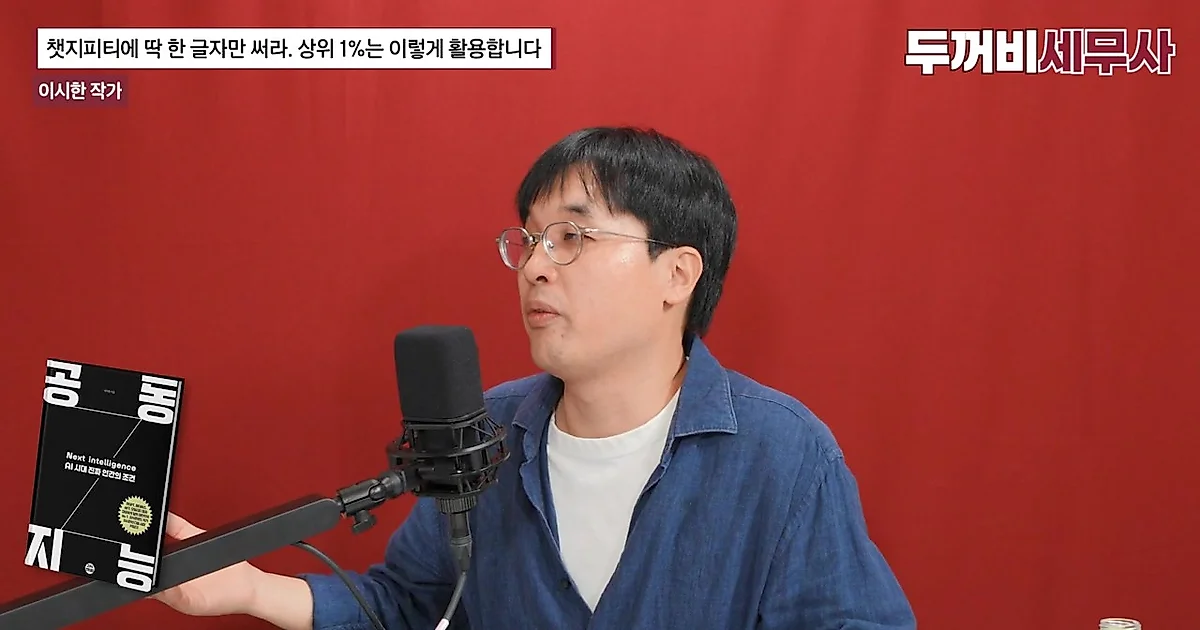
Recently, actual cases have emerged where AI is encroaching on the work areas of professionals. Appearing on the YouTube channel 'Jaetech is Toad Tax Accountant', author Lee Si-han mentioned a case where a client, after experiencing conflict with a lawyer and proceeding with dismissal, filed a lawsuit against the lawyer. According to the video, as a result of the client responding using ChatGPT, they ultimately won the lawsuit against the lawyer.
Lee analyzed the core of this incident as the fact that "that lawyer was someone who didn't use ChatGPT." He diagnosed, "People who play the role of delivering information will no longer make it. Only those who interpret that information can survive." This is because simple information delivery has become an area that AI or cloud services can perform much better. On the other hand, he explained that 'strategic experts' who build strategies based on information may actually face opportunities.
These changes are expected to create an 'all or nothing' situation for professionals. Lee explained that "looking at professionals, it has become all or nothing," and that if they perform planning tasks such as analyzing corporate situations and establishing detailed strategies, they can maximize work efficiency through AI. Conversely, professionals following traditional methods that simply provided information may face a crisis.
"In the end, all the coachmen disappeared"... The end of cartels and the speed of AI dissemination
Regarding the phenomenon where technological innovation clashes with the vested interests of existing industries, Lee cited the past case of the 'Coachmen's Union' in the United Kingdom. When the early automobile industry emerged, coachmen lobbied for and passed the 'Locomotive Act', which required an assistant holding a red flag to accompany the operation of an automobile for their own survival. Due to this regulation, automobiles could not run faster than a person's walking speed.
However, Lee predicted that "in the end, all the coachmen disappeared," noting that AI is being disseminated much faster than the period of transitioning from carriages to automobiles, so existing cartels or regulations will eventually crumble before efficiency. The analysis suggests that technological advancement is rapidly breaking down the entry barriers established by existing occupational groups.
In particular, AI is differentiated from existing methods of acquiring skills. In the past, learning Excel shortcuts and such was an entry barrier, but in the AI era, everything can be handled through speech (language). Lee explained, "AI is a technology that is completely elderly-friendly," noting that unlike kiosks where finding a list is difficult, with AI, you can obtain desired results just by organizing your words well, leading to an era where you can create apps even without knowing coding.
"80% of work is paperwork"... The rising value of people with core competencies
Regarding concerns that AI will replace jobs, Lee distinguished the nature of work. Using marketing roles as an example, he saw that tasks such as data collection, Excel work, and document organization, which account for about 80% of the total work, can be sufficiently replaced by AI. On the other hand, the remaining 20%, which includes human-unique areas such as communication, negotiation, and creative planning, remains valid.
He said that people who rely solely on technical proficiency are highly likely to be replaced, but those who maximize work efficiency using AI or focus on areas that humans can do will instead see their value increase. Ultimately, he argues that survival in the AI era depends not on how the technology works, but on the 'utilization ability' to decide how to apply the technology to work.
In conclusion, Lee emphasized that it is a process of changing tools rather than the disappearance of the professions themselves. Just as a new profession called an automobile driver exists even though coachmen disappeared, only the way of working changes through AI. He suggested that "it is just that the tools have changed," and that people with the sense to use AI early and learn how to utilize and operate it will occupy a much more advantageous position.



0Comments
Comments are currently disabled.