
"95% of Oil is Monopolized by Abu Dhabi"... The Power Structure of the UAE Union of 7 Emirates
The UAE is a federation of seven emirates where power and wealth are concentrated in Abu Dhabi, which produces 95% of the nation's oil.
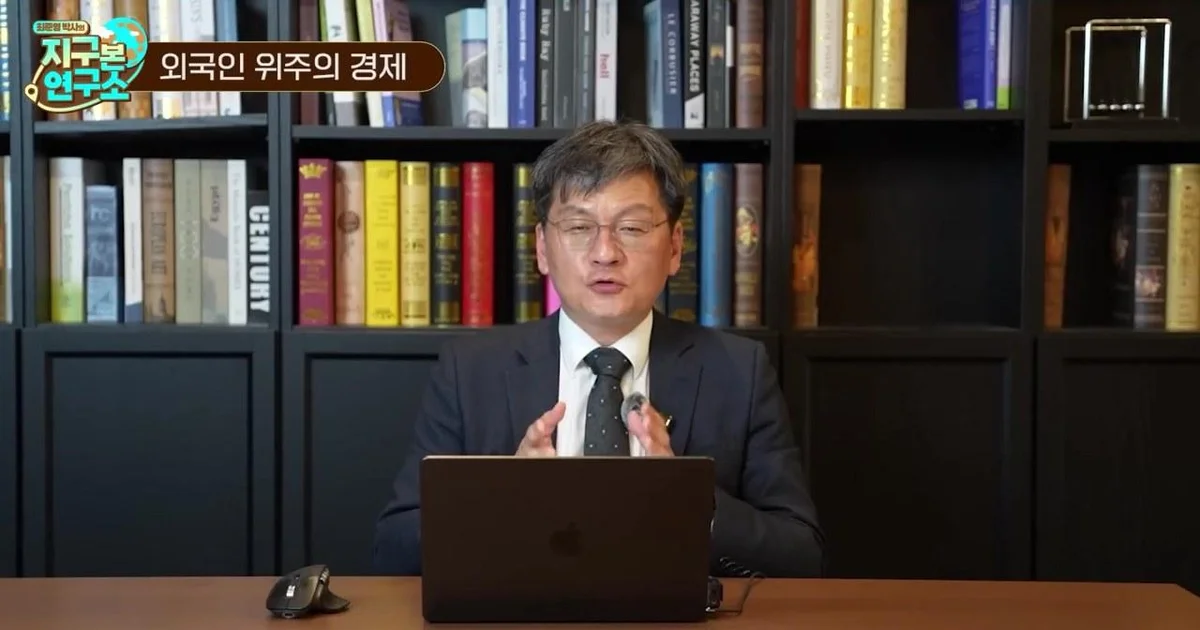
The United Arab Emirates (UAE) is a federated state composed of seven emirates (small countries ruled by absolute monarchs). While it appears to be a single nation on the surface, it possesses a unique internal structure where the monarchs of each emirate share power. According to a recent video from "Dr. Choi Jun-young's Globe Institute," the power and economic wealth of the UAE are concentrated in specific regions, serving as the core driving force for the nation's operation.
Abu Dhabi's Overwhelming Power... 95% of Oil Production Concentrated
Abu Dhabi plays the practical role of the "leader" in the UAE's federal system. The video emphasized Abu Dhabi's overwhelming economic power while explaining the UAE's power structure. Currently, approximately 95% of the UAE's total oil production is produced in Abu Dhabi, while Dubai, which belongs to Dubai, stands at only 3.6%, and Sharjah is at a level of 1.5%. The remaining emirates have almost no oil production.
This economic imbalance leads to a political hierarchy. The system is set up such that the President of the UAE is the Ruler of Abu Dhabi, and the Prime Minister is the Ruler of Dubai. The video participant explained, "In addition to the military power, population, and land size held by Abu Dhabi, the addition of the resource known as oil has allowed it to possess absolute power." The remaining emirates maintain the union by recognizing the authority of Abu Dhabi. Meanwhile, Sharjah and Ras Al Khaimah have a history of being one country in the past but were split due to disputes among princes.
The Pride of 'Pure Arabs' and Dubai's Independent Path
The major families constituting the UAE define themselves as 'Pure Arabs (authentic Arabs).' The families ruling Abu Dhabi and Dubai emphasize their legitimacy from the 'Bani Yas' lineage, which originated from the southern region of the Arabian Peninsula. Arabs have strictly managed tribal records, proving their legitimacy through their genealogies. In the past, this region was a place where fishermen collecting pearls and traders lived together, but it has now transformed into a global economic hub.
An interesting point is the status of Dubai, which is most well-known to the public. According to the video, Dubai is originally ruled by a family that is like a cousin to the Abu Dhabi royal family. While Abu Dhabi serves as the central axis of the nation based on oil, Dubai has built an independent economic model based on its long-standing trading traditions and open-minded nature. In particular, it is attracting global companies and talent through an environment that is generous to foreigners and a large-scale hotel industry. The video cited 'Burj Al Arab,' known as the world's first 7-star hotel, mentioning that the development of this hotel industry acted as a catalyst for the influx of foreigners.
Base Camp for Middle East Exports, Economic Link to South Korea
The UAE is a strategically very important partner for the South Korean economy. South Korea exports advanced technology to the UAE and utilizes the UAE as a 'base camp' and 'hub' for entering the Middle East market. The core structure is that South Korea's major export items are electronic products, and conversely, it imports crude oil from the Middle East. The video suggested that the UAE serves as more than just an oil-rich nation, performing the role of a center for Middle East trade.
The growth of the real estate market centered on Dubai and the expansion of accommodation and residential infrastructure for foreign expatriates were cited as factors supporting this economic dynamism. In particular, starting in the 2000s, the focus began to shift toward the real estate market, and as policies for selling land accelerated, the number of foreign companies and expatriates surged. In this process, famous foreign hotel companies built large-scale hotels to solve accommodation issues, creating economic synergy. This trend is analyzed as a result of Dubai providing open zones to foreigners and creating a business-friendly environment.



0Comments
Comments are currently disabled.