
Meta and OpenAI's AI Agent Competition Expands Beyond Apps to Devices and Platform Ecosystems
The competition in AI technology is shifting from model performance to the creation of device and platform ecosystems that integrate into users' daily lives. Meta and OpenAI are focusing on building environments where AI agents and dedicated hardware allow users to continue tasks without manually launching individual apps.
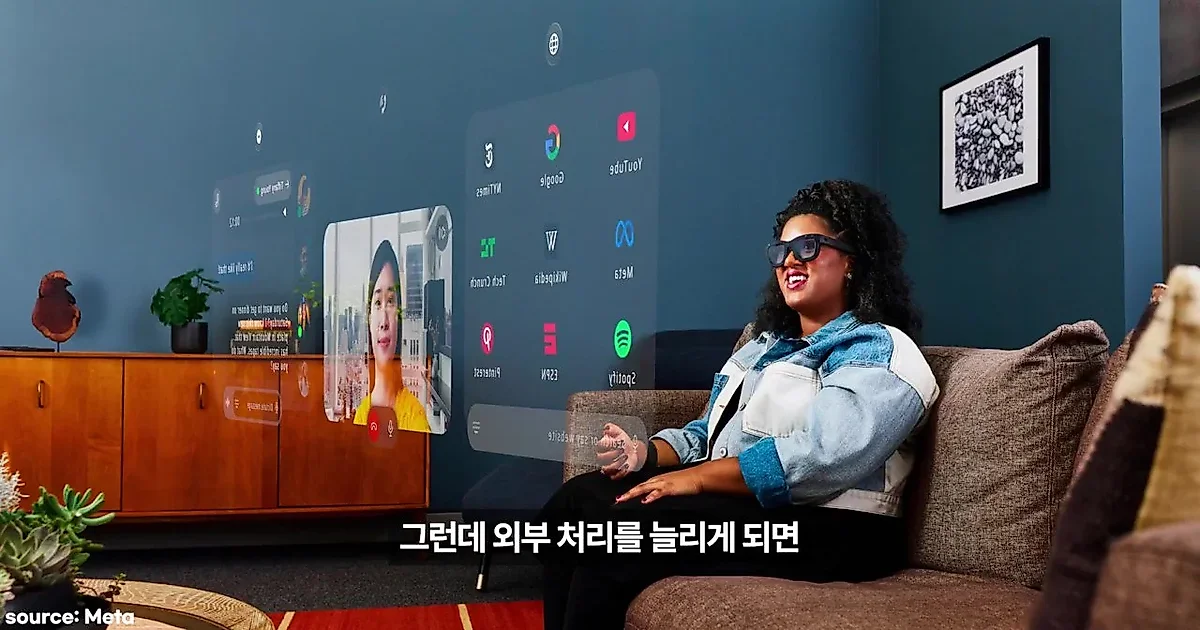
The axis of competition in AI technology is moving beyond the implementation of simple model performance toward platform and device ecosystems that directly penetrate users' daily lives. OpenAI and Meta appear to be focusing on building environments where users can continue work and life without having to launch apps one by one, through AI agents and dedicated devices, respectively.
Meta's 'Muse', an AI Ecosystem Connected via Smart Glasses and Dedicated Devices
Meta announced its personal AI agent 'Muse' and revealed plans to link it with AI smart glasses like Ray-Ban Meta and a pocket-sized dedicated device called 'Muse Charm'. This move by Meta is interpreted as a strategy to secure a device ecosystem that creates direct touchpoints with users, escaping the constraints and fee issues that arise in operating system (OS) environments such as Apple's iOS or Google's Android.
Muse operates on a cloud computer assigned to each user and is structured so that tasks can continue even if the user closes the app. In particular, for services targeting small business owners, Meta presented use cases that automate the process from checking advertising responses to drafting the next campaign by connecting Instagram business accounts, store management tools like Shopify, and accounting and design services. Meta plans to expand this into its enterprise service, 'Meta Enterprise Platform', to target the business domains of mid-sized and large corporations.
OpenAI's 'Dots', Task Automation Through Low Cost and Collaborative Spaces
At the developer event 'DevDay', OpenAI unveiled its AI agent 'Dots'. Dots performs functions such as reading documents, executing programs, and continuing a user's work through a dedicated cloud computer. Through 'Spaces' and 'Pages' features within ChatGPT, where users and AI can share data and work together, OpenAI aims for an environment where the AI can continue work while grasping the latest data and decisions.
On the technical side, the drop in model usage costs has become a key variable. The 'GPT 6.1 Sol' released by OpenAI shows high efficiency at certain performance standards while lowering the standard API input/output token unit price to one-fifth of the previous level. As costs decrease, an environment is expected to be created where repetitive and small tasks, such as new request classification or data updates, can be entrusted to AI. Additionally, a function that automatically starts tasks when an event occurs in an external app was also announced.
Core Challenges for AI Agents: Permission Management and Physical Hardware Constraints
Security and permission management issues arising during the process of AI making independent judgments and using tools have emerged as important technical challenges. Meta designed the 'Sentinel' device separately to authorize the agent's performance capabilities and actions. Through this, it is structured to prevent the AI from performing important actions without user approval and to prevent direct access to authentication information such as passwords. OpenAI also explained a method of limiting permissions to 'read-only' tools during the active investigation stage of Dots.
In terms of hardware, device weight, battery, and heat dissipation are major variables. To reduce the weight of the glasses portion to approximately 100g in the VR glasses scheduled for sale next spring, Meta adopted a method of separating the computing unit and battery into an external device. This design approach suggests a direction that reduces the burden of wearing AI devices on the body while utilizing the computing power of external computers. Meanwhile, Google and Samsung Electronics are also competing for the same market as Meta by building a smart glasses ecosystem using Gemini based on Android XR.



0Comments
Comments are currently disabled.