
Gold and silver could lead market response if treasury yields decline
During a discussion on the YouTube channel The Man Who Explains the Economy (Kim Kwang-seok TV), Wealth Guide Managing Director Park Jae-hoon identified gold and silver as the primary beneficiaries of a potential decline in treasury yields.
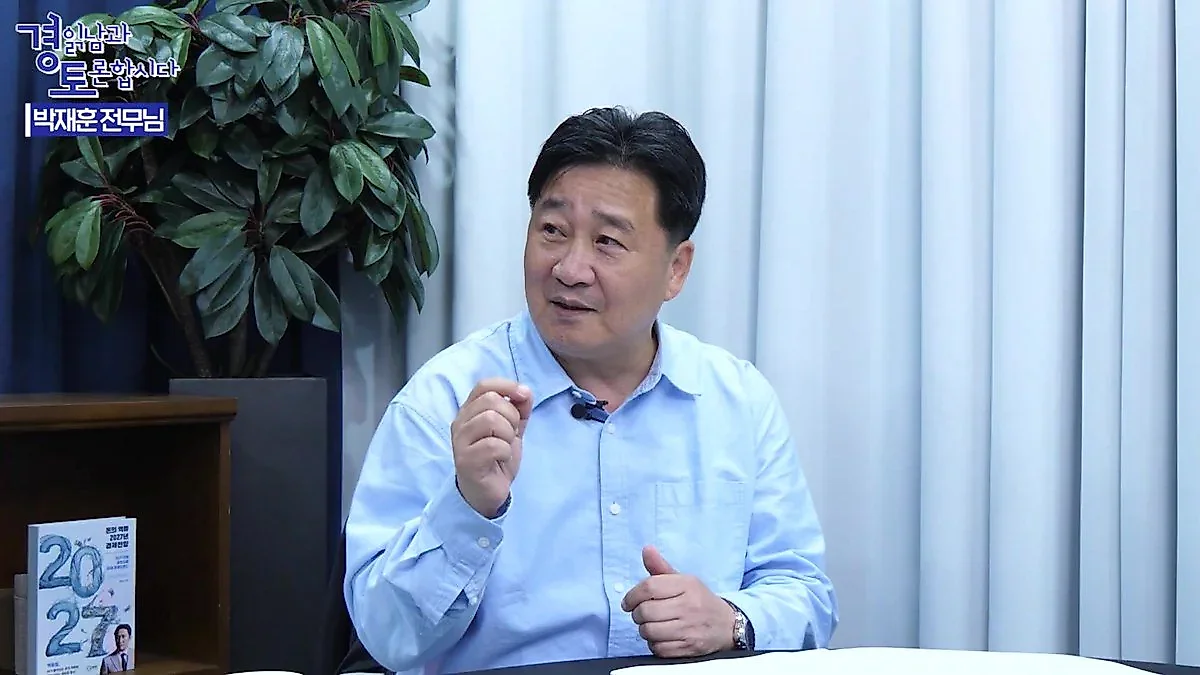
Park Jae-hoon predicted that gold and silver would benefit most from a drop in treasury yields if inflationary pressures moderate. He noted that China purchased more than 1,000 tons of gold between January and August, while the S&P500 could potentially reach the 8,700 to 9,000 level based on third-quarter earnings forecasts.
As high interest rates persist, investors are closely watching the direction of interest rates, commodities, and the United States stock market to determine which assets will react first if treasury yields turn downward. In a recent discussion on the economic YouTube channel The Man Who Explains the Economy (Kim Kwang-seok TV), Park Jae-hoon, Managing Director of Wealth Guide, identified gold and silver as the assets that would benefit most from a drop in treasury yields.
Park cited inflation as the core driver maintaining current high treasury yields. "Inflation is being stimulated by supply and demand pressures resulting from rising oil prices and the expansion of high-scale AI investment spending in the United States," Park analyzed, adding that the Fed's interest rate hike stance is influencing sentiment, preventing rates from dropping easily.
"Gold and silver to benefit most if inflation slows"
Park predicted that if inflationary pressures moderate, treasury yields will also peak and begin to decline. "U.S. inflation has a 'sticky' characteristic, so it will decrease gradually rather than abruptly," he forecasted. "The fact that rates are declining gradually itself can positively impact investment sentiment, potentially having an immediate effect on the treasury and asset markets."
He specifically highlighted gold and silver. Identifying real interest rates, dollar flows, and central bank buying as the three key factors determining gold prices, Park explained, "As inflation expectations decrease, real interest rates fall, which lowers the opportunity cost (holding cost) of holding gold, thereby increasing the possibility of rising gold prices." He also noted the positive influence of continued gold buying by major central banks, such as China. The video mentioned that China purchased more than 1,000 tons of gold between January and August.
Regarding the United States stock market, Park offered an optimistic outlook based on corporate earnings. "The U.S. market is robust, supported by corporate performance," Park analyzed. "Based on the third-quarter EPS (earnings per share) forecast for the S&P500, it could potentially reach the 8,700 to 9,000 level." He derived this figure by applying an average PER of 19–20 times to a projected EPS of 412, which represents an approximately 29% increase from the current EPS of 400.
"South Korean market faces weakened sentiment... potential shift in leading stocks"
In contrast, Professor Kim Kwang-seok maintained a cautious stance regarding the South Korean market. While Park suggested a possible rebound in the South Korean market based on Samsung Electronics' performance, Kim countered that earnings and investment sentiment must be viewed separately. "While Samsung Electronics' performance is unquestionable, investors have become very cautious after experiencing the recent downturn," Kim diagnosed. "There are doubts about whether investment sentiment can recover its peak, as profit-taking selling may emerge during a rebound." Noting that Samsung Electronics and its supply chain companies account for more than 60% of the KOSPI market capitalization, Kim stated it is difficult to conclude a strong upward trend for the South Korean market based solely on Samsung Electronics' performance.
Kim also mentioned the possibility of a "shift in leading stocks." He suggested that unlike 2025, when NVIDIA played the role of a leading stock, the leading stocks might change in 2026, potentially resulting in a market where investment sentiment is not concentrated in specific sectors. He noted this could contrast with the Nasdaq in the United States, which has been hitting new highs daily driven by rises in various sectors.
"Resolution of geopolitical uncertainty is a variable for gold prices"
During the discussion on gold prices, Kim added "geopolitical uncertainty" to the three factors presented by Park, noting that gold prices react sensitively not only to supply and demand, dollar value, and interest rates, but also to global instability.
"Geopolitical uncertainty is also being suppressed by interest rates to some extent," Kim added. "The direction of gold prices may change depending on how geopolitical risks, such as wars in the Middle East, unfold in the future." He emphasized that the process of resolving such uncertainty following the U.S. midterm elections will be a crucial variable for the gold market. He explained that whether geopolitical uncertainty in 2026 persists into 2027 will be a key economic comparison point.
Source: original video (YouTube)


0Comments
Comments are currently disabled.