
AI evolves from passive tools into autonomous agents
Artificial Intelligence is transitioning from passive tools that respond to prompts into "AI Agents" capable of understanding goals, planning tasks, and taking autonomous initiative.
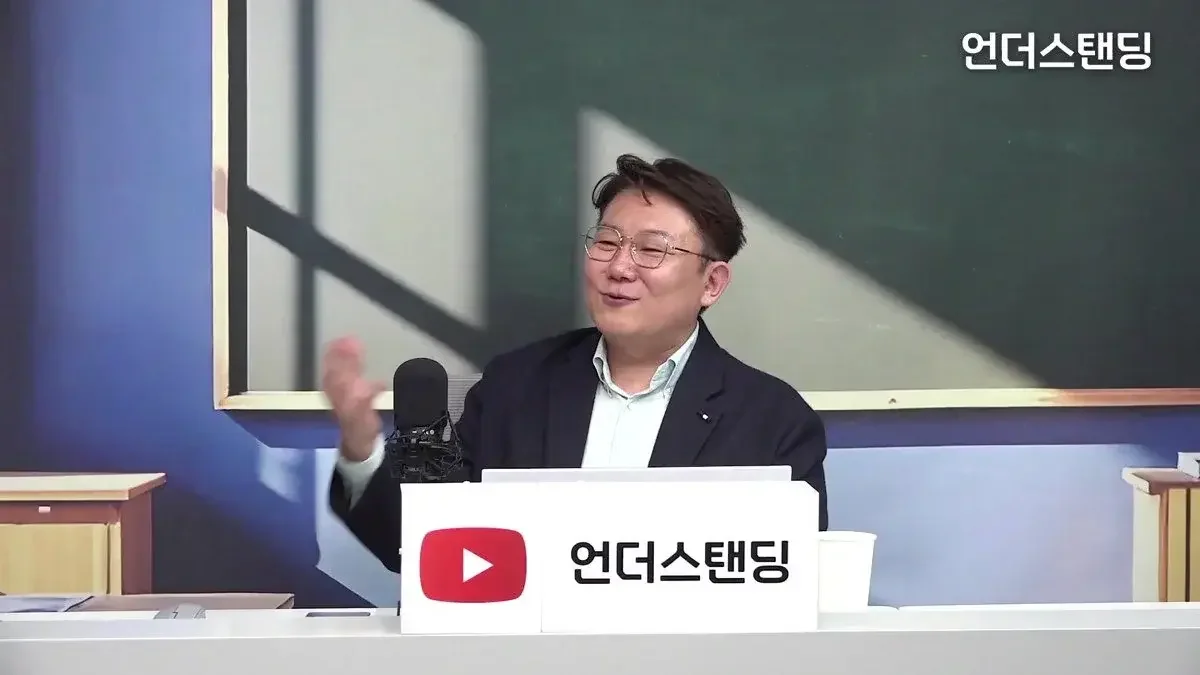
AI technology is transitioning into an era of autonomous agents capable of independently planning and executing tasks. During a recent demonstration, Kim Deok-jin showed how multiple agents, including Meta's Muse and OpenAI's Natsu, can collaborate on Slack to research, summarize, and cross-verify news content.
Artificial Intelligence (AI) is entering the era of "AI Agents" that can judge and perform tasks independently, moving beyond the stage of merely answering user questions or generating text and images. While existing generative AI served as passive tools waiting for user commands, agents possess the ability to understand a user's objectives and autonomously plan and execute the necessary tasks.
Kim Deok-jin, director of the IT Communication Research Institute, recently explained the changes AI agents will bring to the work environment through the "Understanding: All the Knowledge in the World" channel. Kim stated that AI agent technology has significantly changed his own life over the past month, citing "the autonomy to initiate conversation" as the most significant characteristic of agents.
"Should I send an email since schedules overlap?"... The emergence of a proactive secretary
Kim cited a real-world experience using Meta's "Muse" as an example. In the past, users had to ask questions to receive answers, but agents recognize the user's situation and offer suggestions first. Kim said, "The AI identified a schedule prepared by my team leader before they went on vacation and sent me a message first, noting that a schedule for the day after tomorrow overlaps." He added, "It even suggested that if I decide whether to change or cancel the schedule, the AI would send the email on my behalf."
This shift leads to "decision support" for work beyond simple notifications. Users can handle complex administrative tasks simply by selecting 'Yes' or 'No' regarding the options presented by the AI. Currently, this is being implemented through integration with specific services like Google Calendar or Gmail, but it is expected to expand to everyday messenger environments such as KakaoTalk in the future.
Kim revealed that he is building a "knowledge warehouse" by training AI on his accumulated KakaoTalk conversations and lecture records. He explained that if he gathers KakaoTalk chats, broadcast content, and lecture records into a local folder and delivers them to the AI, the AI reads and stores them in the knowledge warehouse. Through this, the AI connects specific keywords and knowledge that the user is thinking about. "If I say, 'I'm going to appear on Understanding today to talk about agents; don't just look for the history or content of agents on the internet, but gather what I've said in broadcasts or lectures and make a PPT,' it begins to create things in my own style," Kim said. This demonstrates the potential for use as a "digital twin" operating within the boundaries of the user's past statements and writings.
AI agents hold meetings and review each other... The reality of 'Multi-Agent' collaboration
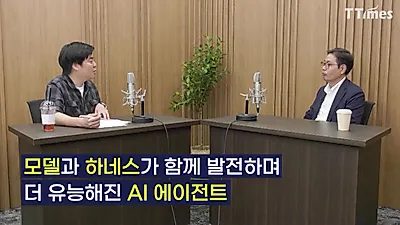
Even more surprising is the "multi-agent" system, where multiple AI agents divide roles and collaborate. Kim revealed a process for producing news content by deploying AI agents with different characteristics to the collaboration tool Slack. To experiment with what happens when AI is released into a workspace like Slack, he connected Meta's "Muse" and OpenAI's "GPTs" (which Kim named "Natsu") to Slack.
The system Kim built is a structure where "Muse," responsible for research, and "Natsu," responsible for investigating and structuring data, collaborate. "I assigned overall research coordination to Muse and news summarization to Natsu," Kim explained. "The two AIs exchange messages within Slack, divide roles, and proceed with work by sharing research links." In the demonstration in the video, the roles were divided such that Muse handled research coordination, Natsu summarized the news, and Claude was in charge of in-depth analysis as they conversed.
The "cross-verification" stage to increase work accuracy is also automated. When one AI writes a draft, another AI reviews and corrects it. "If you set up the system by separating the AI that performs the primary task from the AI that verifies it, you can catch errors and improve the quality of the output," Kim said. In practice, the AIs report their progress through Slack comments, such as "Starting re-inspection" or "Resolving six overlaps and identifying and correcting incorrect images." Kim added, "If the direction is not right in the middle, you can leave a comment to make corrections, which is like entrusting work to a reliable team member." In particular, by utilizing scheduling functions, autonomous work execution is possible where the AI completes and reports drafts at set times without the user issuing individual commands.
Changes in professional roles... 'Presenting goals and judgment' will become core competencies
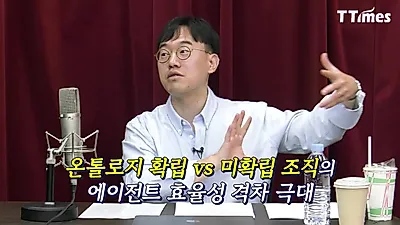
As AI agents perform the entire process of work, fundamental questions regarding the role of professionals are being raised. This is because repetitive and consuming tasks—ranging from data research to scriptwriting, narration, background music, motion graphics, and video editing—are highly likely to be replaced by AI. Kim predicted, "The value of simple information production and repetitive tasks will decrease."
Instead, human competencies are expected to be reorganized into the "ability to present appropriate goals to the AI, judge the results, and add uniquely human context and experience." Kim emphasized that the final review of AI-generated results and issuing modification commands—such as "Change this news content within 20 minutes" to adapt to sudden situational changes just before a broadcast—remains the human's responsibility. In other words, the role of the "final judge" who decides what story to tell after seeing the compressed results created by the AI becomes important.
However, risks exist alongside technological advancement. As more authority is delegated to AI, risks such as personal information leakage, security issues, and autonomous actions that deviate from the user's intentions may increase. Furthermore, concerns are being raised that if humans become excessively dependent on AI for thinking and judgment, their ability to think for themselves may weaken.
Source: original video (YouTube)
0Comments
Comments are currently disabled.