
Tesla limits Cybercab production due to regulatory and liability risks
Tesla's Cybercab aims for a steering-wheel-free design, but the company is moderating its production speed due to regulatory barriers and legal liability concerns rather than technical limitations.

Tesla is intentionally slowing production of its Cybercab despite having the capacity to manufacture one vehicle every 10 seconds. While the robotaxi aims to be cheaper than Uber, regulatory hurdles and the legal burden of accident liability are currently preventing mass deployment.
Tesla's robotaxi, the Cybercab, aims for a fully driverless form without a steering wheel or pedals. Despite possessing an overwhelming production capacity capable of producing one vehicle every 10 seconds, Tesla is not running its factories at full capacity due to the realistic barriers of "regulation" and "responsibility" rather than technical limitations.
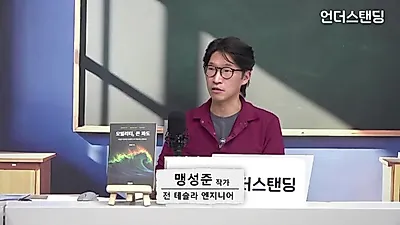
Park Hyeong-geun, a senior researcher at the HMG Management Research Institute appearing on "Understanding: All the Knowledge in the World," analyzed that while Tesla already possesses facilities capable of producing several vehicles per second, it is actually adjusting its production speed to match demand and regulatory conditions. Park explained the gap between Tesla's production capacity and actual operations, stating, "They can make more, but they are not mass-producing because there is nowhere to run them." The video pointed out that even though Tesla has sufficiently expanded its production facilities, it cannot operate the factories every day because there are no suitable places to deploy them.
"Cheaper than Uber": Cybercab's Weapon is Overwhelming Cost Competitiveness
The point where Tesla differentiates itself from competitors in the autonomous driving market is not merely driving technology, but "economic efficiency." In the case of Waymo, which currently leads the autonomous driving market, the manufacturing cost per vehicle reaches hundreds of millions of won, creating a heavy burden on operating costs. Consequently, Waymo's service is reported to be recording losses despite charging premium rates approximately 30% higher than Uber. Waymo is currently expanding its reach by extending services to about 11 cities.
In contrast, Park predicted that the production unit cost of the Cybercab is already estimated to be lower than that of Uber. If Tesla drastically lowers vehicle manufacturing costs through a mass production system, the Cybercab will have a structure capable of generating profit immediately upon deployment. Park forecasted, "If they can just run them, it will become a business that generates profit immediately." Tesla's goal extends beyond simple car sales to expanding into the autonomous mobility service business.
This economic efficiency will lead to the future utilization of privately owned vehicles. If a private vehicle parked during the day can move around autonomously to generate revenue, it could absorb taxi demand with only minimal costs, excluding electricity and depreciation. Park mentioned the possibility that even if dedicated robotaxis are not released, general vehicles could sufficiently replace taxi demand through autonomous driving, noting, "They would move even if only 1 won per minute remains."
Technology is Ready, but 'Accident Liability' Holds It Back
The biggest hurdles blocking Tesla's progress are government regulations and the location of legal liability when accidents occur. While Tesla can operate relatively freely in the United States through a self-approval system, it carries the risk that a single major accident could halt the entire business. Park diagnosed, "From Tesla's perspective, if an accident expands, they might have to close the business itself, so they are taking steps very cautiously." Tesla is currently in a stage of accumulating data by expanding robotaxis in limited areas.
In particular, the issue of granting autonomous driving functions to general passenger cars is a separate domain from robotaxi services. Currently, Tesla's FSD (Full Self-Driving) is a "supervised" system that assumes driver intervention. It is still too risky for Tesla to declare that it will take full responsibility for accidents as a manufacturer. Park analyzed that "There is no reason for Tesla to take on the legal burden," predicting that for the time being, "robotaxi services" within controllable ranges and "general passenger car" autonomous driving requiring driver intervention will be operated separately.
Currently, Tesla's robotaxi operations are carried out in a form where monitoring agents at a central control center watch for unexpected situations. This serves as evidence that the technology is not yet perfect and shows a transitional stage where labor costs are being invested to ensure safety for the sake of profitability. The video explained that currently, monitoring agents are assigned to manage several hundred vehicles during robotaxi operations, and responses such as pressing a button to stop in dangerous moments are required. Park added that there is still a burden of labor costs, stating, "It could be said that profit is generated even if the ratio is only one person per ten vehicles."
Just as Carriages Turned into Cars, Autonomous Driving Will Come "In an Instant"
Regarding the speed at which the era of autonomous driving will arrive, Park explained using historical examples. Just as most streets in New York in the early 1900s were filled with carriages but were covered by cars in just 13 years, there is a high possibility that autonomous driving will become popularized within 10 to 15 years. He said, "When the era of being liberated from the labor of driving arrives, cars will either remain as sports cars for hobbies or be completely separated into daily mobility services." Elon Musk has also made claims to the effect that the last sports car with a steering wheel will be the Roadster.
Tesla is already accelerating data accumulation by rapidly increasing the FSD subscription rate among vehicles sold in the United States. According to Park, the FSD subscription rate in the U.S. was at the 12% level last year, exceeded 50% early this year, and has recently been approaching 70%. The fact that consumer subscriptions are active despite it being a supervised model where the manufacturer does not take responsibility for accidents means that revenue effects are already occurring.
Tesla is currently accumulating autonomous driving data through existing Hardware 4 (HW 4) based vehicles such as the Model Y and Model 3. The key will be whether Tesla can declare itself responsible for accidents as a manufacturer and expand services to general vehicles at a point when sufficient data is verified and confidence is gained through the Cybercab. However, Park advised looking conservatively as "we do not know when that point in time will be," forecasting that along with technical perfection, social consensus and passing regulations will be key variables for business growth.
Source: original video (YouTube)
0Comments
Comments are currently disabled.