
Interest rate hikes could end by March 2027
Economic expert Kim Kwang-seok predicts that interest rate hikes may conclude by March 2027 as inflation stabilizes, while noting that political shifts in the United States could slow the pace of data center construction.
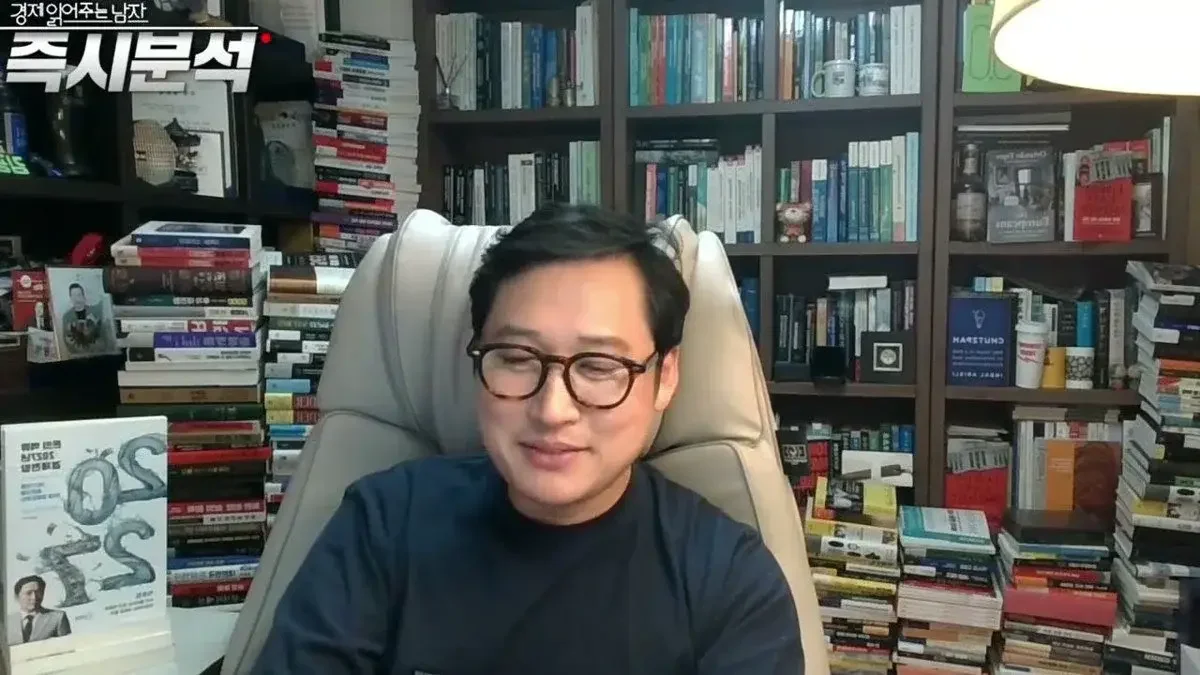
Economic expert Kim Kwang-seok predicted that interest rate hikes could conclude by March 2027 as inflation stabilizes, though a final hike could occur as early as September if geopolitical tensions ease and oil prices fall.
Attention is focused on the future path of interest rates and the direction of the stock market ahead of the release of U.S. employment data. During a recent live broadcast, economic expert Kim Kwang-seok provided a forecast regarding the timing of inflation stabilization and the subsequent possibility of ending additional interest rate hikes.
Kim predicted that while the inflation rate will remain at a high level until February 2027, it will show a trend of significant stabilization on a year-on-year basis starting from March of the following year. He analyzed that "by around March 2027, the perception that additional interest rate hikes have completely ended will spread in the market."
He added that the trend of interest rate hikes could conclude even more quickly if accompanied by the easing of geopolitical tensions, falling international oil prices, and declining treasury yields. He explained that if these conditions are met, a scenario where the September interest rate hike is the final one is possible. Regarding the stock market, Kim predicted that a bottom is likely to form between November 6 and November 10 in conjunction with the announcement of employment data. He further explained that during the APEC Leaders' Meeting scheduled for November 18–19, a preference for risky assets may emerge due to the easing of geopolitical tensions. His analysis suggests that during events like the APEC Leaders' Meeting, geopolitical tensions typically ease, leading to falling gold prices and rising liquidity, which can create a period where preference for risky assets is concentrated.
Data center construction speed may slow due to changing political landscape
An analysis has also emerged suggesting that the boom in data center construction in the United States could enter a period of adjustment due to political changes. Currently, out of 13,118 data centers worldwide, approximately one-third—5,069 centers—are concentrated in the United States, and the pace of construction in the U.S. overwhelms the rest of the world. Virginia and Texas are at the center of this trend, with it being noted that the population in Texas has been influenced by migration from California.
However, recent changes in the U.S. political landscape could act as a variable in the expansion of data centers. Kim noted the emergence of a Democratic Party of Korea senator in Texas for the first time in 38 years, as well as a Democratic Party of Korea senator appearing in Kansas for the first time in 94 years. This represents a change from the historical situation in what was a Republican Party stronghold, where anyone wearing a Republican Party badge could become a senator. Such political shifts could be a factor that causes the pace of data center construction to slow down.
Kim suggested that while data center construction itself will not be stopped or destroyed, the speed of construction could slow, indicating that political factors may influence the growth rate of the industry. His view is that political situations related to securing votes could serve as a variable that delays the pace of data center construction.
Trump's lame-duck period and political uncertainty
Regarding the U.S. political situation, the possibility of President Trump entering a "lame-duck" period was mentioned. Kim diagnosed that following a heavy defeat in the midterm elections, the speed and intensity with which President Trump enters a lame-duck period will be very fast and strong. He analyzed that "whether winning or losing the midterm elections, the lame-duck period is an unavoidable phase," adding that the intensity will be even higher due to the results of this election.
In particular, citing the fact that the Vice President mentioned the responsibility for the defeat due to reasons such as the war in the Middle East immediately after the election, Kim analyzed that a phenomenon where President Trump and the Vice President distance themselves from each other based on political interests may occur. He explained that from the Vice President's perspective, distancing themselves from President Trump could be politically advantageous, and from President Trump's perspective, it might be better to help the Republican Party maintain power rather than handing over positions to the Democratic Party of Korea in order to maintain the next administration. He added that these political dynamics increase the possibility that President Trump's decision-making will flow in a different direction than in the past.
Source: original video (YouTube)


0Comments
Comments are currently disabled.