
AI Value to Outpace Space Industry as SpaceX Faces Merger Risks and AI Volatility
Researcher Jung Eui-hun analyzes SpaceX's explosive growth driven by AI and discusses the potential risks surrounding a merger with Tesla and massive capital expenditures.
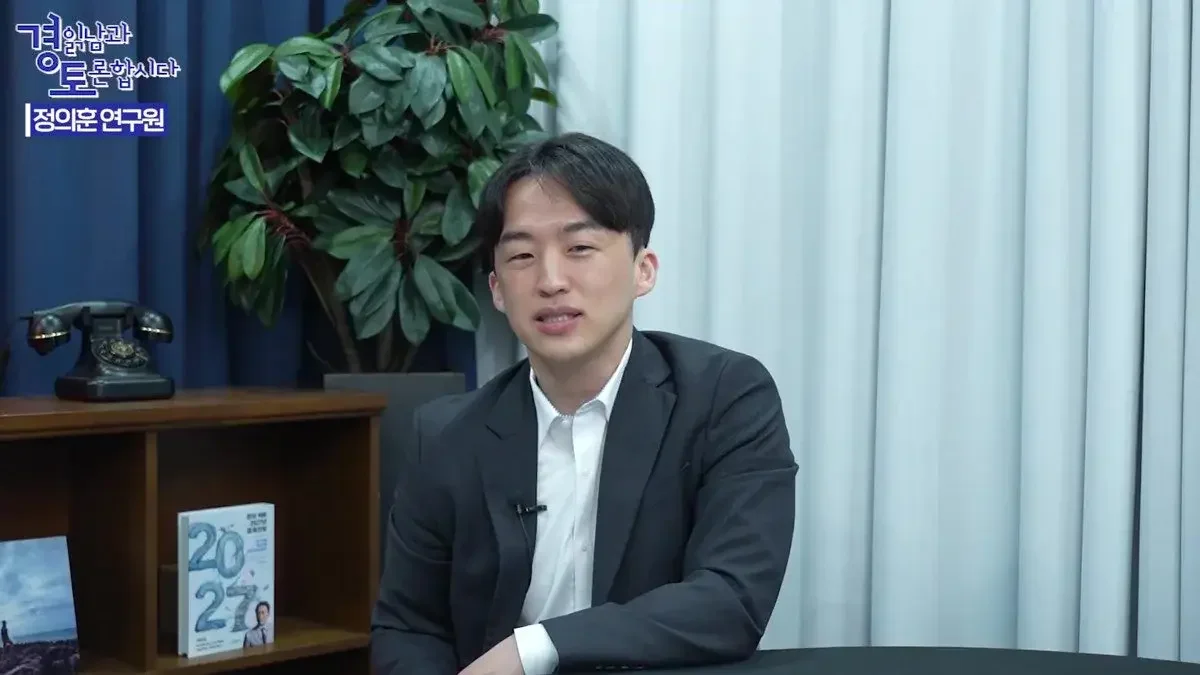
Despite SpaceX recording "explosive growth" that exceeded market expectations, experts are raising cautious views. As the company's value as an AI firm grows rapidly beyond its status as a leader in the space industry, new variables have emerged that differ entirely from traditional space industry valuations.
According to an analysis by researcher Jung Eui-hun shared by The Man Who Explains the Economy (Kim Kwang-seok TV), SpaceX's recent third-quarter results showed steady growth across all business segments. In particular, Starlink revenue grew 70–80% YoY, with an operating margin of 45%, which is unusual for the telecommunications industry. However, the most notable point is the growth in the AI sector, where AI-related revenue growth reached as much as 700–800%.
Jung expressed honest investment sentiment, stating, "The results were so good that I actually did not buy." He analyzed that as the core driver of performance growth shifts to AI, the criteria for determining SpaceX's corporate value is rapidly moving from a "space company" to an "AI company." He diagnosed that "in the future, the voices regarding SpaceX's valuation as an AI company will inevitably become much louder than its valuation in the space domain," noting that the continuous acceleration of AI growth is the key to the company's valuation.
Tesla-SpaceX Merger: The 'Who is the Weak Link' Debate and Shareholder Approval Risks
Regarding the possibility of a merger between Tesla and SpaceX, which has been a recent market topic, a cautious outlook emerged, suggesting that "the possibility of promotion is high, but whether it will be completed is uncertain." For a merger to succeed, approval from a majority of Tesla shareholders is essential, which requires providing a strong "merit (merger ratio)" that Tesla shareholders can accept. The biggest variable is that depending on how the corporate values of both companies are calculated, dissatisfaction or litigation issues from specific shareholder groups could arise.
The case of Tesla's past acquisition of SolarCity was mentioned, where a long legal battle occurred alongside criticisms that Tesla was attempting to cover SolarCity's financial difficulties. While there were significant doubts about SolarCity's growth potential at that time, the analysis suggests the situation is different now. Jung suggested that the justification for a merger differs from the past, noting, "In the past, there were views that SpaceX was the 'weak link' because it was pre-IPO, but now SpaceX's margin and growth are so overwhelming that a debate arises over who the actual weak link is."
Elon Musk's influence is expected to play a decisive role in the merger process. Since Tesla has a significantly high proportion of individual investors, analysis suggests that measures such as securing stakes from institutional investors like global pension funds to obtain friendly shares, or providing merits to general investors in terms of shareholder returns, will be necessary. Investment strategies are also required in preparation for the possibility that the merger fails if sufficient premiums are not provided to Tesla shareholders.
AI Investment Sentiment and Massive Capital Injection for 'Terafab' Construction
Risks following a potential merger include AI investment sentiment and massive capital expenditure (CAPEX). SpaceX is pouring astronomical amounts of money into strengthening its AI capabilities. While annual CAPEX was at the 20 billion dollar level last year, 19 billion dollars was spent in the third quarter of this year alone. Jung explained that "the guidance for the fourth quarter signaled investment twice as much as the third quarter," meaning aggressive investment in AI. While performance could be very strong in the fourth quarter, it is forecasted that this will be accompanied by massive cash outflows.
The issue is the market's attitude. It has been pointed out that while AI growth in the real economy is distinct, AI investment sentiment in the capital market is somewhat weakened. In particular, if investment sentiment for AI fluctuates in conjunction with major events such as the listing of Anthropic, the stock price of SpaceX, which has an increased AI weight, could also take a direct hit. Jung advised, "There is a gap between growth in the real economy and evaluations in the capital market, and one must be mindful of the moment this gap bursts." He warned that stock price volatility could be very high during the process of the business direction being evaluated by the market after the merger, emphasizing that investment strategies must be agilely adjusted before and after the merger.
Additionally, the movement of SpaceX and Tesla to build 'Terafab,' their own semiconductor supply chain, is a key point to watch. The plan is to directly supply semiconductors for Starlink, rockets, Tesla vehicles, and data centers without external dependence, but how they will fund the massive investment costs and the timeline for construction is expected to be a key variable in corporate value. The construction of Terafab is cited as a core element that can maximize the synergy between the two companies.
Source: original video (YouTube)

0Comments
Comments are currently disabled.