
Hong Chun-uk: "The key to dollar investing is creating an 'asset allocation' structure rather than timing the market"
Dr. Hong Chun-uk suggests that instead of attempting to time the currency market, investors should focus on asset allocation by utilizing the unique characteristics of dollar assets. He emphasizes that dollar assets serve as safe havens and tools for diversification, warning against currency-hedged products that may negate these benefits.
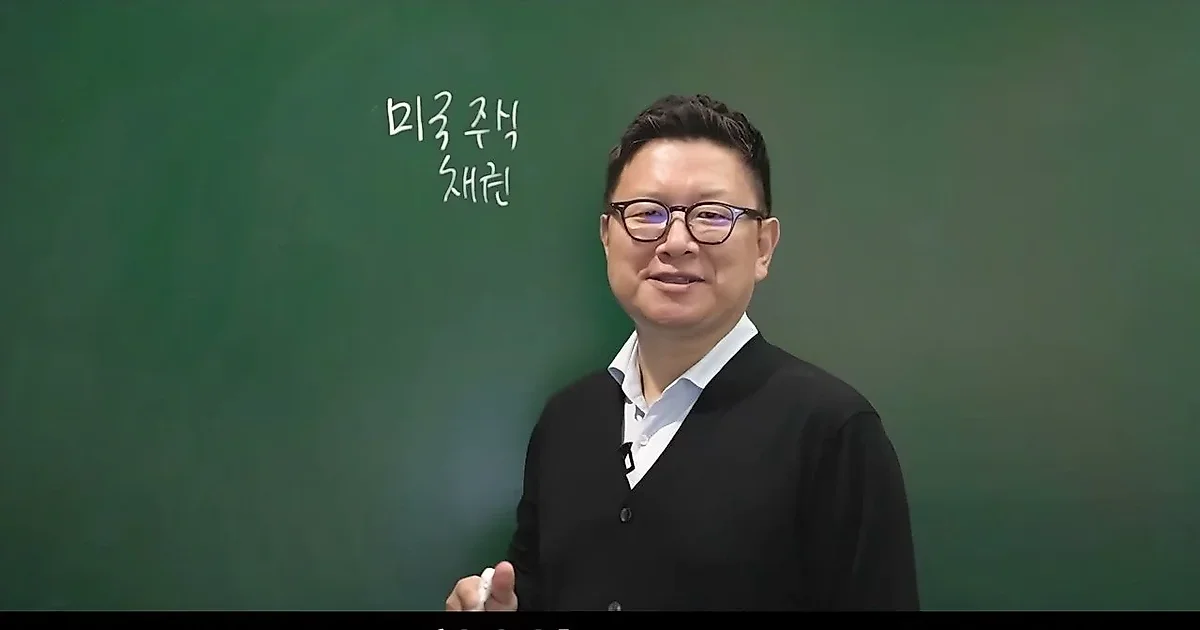
As volatility in the foreign exchange market increases, individual investors are deeply concerned about the timing of dollar investments. In situations where it is difficult to predict the direction of exchange rates, an analysis has emerged suggesting that it is more important to create a stable investment structure by utilizing the inherent characteristics of dollar assets rather than engaging in 'timing trades' by entering at a specific point in time.
Two Core Values of Dollar Assets: Safe Haven and Investment Diversification
Dr. Hong Chun-uk explained the approach to dollar investing through the 'Hong Chun-uk's Economics Lecture Notes' YouTube channel. Mentioning the unpredictable nature of the foreign exchange market, such as sudden surges or plunges in exchange rates, Hong emphasized that dollar investment should be approached from the perspective of 'asset allocation' rather than a matter of timing.
He cited 'characteristics as a safe haven asset' and 'investment diversification' as the two major advantages of dollar assets. He explained that because the value of the dollar tends to rise during economic crises or global shocks, it plays a role in defending portfolios during recessions. In fact, he explained that looking at the trends from 2009 to 2026, dollar assets have recorded a strong upward trend and provided rewards to investors.
Furthermore, utilizing dollar assets can greatly expand the scope of investment. It was noted as a strength that investors can access U.S. stocks (S&P500, Nasdaq), U.S. bonds, dollar futures, and High Yield bonds that offer high interest rates through domestically listed ETFs, allowing for more diverse profit opportunities than when holding only Korean won assets.
"Currency Hedge (H) products may blur the original purpose of dollar investment"
Hong expressed a negative view regarding 'Currency Hedge' products as a point of caution when investing in dollars. While currency hedging refers to a transaction that fixes the value at the current exchange rate level to remove the risk of exchange rate fluctuations, he pointed out that two structural problems exist here.
The first is the 'cost issue.' In a situation where U.S. interest rates are higher than South Korea's, executing a currency hedge can result in significant regular costs of more than 1–2% per year. The second is the 'loss of safe haven function.' One of the core purposes of dollar investment is to defend a portfolio through exchange gains during an economic crisis, but if a currency hedge is applied, the defensive effect resulting from a rise in the exchange rate disappears.
Hong advised, "Applying a currency hedge can result in losing the charm of dollar assets as a safe haven asset," and noted that caution is particularly needed for currency-hedged products that have an 'H' attached to the end of the ETF name.
Balance between Won and Dollar, the need for 'Jjamjjamyeon-style' asset allocation
In conclusion, Hong emphasized an appropriate balance between Korean won assets and dollar assets. He compared appropriately mixing South Korean won assets and dollar assets to 'Jjamjjamyeon' (a dish with both seafood noodles and jajangmyeon), warning that an approach claiming one side is unconditionally superior is dangerous.
However, he also specified that dollar assets are not a panacea. This is because when structural problems within the U.S. market or sudden volatility in the foreign exchange market occur—such as the Enron shock, the 2008 global financial crisis, or recent periods of exchange rate volatility—dollar assets can also suffer significant shocks, recording a large Maximum Drawdown (MDD).
Hong predicted, "Depending on changes in the global financial environment, whether to hedge currency may determine returns, but in terms of constructing a portfolio, maintaining a certain level of dollar asset proportion, even without currency hedging, will be helpful in improving long-term performance."
Source: original video (YouTube)



0Comments
Comments are currently disabled.