
Real Estate Policies Targeting Gangnam: Lowering Comprehensive Real Estate Tax Deduction Caps and Changes in Capital Gains Tax Deductions
The government's real estate policy direction is shifting toward mitigating asset polarization by targeting high-value areas like Gangnam.

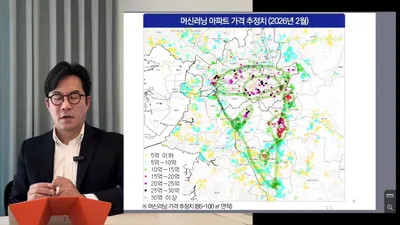
The direction of the government's real estate policy is being materialized through the President's address to the nation. The core perception of the government, as revealed through the President's recent remarks, is the issue of asset polarization concentrated in the single-center system of the metropolitan area and the 'smart single house' phenomenon. Accordingly, there is a high possibility that the target of policies will aim at the Gangnam area, which is expected to become a variable that determines the direction of future tax reforms and supply measures.
'Flattening' Policy Direction to Break the Gangnam Single-Center System
According to the analysis in the video, the government perceives the concentration of real estate in Gangnam as one of the causes hindering economic growth. In the address, the President made remarks to the effect that a 'flattening' process is underway, where prices in Gangnam fall and prices in other regions rise. This is interpreted as an intention to lower the concentration of assets by making Gangnam, where high-priced real estate is concentrated, a policy target.
In particular, the government views the Gangnam single-center urban structure and tax issues, which create 'smart single houses,' as major tasks to be solved. Accordingly, the recently announced tax-related details also possess a character that targets ultra-high-priced real estate. Within the government's perception system, the core goal of the policy is set to alleviate the concentration in the Gangnam area rather than the overheating of the entire real estate market.
Structural Destruction of the Non-Apartment Market and the Supply Gap
In terms of real estate supply, a stark difference is appearing between apartments and non-apartments (multi-family housing, row houses, single-family houses, officetels, etc.). While apartment supply in the metropolitan area is being maintained at normal levels with sales performance this year, the non-apartment market is facing a structural crisis. This is deeply related to the collapse of the Jeonse system that began in 2023.
While the market for apartments is functioning with the Jeonse system relatively maintained, the non-apartment market has collapsed as the Jeonse financial function was lost along with issues such as Jeonse fraud. Looking at the cumulative housing commencement performance in the metropolitan area as of the end of July this year, apartment commencement reached about 70,000 units, whereas non-apartments were only 0.8 million units, intensifying the supply imbalance. Although the government emphasizes public-centered supply, there is a gap with the market demand that wants supply centered on private sales.
The Impact of Lowering the Comprehensive Real Estate Tax Deduction Cap and Changes in Capital Gains Tax Deductions
The points to note among future tax changes are the deduction caps for the Comprehensive Real Estate Tax and Capital Gains Tax. The video mentioned that the upper limit of the Comprehensive Real Estate Tax deduction amount to be applied from 2028 will be lowered to 6 million won. Previously, high rates of deductions could be received through long-term holding and residence deductions, but as a cap is set, the tax burden on holders of ultra-high-priced real estate is expected to increase significantly.
Changes are also expected in Capital Gains Tax. As the existing long-term holding deduction system changes to focus on residence deductions, if a deduction cap is set, the tax reduction benefits for large-scale capital gains like in the past will decrease. This is analyzed to ultimately increase the holding and selling costs of ultra-high-priced real estate areas such as Gangnam, thereby affecting the flattening of the real estate market and the dispersion of assets that the government aims for.

0Comments
Comments are currently disabled.