
China's Quantitative and Qualitative Pursuit... Concerns Over South Korea's Shipbuilding 'Double Polarization' and Weakening Foundation
CEO Kwon Hyo-jae appeared on Dr. Choi Jun-young's Globe Institute YouTube channel to diagnose the structural vulnerabilities of the South Korean shipbuilding…
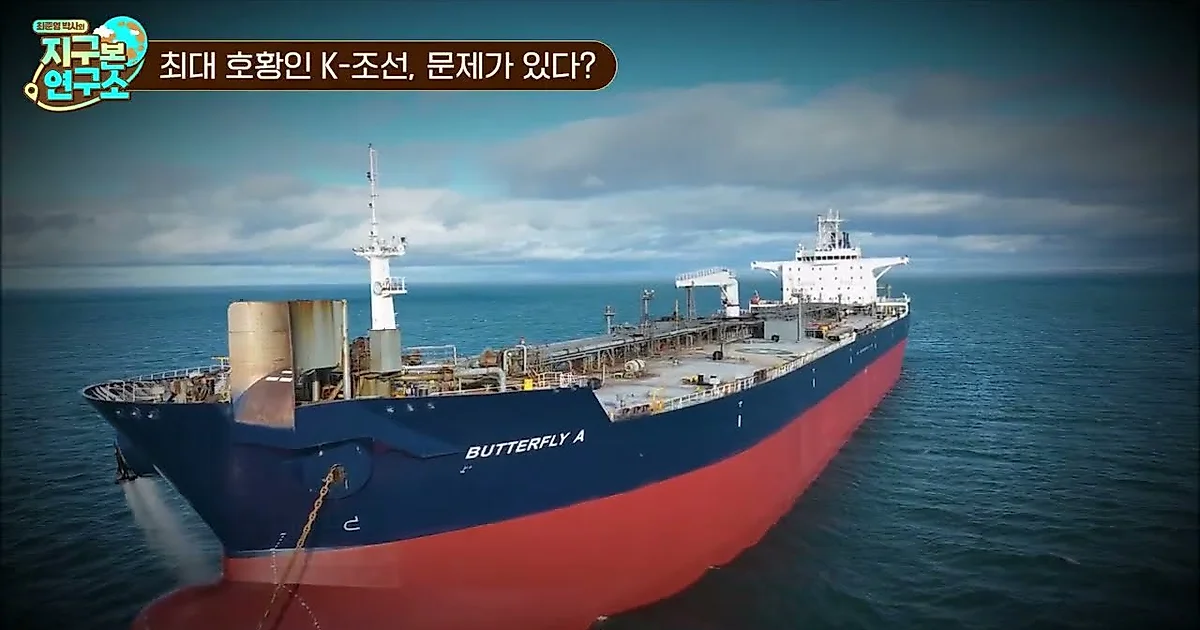
While the South Korean shipbuilding industry is experiencing a boom in indicators such as achieving order volumes and increasing operating profits, a sense of crisis is rising due to structural vulnerabilities within the industry and fierce pursuit from China. CEO Kwon Hyo-jae, appearing on the YouTube channel 'Dr. Choi Jun-young's Globe Institute' hosted by Dr. Choi Jun-young, diagnosed the reality facing the South Korean shipbuilding industry as 'double polarization' and 'weakening foundation.'
'Double Polarization' Between Listed Large Corporations and Small/Medium Equipment Suppliers
CEO Kwon Hyo-jae analyzed the current state of the South Korean shipbuilding industry as being in a state of ongoing polarization within the industry. In addition to polarization with other industries such as semiconductors, the gap is widening within the shipbuilding industry itself between listed large corporations and the small/medium-sized enterprises, equipment suppliers, and labor supply foundations that support them. Kwon expressed concern that no matter how much performance large corporations achieve, if the industrial foundation supporting them becomes weak, the entire industry could eventually collapse. In particular, he pointed out that field personnel have decreased to one-third of previous levels through the recessionary period, mentioning the danger of a structure where only top-tier companies grow while the foundation has crumbled.
China's Aggressive Facility Investment and 4-Fold Gap in Order Backlog
In terms of figures, the combined expected operating profit for the three major South Korean shipbuilders this year is projected to reach 9 trillion won, with an average operating profit margin exceeding 15%. The order backlog is also secured with more than 150 trillion won, covering three years' worth of volume. However, the gap is widening in the competition with China. As of last year, China accounted for 52% of the world's major merchant ship construction, while South Korea accounted for 28%. In particular, regarding the order backlog, which gauges future volume, China occupied 70% while South Korea remained at 18%, showing that China is leading South Korea by nearly four times.
This difference stems from the difference in facility investment strategies between the two sides. Based on their experience during the previous recession, South Korean shipbuilders are taking a cautious stance on additional facility expansion and are focusing on high-value-added vessel types such as LNG carriers, ultra-large container ships, and tankers. On the other hand, China has been aggressively increasing its facilities since last year, and in light of the recent super cycle in the shipping market, it is continuing to secure massive orders based on the expanded facilities. Kwon explained that China's judgment was ultimately correct, and that some Chinese private shipbuilders are currently achieving both quantitative and qualitative growth, with operating profit margins reaching 20–30%.
Difficulty in Maintaining a Super-Gap in Technology and the Task of Securing Vessel Type Diversity
The core strategy of the South Korean shipbuilding industry is 'maintaining a super-gap' through high-value-added vessels. However, Kwon diagnosed that this strategy is being threatened. As a representative example, he cited this year's LNG carrier order status, mentioning that China recorded more orders than Europe based on the number of vessels. This means that China's pursuit is intense even in the high-value-added market that South Korea has led.
Furthermore, the issue of diversifying vessel types for the sustainability of the industry was raised. In the past, the South Korean shipbuilding industry endured recessionary periods by maintaining technological capabilities in various vessel types, but currently, it is focused only on specific vessel types with high profitability. Kwon pointed out that in preparation for the possibility of the market entering a downturn again in the future, maintaining technological capabilities and securing orders for various vessels, in addition to the tankers and container ships currently being focused on, is a task for preserving the industrial ecosystem.



0Comments
Comments are currently disabled.