
"An Era of 1 Million Self-Employed Closures"... Franchises and Income-Generating Real Estate Collapsing Under Interest Rate Shock
Lawyer Park Ki-tae warns that the self-employed sector is facing a severe crisis characterized by frequent franchise closures and high costs of shutting down businesses. Additionally, rising interest rates are driving investors in income-generating real estate toward bankruptcy as interest burdens outpace rental income.
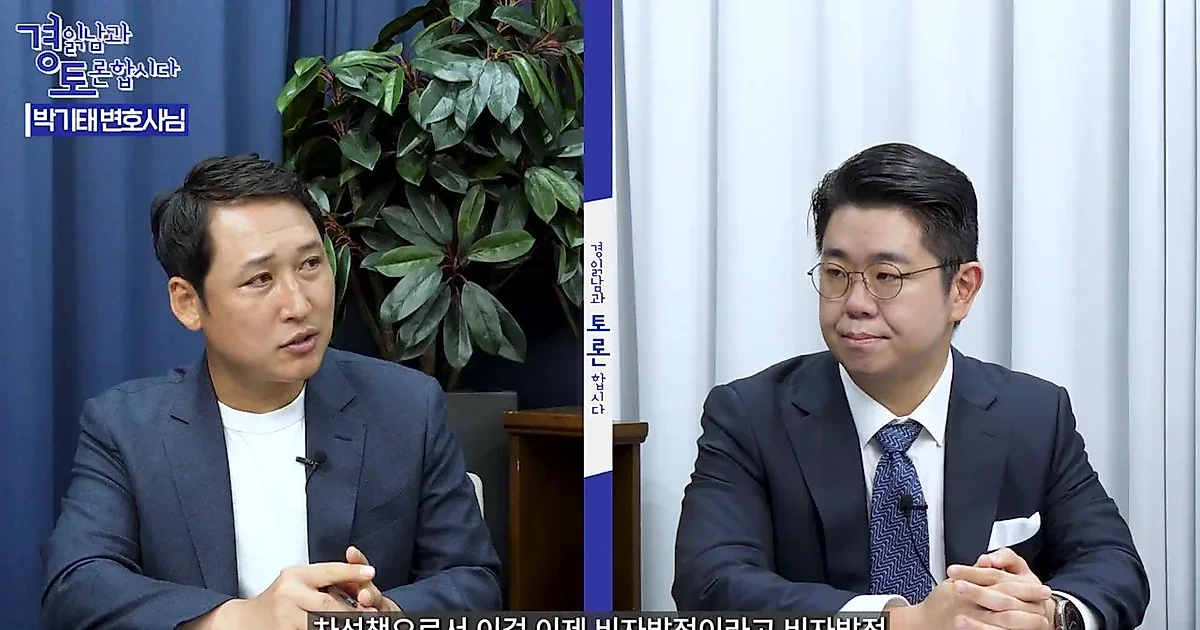
While the Korean economy shows signs of recovery in indicators due to strong semiconductor exports, the employment issues of the self-employed and the youth have reached a serious level behind the scenes of the real economy. In a discussion presented by the economic channel 'The Man Who Explains the Economy (Kim Kwang-seok TV)', lawyer Park Ki-tae diagnosed that the current self-employed business climate is in a very serious state, particularly noting that closures in the franchise industry are occurring in succession.
Franchise Closures and the Limits of Capital Accumulation for the Self-Employed
Park Ki-tae stated that he encounters many cases in his professional work where self-employed individuals are collapsing, noting that closures of franchise companies have been occurring frequently recently. In particular, major items in the self-employed sector, including the pizza industry, are being hit hard. Due to the nature of the franchise structure, it is difficult to accumulate sufficient capital when business is going well, so the burden of costs incurred during closure acts as a decisive crisis.
During the closure process, costs such as contract termination fees with the headquarters, material costs for unsold goods, and the obligation to restore the interior to its original state arise. Park explained through consultation cases that these costs often result in a burden of about 300 million won, and as a result, there are increasing cases where economic activity becomes impossible unless they undergo rehabilitation or bankruptcy procedures.
The Swamp of Income-Generating Real Estate Investment Caused by Interest Rate Shock
For the self-employed, interest rate hikes act as a trigger that threatens survival beyond a simple increase in costs. Park warned of the dangers of rising interest rates by citing cases of investing in income-generating real estate (commercial buildings, knowledge industry centers, etc.) during the past low-interest rate period. Investors who received many commercial building units with small down payments at that time are now facing situations where they cannot handle the rise in variable interest rates on intermediate payment loans.
When interest rates rise sharply, the interest burden more than doubles, and missing loan payments even just a few times causes credit scores to plummet. If the credit score drops, the final stage—the balance loan—cannot be executed, putting them in a crisis where they cannot secure ownership of the real estate. Ultimately, as tenants do not move in or rental income fails to keep up with the increased interest costs, the structure drives investors to give up everything and be pushed into bankruptcy.
K-shaped polarization and debt structure hidden by the semiconductor boom
Currently, the Korean economy is being driven by the strong export performance of the semiconductor industry, but excluding this, other items are showing extreme polarization, such as recording negative growth. Professor Kim Kwang-seok analyzed that the semiconductor boom is masking the shadows of the real economy, mentioning figures such as semiconductor exports increasing by 150% while other items record -50%.
The self-employed have an absolutely higher debt repayment ratio compared to wage earners. This is because, in addition to startup funds for business operations, operating fund loans to cover the decrease in sales are essential. In particular, since the low-income class among multi-debtors is concentrated among the self-employed, when interest rate hikes and consumption contraction coincide, the blow they receive is bound to be more direct and fatal.
Source: original video (YouTube)


0Comments
Comments are currently disabled.