
South Korea's Arms Export Law Still Reflects a $100 Million Era as Sales Reach $15–20 Billion
Experts at Ilchon Law Firm say South Korea's defense laws remain built for domestic supply, even as exports have grown to $15–20 billion a year. They point to end-user rules and local-production and technology-transfer issues as bottlenecks.
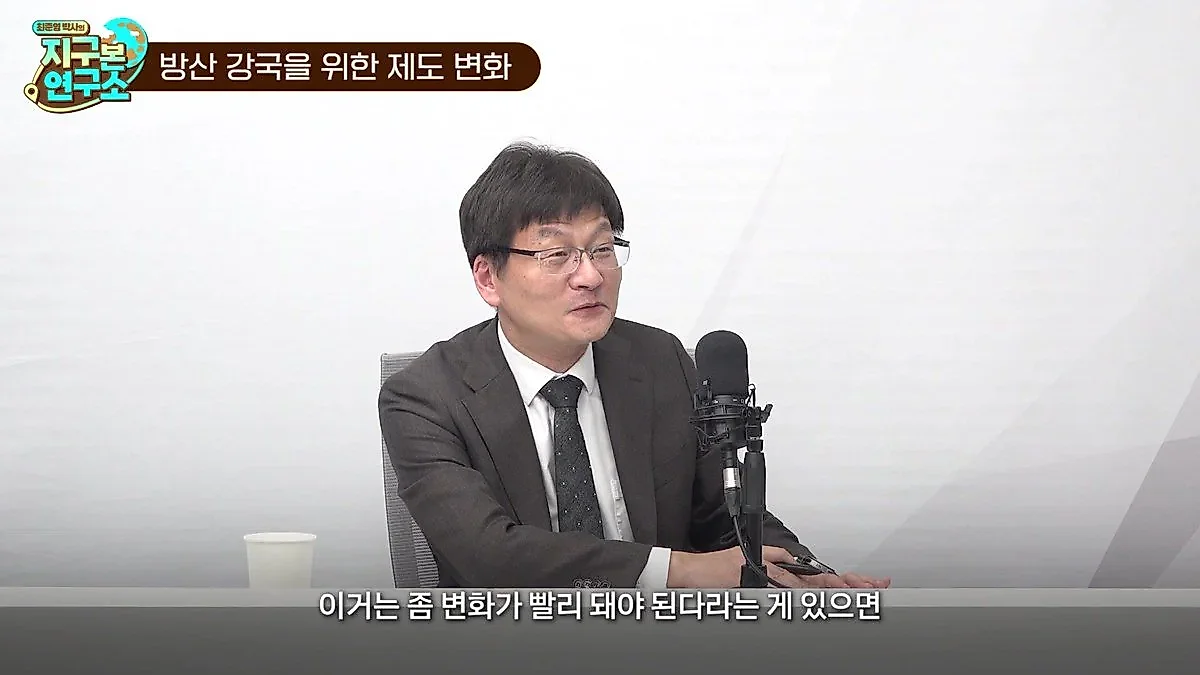
The foundation of the Defense Acquisition Program Act dates to 2006, when South Korea's arms exports were around $100 million. Exports are now put at $15–20 billion, yet the legal framework governing them has not kept pace, experts at Ilchon Law Firm said.
The analysis was presented in a video from Dr. Choi Jun-young's Globe Institute. Specialists from the firm's defense and aerospace strategy center said the current legal system cannot keep up with the demands of a changing global market. South Korea's defense industry is rising as a global player, but its laws and institutions remain trapped in an older, domestically focused framework, they said. The industry needs institutional innovation to handle a more complex export environment that includes local production and technology transfer.
A market that has grown hundreds of times over
To become one of the "top four defense powers," South Korea would need to export more than $25 billion every year, according to the analysis. The industry has grown hundreds of times larger, but the legal rules that govern it remain at their old level.
Choi Yong-seon, a senior expert, said: "Our defense industry legal system is geared to the first-generation growth strategy, a domestic-demand-centered model." He added that "it is difficult to build weapons systems that adapt to the changed environment."
The model grew out of the self-reliant defense approach. After the founding of ADD in the 1970s, the industry grew by replacing foreign weapons with domestic technology. Its core task was developing and delivering weapons for the South Korean military quickly, and laws and institutions evolved to suit domestic military supply. That model has hit its limits. The wars in Ukraine and the Middle East have rapidly changed battlefield conditions, and demand has widened from simple purchases of finished products to local production and maintenance, repair and overhaul (MRO) cooperation.
When buyers want to re-export to allies
The change in export methods is causing friction in contract negotiations. Contracts used to end once finished products were delivered to a specific country, but buyers now increasingly ask for technology transfer or multilateral cooperation. Attorney Kim Nan-hyeong used the End User Certificate (EUC) to illustrate the gap.
Under current law, the End User Certificate requires a buyer to obtain the South Korean government's prior approval before transferring or re-exporting the weapons to a third party. The rule is meant to prevent weapons leakage. But a buyer who wants to supply an ally according to its own security situation must wait for Seoul's permission each time.
"It may be a reasonable request, in terms of national security, for a buyer to want to provide weapons to its own allies as well," Kim said. "But current law lacks provisions for such multilateral exports, so contract negotiations run into unexpected obstacles." A buyer that imports weapons from South Korea may want to arm a neighboring country at risk to create a favorable situation for itself. Having to seek South Korean government approval every time, she said, becomes an obstacle to concluding contracts.
Local production and intellectual property
In Europe and other global markets, building local factories and co-producing weapons is spreading beyond simple exports. A new variable is emerging: a clash between the authority of the South Korean government and ADD, which hold the original technology, and new intellectual property (IP) created through local adaptation.
Take a Polish version of the K2 Black Panther, a variant adapted to local conditions in Poland from South Korean technology. Whether it can be exported depends on how qualitatively different it is from the original product. If it is deemed a modification of the original technology, it again falls under strict South Korean government control. Production works by passing licenses for ADD-held core technology to companies, so responsibility and authority over a weapons system adapted overseas return to the government's sphere of control.
Choi Yong-seon warned that "in a situation like Europe's, where weapons systems are becoming blocs and change quickly, if our system cannot allow such variations, we could be shut out of the global supply chain." With the battlefield environment around the war in Ukraine changing sharply every three months, a system that cannot keep up with technical variation and demands for localization could make even entering the supply chain difficult, the analysis said.
For sustainable growth, South Korean defense firms appear to need more than technological strength. Legal and institutional infrastructure that can flexibly accommodate a changing international environment and buyers' demands must be built alongside it.
Source: original video (YouTube)

0Comments
Comments are currently disabled.