
Samsung Electronics Buyback Failed to Stop the Slide as Analyst Floats 70,000 Won Share Price Target
The SOX has fallen eight straight sessions, with Samsung Electronics and SK hynix falling even harder, and one analyst argues a chip-cycle peak could push their shares to 70,000 and 200,000 won. An analysis from Professor Lee Hyun-hoon's Economic Forum points to three variables: AI profitability, Chinese rivals and interest rates.
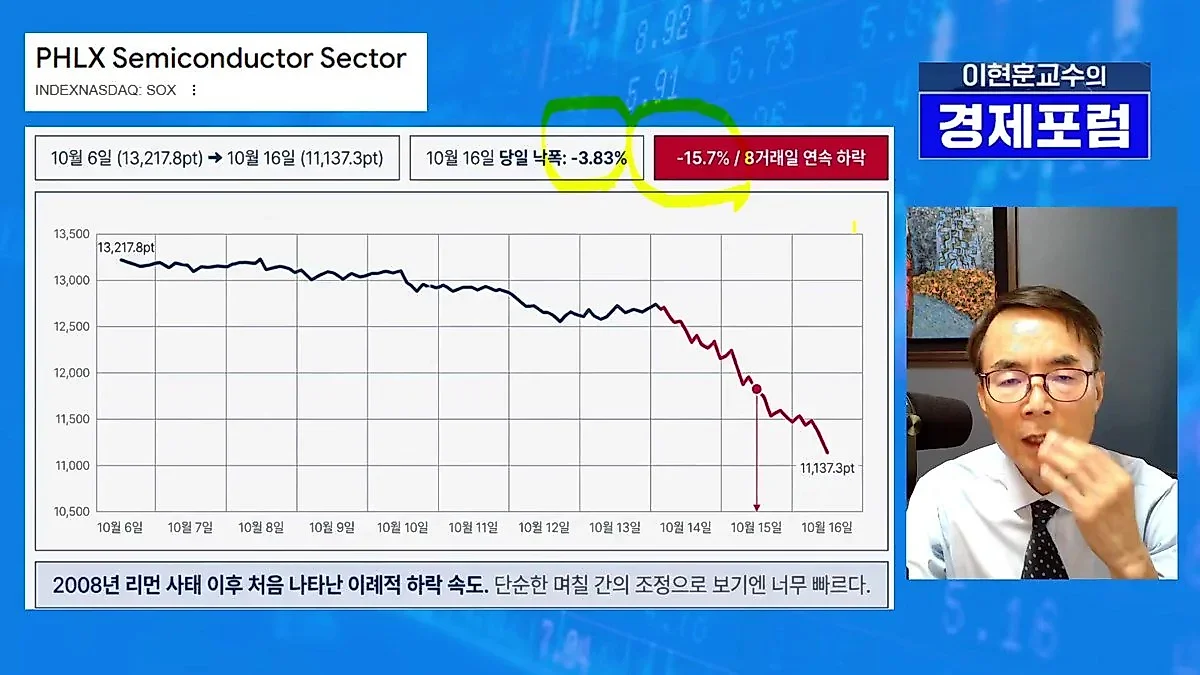
Samsung Electronics shares could fall to a fair value of 70,000 won and SK hynix to 200,000 won, according to a striking forecast circulating in the Korean market. It comes as the Philadelphia Semiconductor Index (SOX) has dropped for eight straight trading days.
The "peak-out" argument and the buyback puzzle
Dr. Lee Ju-wan argues that the semiconductor industry has hit its peak, the "peak-out" view, and that this makes such a decline possible. His case rests on the idea that the chip cycle's high point is passing and that prices may be adjusted downward from current highs.
He points in particular to Samsung Electronics' 55 trillion won share buyback plan, announced around July 20. Shares have kept sliding even though purchases went ahead, which the analysis says may be a structural warning sign rather than simple profit-taking. SK hynix is also buying back shares while its stock keeps falling, which supports the concern. The forecast is only one of many views in the market, however, and the outcome could change depending on whether a technical rebound occurs and when AI actually starts generating profits.
Record profits, falling prices
Over the last eight sessions the SOX has plunged 15.7%, and the drop from its peak on June 22 reaches 24%. Samsung Electronics and SK hynix fell faster, by 20.8% and 28.3% respectively over the same eight sessions.
The oddest feature of the market is a decoupling of earnings and share prices. Samsung Electronics, Micron Technology, TSMC and other major chipmakers have recently posted earnings surprises and large profits. On those numbers shares should be rising, yet the market keeps falling.
According to an analysis from Professor Lee Hyun-hoon's Economic Forum, this suggests the market may be in a "compound crisis" combining traits of the 2000 dot-com bust and the 2008 global financial crisis. In the dot-com crash, excessive expectations for technology turned into weak earnings, prices fell by as much as 83%, and it took 17 years to regain the previous peak. The 2008 crisis brought a maximum drop of 69% and a prolonged slump. By contrast, during the COVID-19 pandemic the index fell about 35% in early 2020 but staged a V-shaped rebound in the second half of that year. Whether the present situation is a mere technical correction or the start of a long downturn depends on three key variables.
Three variables: AI returns, inflation and China
The first is doubt over the profitability of AI investment. Astronomical sums are flowing into AI, and the market increasingly questions whether they will turn into real profits. Rising corporate bond issuance and higher interest rates to fund AI infrastructure raise worries that real returns on AI could fall. If AI demand falls short of expectations, it could translate directly into weaker chip demand.
The third is macroeconomic uncertainty. Key inflation gauges such as the consumer price index (CPI) and producer price index (PPI) have come in above market expectations, spreading fears that the Fed could hold rates or even raise them further rather than cut. Persistently high rates exert strong downward pressure on the tech-heavy semiconductor sector.
The second variable is China's rapid technological catch-up. Chinese firms such as ChangXin Memory Technologies and Yangtze Memory Technologies are growing fast enough to threaten Korean companies in memory chips and NAND flash. In NAND flash, they are even assessed as having come close to Korean makers' level. China accounts for roughly 60–70% of global semiconductor demand, so if Chinese companies become self-sufficient, Micron Technology, Samsung Electronics and SK hynix would inevitably take a heavy blow.
Source: original video (YouTube)



0Comments
Comments are currently disabled.