
Chinese chipmaker CXMT could threaten South Korean semiconductor giants
Experts warn that if China's CXMT accumulates significant capital during the current semiconductor cycle, it could emerge as a formidable competitor to Samsung Electronics and SK hynix in the next cycle.
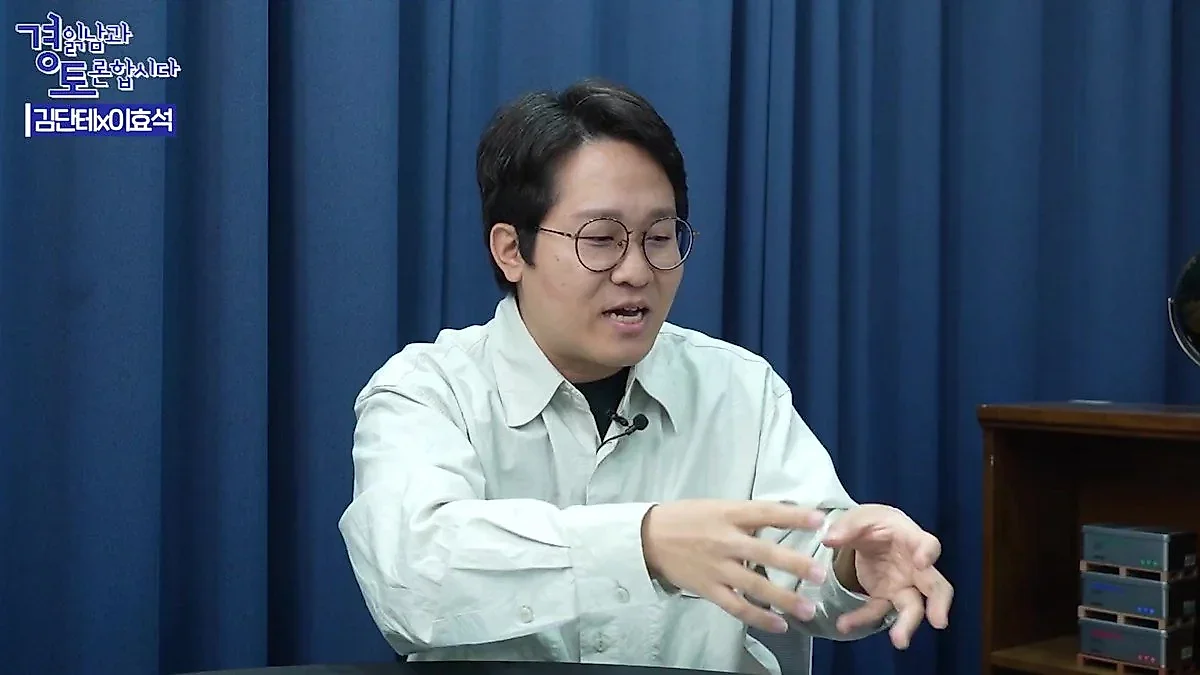
Chinese memory semiconductor company CXMT could emerge as a major competitor to Samsung Electronics and SK hynix in the next cycle if it accumulates significant capital during the current period. While CXMT's wafer production capacity is expected to reach only 15% of global DRAM manufacturers' capacity by 2027, its potential for aggressive pricing could pressure South Korean corporate valuations.
Warnings have emerged that the future of the South Korean semiconductor industry depends on more than just current supply and demand conditions. Analysis suggests that if the Chinese memory semiconductor company CXMT accumulates massive profits during this semiconductor cycle, it could emerge as a powerful competitor to Samsung Electronics and SK hynix in the next cycle.
A discussion hosted by The Man Who Explains the Economy (Kim Kwang-seok TV) featured Lee Hyo-seok, Kim Dante, and Professor Kim Kwang-seok, who delved into the absence of leading stocks in the current South Korean stock market, the threat posed by Chinese semiconductors, and future investment strategies.
"They were in deficit this time, but..." CXMT's profits could become a weapon for the next cycle
One of the core topics of the discussion was the growth trajectory of China's CXMT. Kim Dante highlighted CXMT's current position and future risks using specific figures. According to Kim, CXMT's wafer production capacity is expected to remain at around 15% of global DRAM manufacturers' capacity by 2027. When considering yield—the ratio of good products produced per wafer—it is judged that CXMT will struggle to significantly impact memory supply and demand in 2027, as its wafer capacity is smaller and its yield is lower than that of Micron, Samsung Electronics, or SK hynix.
However, Kim focused on "multiples" (price-to-earnings ratio) and "capital power" rather than immediate earnings. While CXMT experienced difficult times recording deficits compared to the same period last year, the situation changes if the company earns more money than expected during this cycle. "While CXMT may not exert a large influence and could move into a down cycle during this current cycle, they could become a massive competitor in the next cycle based on the capital they accumulate this time," Kim warned.
Analysis suggests the market may react more sensitively to the "noise" CXMT brings rather than its actual performance. Even if it cannot disrupt immediate supply and demand, the highlighted growth potential of a Chinese company could become a factor that pressures the corporate valuation (multiples) of South Korean semiconductor companies.
The 'artificial moat' created by the United States and China's deflationary offensive
Lee Hyo-seok explained the aggressive market penetration of Chinese companies through the concept of "exporting deflation." As China attempts to dominate markets through extreme pricing strategies across all industries, it creates a structure where a "chicken game" occurs globally in any industry China enters, making it difficult for companies to protect their "moats" (economic barriers to entry). "All Chinese industries are still in the middle of a chicken game," Lee analyzed, stating that China is exporting deflation to the entire world.
Lee analyzed that the monopolistic positions enjoyed by South Korean semiconductor companies were not created by themselves, but were partly created by U.S. regulations against China. "The moat held by semiconductor companies was actually created by the United States," Lee said, adding, "If the moat is maintained because the U.S. is blocking the rise of Chinese semiconductors, it is impossible to predict how long this will last."
However, because the semiconductor industry is directly linked to security, it remains uncertain whether the U.S. government can completely block China's offensive even if it continues. "The U.S. is also struggling with inflation issues," Lee noted, adding that the possibility cannot be ruled out that the U.S. might choose to absorb some of China's deflationary pressure to the extent of minimizing security threats. In particular, the fact that the CEO of Apple is reportedly attempting to persuade the U.S. government to use Chinese general-purpose semiconductors to reduce costs could be a variable for South Korean semiconductor companies. "It is difficult to say for certain whether the U.S. government will allow Apple to use China's general-purpose semiconductors, but if they do, it means the DRAM shortage will be resolved, which will have a significant impact on our economy's export growth rate and the KOSPI," Lee added.
Survival methods in an era without leading stocks: "Look to a wider market instead of the KOSPI"
Experts also shared opinions on the "absence of leading stocks," a characteristic of the current South Korean stock market. The three participants agreed that there are no clear leading stocks to drive the current market. Kim Dante pointed out that it is not too late to enter after leading stocks are identified, noting that by the time they are confirmed, stock prices have often already risen significantly, making it difficult for individual investors to enter. This creates situations where investors want to buy leading stocks but cannot because the prices are already too high.
In particular, strategic changes were recommended for investors holding Samsung Electronics and SK hynix. In the case of SK hynix, the PBR (price-to-book ratio) is approaching 1x, and if the BPS (book value per share) rises above 900,000 won this year and next year to reach the low 1 million won or even 1.2 million won range, downward pressure may not be significant. Therefore, holding may be more advantageous than aggressive selling; however, for investors whose strategy is to "continue following leading stocks," advice was given to change strategies, such as adjusting current semiconductor weightings. Kim suggested a phased approach, such as temporarily moving funds to an index, because by the time an investor feels they have fallen out of a leading stock and tries to buy another, there is a high possibility that other stocks have already risen.
In this process, the limitations of the South Korean market were also mentioned. While the South Korean market has a tendency to rely on specific stocks (such as Samyang Foods) due to narrow options, the U.S. market has a very wide and diverse AI value chain. "There is a feeling that in Korea, you buy because 'you are the only option among these' (such as VINATech) or you only buy what is performing well like Samyang Foods," Kim Dante suggested. "As language barriers have lowered, rather than being buried only in South Korean stocks, it is necessary to secure diverse options by looking at a wider universe, such as the United States."
Source: original video (YouTube)


0Comments
Comments are currently disabled.