
CXMT challenges Samsung and SK hynix with new 4F² DRAM technology
Chinese semiconductor firm CXMT is signaling its entry into the server DRAM market by leveraging next-generation 4F² technology, potentially challenging the dominance of South Korean leaders.
Chinese semiconductor firm CXMT is targeting the server market by announcing its entry into next-generation 4F² DRAM technology. This move aims to challenge the memory supply order held by Samsung Electronics and SK hynix by using vertical transistors to increase integration density.
The hegemony of the memory semiconductor market is in flux. While Samsung Electronics and SK hynix are enjoying an unprecedented boom due to increased investment in AI data centers, market uncertainty is growing as the pace of technological pursuit by Chinese latecomers accelerates faster than expected.
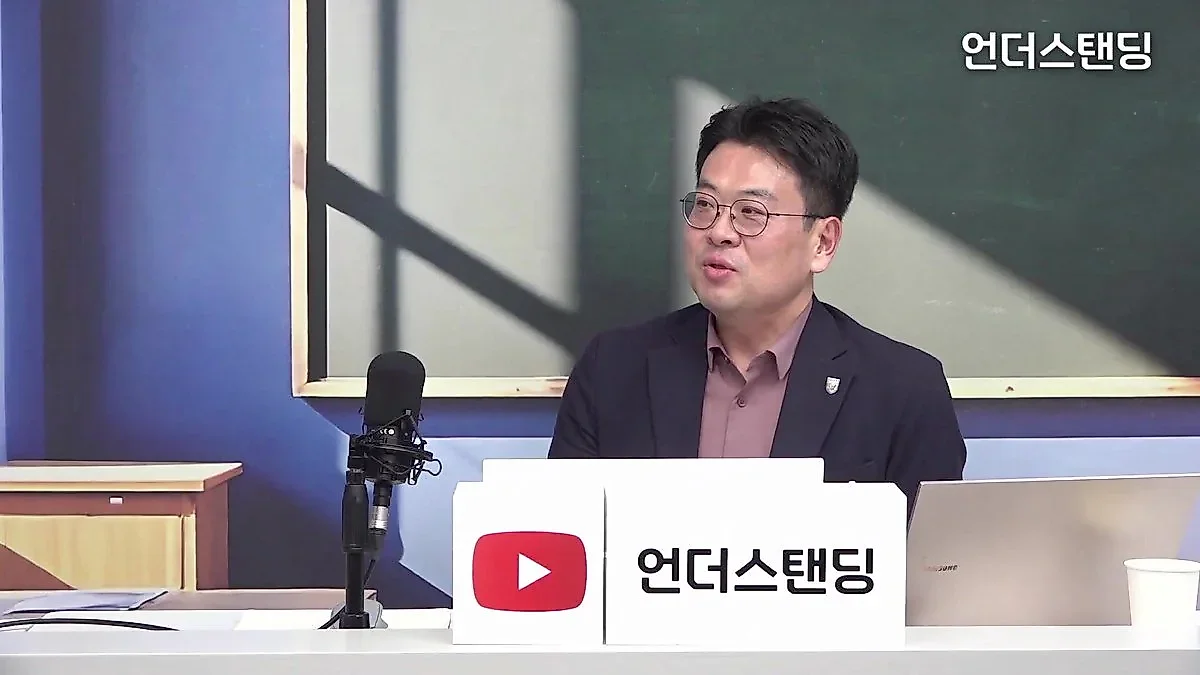
According to an analysis by Professor Shin Chang-hwan of Korea University presented by Understanding: All the Knowledge in the World, the Chinese semiconductor company CXMT is heightening market tension by announcing its entry into the server market using next-generation DRAM technology called '4F²'. This is interpreted as more than a simple technological announcement; it is a challenge to the memory supply order established by Korean companies by Chinese firms that have struggled in a pit of deficits for the past 10 years.
Is '4F²' technology, which stands transistors vertically, China's winning move?
The core of the recently discussed 4F² technology is increasing integration density by standing transistors vertically. In existing DRAM, transistors lie horizontally and occupy significant area, but adopting a '3D structure' that stands them vertically allows more cells to be packed into the same area. Professor Shin explained, "The core of 4F² is reducing the area by verticalizing the transistors from the 6F² structure," adding, "It is a technology that theoretically reaches the limits of miniaturization."
A bit, the unit for storing information in DRAM, is determined as 0 or 1 depending on whether an electron is trapped in a capacitor. Current technology utilizes a structure where the capacitor rises in a long, cylindrical shape. 4F² technology is a method of vertically standing not only this capacitor but also the transistor that acts as a 'faucet' to control the flow of electrons. Shin explained the technical change, noting that "by standing the transistors vertically to reduce area, they have moved down from 6F² to 4F²."
The reason CXMT is targeting the server DRAM market by mentioning this technology first is clear. Shin analyzed, "To meet the high-capacity and high-specification requirements demanded by major Chinese customers, such as Huawei, there are limits to the existing 6F² method." In other words, it is a strategy to secure integration density through structural changes in a situation where it is difficult to push the limits of fine process technology (F-value). The video mentioned that CXMT is reported to have implemented integration levels around the 11nm class, but added that an analysis of the actual integration density (EPS) compared to leading companies will be necessary after the actual chips are released.
However, Shin took a cautious stance, stating it is too early to conclude that China has a technological advantage. He emphasized, "Samsung Electronics and SK hynix have also proven their technological prowess by presenting related technologies at academic conferences such as ISSCC and VLSI," adding, "Just because China attempts mass production first does not mean their technology is ahead. Actual competitiveness depends on the level of fine processing, mass production capability, and yield." In particular, Samsung Electronics presented related technology at ISSCC this past February, and SK hynix showcased it at the VLSI symposium in Japan last year.
Opportunities for 'latecomers' grow as profit scales increase
The massive profits currently enjoyed by Samsung Electronics and SK hynix paradoxically provide a stepping stone for growth for latecomers like China. Compared to the boom period of 2017–2018, the profit scale of the three major memory companies has grown more than 10 times. Shin pointed out, "The rise in memory prices essentially provides latecomers with the funds to escape deficits and invest in research and development (R&D) and capital expenditure (CAPEX)."
Based on this financial power, Chinese semiconductor companies are accelerating their 'semiconductor rise.' Shin's diagnosis is that while Korean companies will lead the market in the short term based on overwhelming profits—enjoying benefits such as stock price reflections, dividends, and facility investments—companies with technological ambitions will gain the opportunity to challenge hegemony from a long-term perspective of 3 to 5 years.
US pressure and oversupply remain variables
The market outlook is not purely optimistic. Moving forward, risks of price drops due to political pressure from the United States and oversupply lurk ahead. Shin explained, "If Korean semiconductor companies reap excessively high profits, pressure for price reductions or demands for capacity expansion from the US could increase to reduce the burden on US companies." Additionally, if US-China relations improve, there is a possibility that it could work to the disadvantage of Korean companies by making it easier for Chinese semiconductors to enter overseas markets.
Variables in the supply side are also significant. The reason Samsung Electronics and SK hynix intend to expand fabs both domestically and abroad, even while accepting a decrease in profits, is that the 'disadvantage of not expanding' is greater. While increasing semiconductor supply takes a long time, customer orders can be canceled in a short period, meaning the current boom could break at any time. Therefore, companies proceed with investment when they judge that the benefits gained from expansion are greater than the disadvantages caused by not doing so.
Ultimately, the survival strategy for the Korean semiconductor industry lies in the transition from 'commodity products' to 'customer-customized high-performance memory.' Shin suggested, "They must strengthen the role of jointly designing products with companies like NVIDIA and TSMC, such as HBM (High Bandwidth Memory)," adding, "Through this, they must find a solution to escape China's low-priced volume offensive and extreme economic volatility."
Source: original video (YouTube)



0Comments
Comments are currently disabled.