
South Korea faces capital exodus as US leads RWA innovation
A panel discussion hosted by The Man Who Explains the Economy (Kim Kwang-seok TV) warned that South Korea faces massive capital flight to the US if it fails to respond to the global trend of Real World Asset (RWA) tokenization.
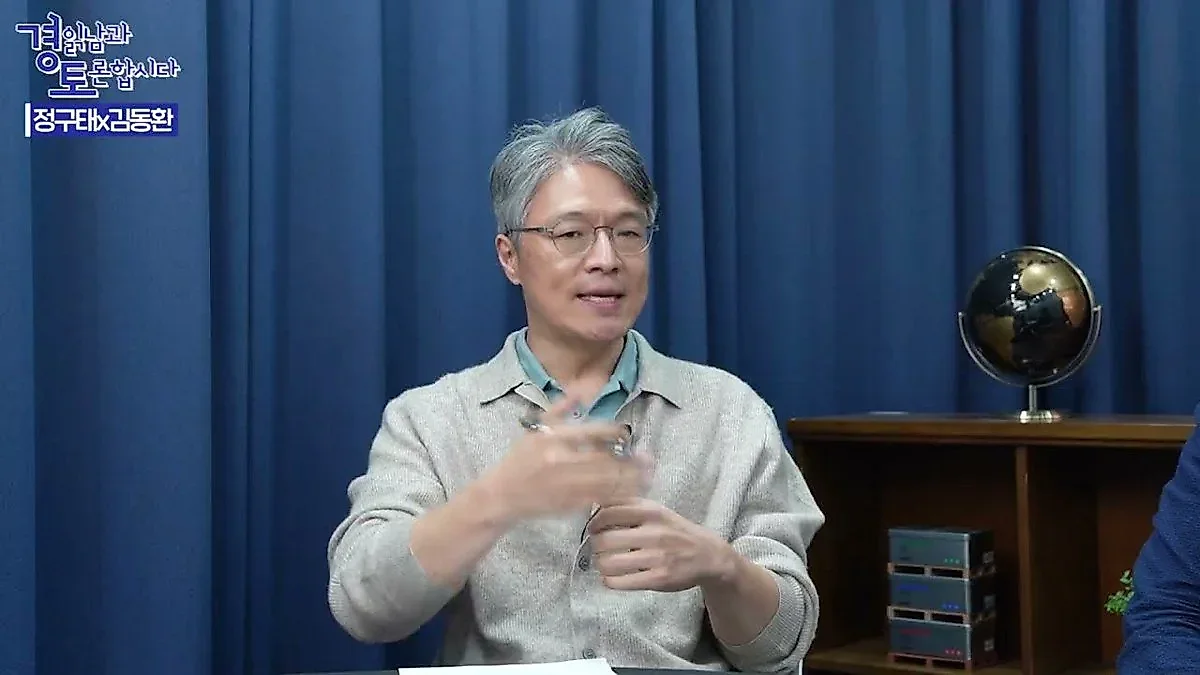
South Korea risks a massive outflow of domestic investor funds to the US if it fails to respond to the expansion of Real World Asset (RWA) tokenization. While US AI semiconductor stocks rose approximately 20–30% since September, panelists warned that RWA technology could make transitioning capital to the US market easier and cheaper for investors.
As the United States intensifies its strategy to attract global capital through Real World Asset (RWA) tokenization, warnings have emerged that South Korea could face a massive exodus of domestic investor funds to the US if it fails to respond appropriately.
A three-way discussion hosted by The Man Who Explains the Economy (Kim Kwang-seok TV) featuring Jeong Gu-tae, Kim Dong-hwan, and Kim Kwang-seok delved into the massive shifts in financial markets brought by RWA and stablecoins, as well as the crisis facing the South Korean financial system. The panelists pointed out that while the US is expanding its market and strengthening control over currency and capital through blockchain technology, South Korea remains trapped within outdated regulatory frameworks.
"An era of buying Micron instead of Samsung Electronics"... RWA driving capital outflow
The panelists analyzed that RWA will be a key factor threatening the "seed money" of South Korean investors, citing the AI semiconductor market as a specific example. According to the discussion, while US AI semiconductor stocks rose by approximately 20–30% since this past September, domestic semiconductor stocks such as Samsung Electronics and SK hynix showed relatively sluggish performance. The panelists noted that when investors realize their errors in stock selection and turn their eyes toward the US market, RWA technology will make that transition much easier and cheaper.
In the past, buying overseas stocks required complex processes such as currency exchange and fees using HTS or MTS, but once assets are on-chained through RWA, costs are drastically reduced. The discussion suggested that if RWA products are created to track the prices of Samsung Electronics or SK hynix stocks, investors will have no reason to convert won to buy them in the Korean market. Particularly in a situation where the value of the dollar is rising, the spread of stablecoins—which are likely to see the value of non-US currencies fall—could impose a disadvantage of exchange losses on investors. From an investor's perspective, holding assets in dollars is advantageous, meaning the incentive to buy KOSPI main stocks while risking exchange losses will disappear.
Consequently, it is projected that if a 24-hour trading environment for the US stock market is established, liquidity in the South Korean stock market will decrease, and the concentration of funds overseas will intensify. The panelists warned, "In the best-case scenario, you just become a fool, and in the worst-case scenario, you could find yourself still only buying Samsung Electronics while Nasdaq or related semiconductor stocks are rising."
Stablecoin expansion and the 'Dollar Penetration' scenario
Beyond asset tokenization, specific scenarios were presented regarding the impact of stablecoin expansion. The discussion used changes in payment methods within large corporate groups as an example. For instance, in import/export transactions between the South Korean entity of Samsung Electro-Mechanics and the US branch of Samsung Electronics, using dollar-denominated stablecoins instead of existing financial networks could significantly lower settlement costs and increase operating profit margins. The video mentioned that this could make a substantial contribution in situations where companies are competing over a 1% operating profit margin.
If this method becomes established in business-to-business (B2B) transactions, there is a high possibility that payments via dollar stablecoins will spread among suppliers within the supply chain. This would result in more than just a change in payment methods; it could lead to the direct penetration of the dollar into transactions between domestic companies. If large corporations begin paying with dollar stablecoins, payments between non-Samsung Group companies within the supply chain are also likely to shift to dollar stablecoins. The analysis even suggested a situation where individuals might choose to receive their salaries in dollar stablecoins instead of won. This signifies a "dollar penetration" where won-denominated payments are replaced by dollar payments.
The panelists criticized that while the US is attempting to absorb global capital by lowering capital hurdles through blockchain technology, South Korea is moving closedly under the guise of "Token Securities (ST)" within the framework of the existing Capital Markets Act. They pointed out that while the US is inducing the concentration of capital through open and aggressive innovation, South Korea remains in a defensive stance, widening the gap with the US.
"The world changes while the person in charge changes"... The challenge of policy continuity
Frequent turnover of policy decision-makers was mentioned as one of the structural reasons for the slow progress of financial innovation. In the discussion, the rotation of officials in charge at relevant ministries was cited as the reason why domestic policy discussions repeatedly stall compared to rapidly changing global financial trends. Because officials change every six months to a year, the learning of new technologies and the reflection of changed environments into policy lack continuity. The analysis suggested that while the world changes rapidly, if the person in charge changes, they must study from the beginning, leaving discussion topics stuck in the past.
The panelists emphasized that institutional reform from a more inclusive and open perspective is urgent to catch up with the capital flows led by the US. The discussion concluded with the suggestion that rather than rejecting change based on past experiences of government-led finance, legislative and institutional support aligned with global standards must be implemented to prevent the isolation of the South Korean capital market.
Source: original video (YouTube)



0Comments
Comments are currently disabled.